
Congress – Kerala Congress Rift Deepens Amid Dispute Over Government Pleader Appointments
Congress – The latest political disagreement within the Kerala unit of the Congress has once again drawn attention to the party’s long-standing internal divisions. What initially appeared to be a dispute over the appointment of Government Pleaders has now evolved into a broader debate over leadership, coordination, and factional influence within the organisation.
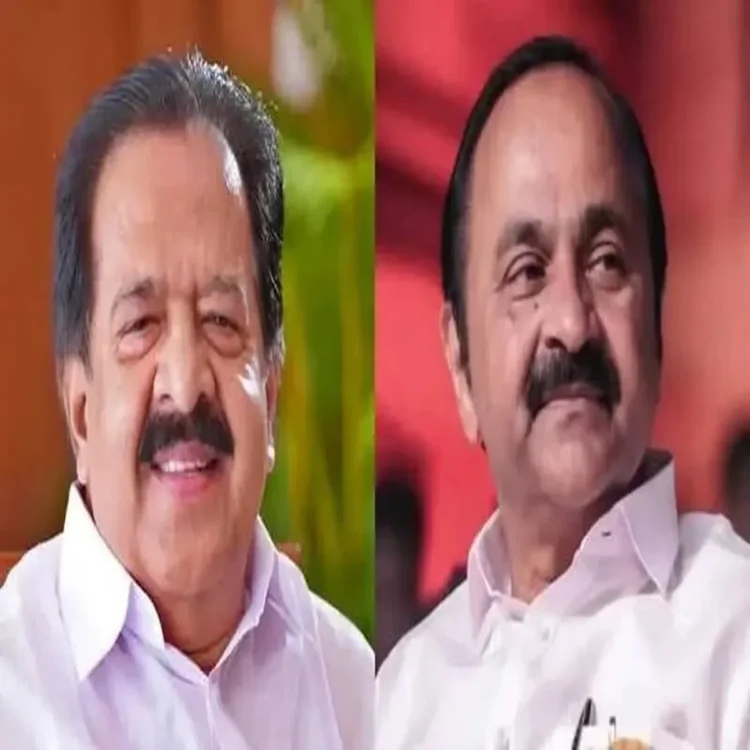
The recent exchange between Chief Minister V.D. Satheesan and KSU state president Aloysius Xavier has sparked fresh discussion about the Congress party’s internal functioning in Kerala. Although the controversy began with objections over the selection of Government Pleaders, many senior leaders and political observers believe the issue reflects much deeper organisational challenges rather than a disagreement limited to legal appointments.
A Familiar Pattern of Internal Rivalry
Factional politics has been a defining feature of the Kerala Congress for several decades. The party has witnessed several influential camps competing for organisational control, beginning with the political rivalry between K. Karunakaran and A.K. Antony. In later years, leadership contests involving Oommen Chandy and Ramesh Chennithala continued to shape the party’s internal structure.
Many within the organisation now view the latest developments through the ongoing political competition between Chief Minister V.D. Satheesan and AICC general secretary K.C. Venugopal. Both leaders command significant support within the Congress, and several recent political disagreements have been interpreted against the backdrop of this wider leadership equation.
Leadership Contest Remains in Focus
Political analysts note that Satheesan’s elevation as Chief Minister followed the United Democratic Front’s decisive Assembly election victory, during which he emerged ahead in the race for leadership. Since then, differences arising within the party have frequently been linked to the evolving balance of power between various Congress groups.
The current controversy has therefore attracted attention beyond the immediate issue of appointments, with many observers suggesting it reflects broader questions surrounding authority, consultation, and organisational management.
Dispute Over Government Pleader Appointments
The latest disagreement gained momentum after KSU publicly questioned the government’s selection of Government Pleaders. Aloysius Xavier claimed that he was overlooked by the Chief Minister during a public programme held in Thevara. He also conveyed his concerns to the Kerala Pradesh Congress Committee (KPCC), alleging that the student wing’s views were not receiving adequate attention from the government.
Responding to the allegations, the Chief Minister’s Office rejected claims that Xavier had been denied an opportunity to meet the Chief Minister. Officials maintained that scheduling difficulties caused by prior commitments had prevented an immediate meeting and insisted that there had been no deliberate refusal.
Differing Views Within the Party
Supporters of the Chief Minister argue that the controversy has been unnecessarily amplified by sections within the party. According to them, the issue has been projected beyond its actual significance, creating avoidable political friction at a time when organisational unity is essential.
On the other hand, leaders associated with the KSU maintain that they raised the matter publicly only after repeated efforts to communicate their concerns through internal channels failed to produce a satisfactory response.
The debate became more pronounced when KSU Ernakulam district president K.M. Krishnalal publicly defended the Chief Minister. He described the controversy as a politically motivated exercise and questioned why objections were being raised over the appointment of lawyers who had already aligned themselves with the Congress ideology.
Organisational Challenges Continue
Several Congress leaders acknowledge that the absence of a fully constituted KPCC leadership and the lack of a strong coordination mechanism between the government and the party organisation have contributed to the present situation. Without an effective system for resolving disagreements internally, routine matters are increasingly becoming public controversies, offering political opponents opportunities to criticise the ruling establishment.
The timing of the dispute has also attracted attention. The developments come as Congress leaders prepare to observe the third death anniversary of former Chief Minister Oommen Chandy, who was widely regarded as a leader capable of maintaining unity despite ideological differences and competing political camps. As party members gather to honour his legacy, discussions are expected to extend beyond remembrance to the growing challenge of preserving cohesion within the Kerala Congress.