
Education Reform – Rahul Gandhi Urges Fresh Approach to India’s Examination System
Education Reform – Congress leader Rahul Gandhi has renewed his call for major changes to India’s education system, arguing that students deserve an environment that promotes learning without fear while ensuring that the hard work and sacrifices of their families are not undermined by examination irregularities.
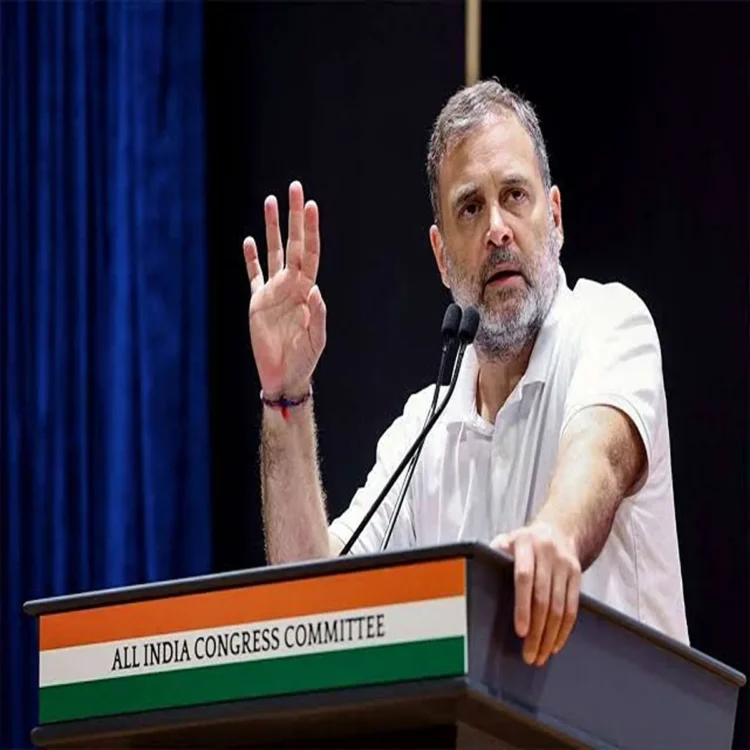
Rahul Gandhi shared a video on X from Friday evening’s “Chhatron ki Goonj” event in Dehradun, where he highlighted concerns over repeated examination paper leak incidents. During the gathering, he invited Rajesh Kumar, the father of Riya Kumari, to the stage. Riya had died by suicide following the cancellation of the NEET-UG examination earlier this year after allegations of a question paper leak emerged. Referring to the emotional moment, Gandhi said Rajesh Kumar’s grief deeply affected everyone present and reflected the suffering experienced by many families impacted by similar incidents.
Personal Tragedies Highlight Wider Concerns
In his post, Gandhi said the consequences of examination failures extend far beyond statistics. According to him, every affected student represents a family whose dreams and aspirations have been disrupted. He noted that behind every candidate is a mother and father who invest years of effort and hope in their children’s future, making such setbacks emotionally devastating.
He argued that the current education framework requires a complete redesign to ensure that students feel secure rather than burdened by anxiety. Gandhi added that parents should see the rewards of their dedication instead of facing heartbreak caused by systemic shortcomings.
Call for Structural Changes in Education
Addressing the public meeting in Dehradun, Gandhi maintained that India’s education system requires comprehensive reform rather than isolated corrective measures. He said educational institutions should remain independent and free from the influence of political parties or organisations. According to him, protecting the credibility of examinations is a national responsibility that should receive support across political lines.
He also called for broader discussions among stakeholders to develop long-term solutions aimed at restoring confidence in competitive examinations conducted across the country.
Allegations Over Examination Process
During his address, Gandhi alleged that repeated paper leak incidents indicate deeper structural issues within the examination process. He claimed that millions of students have been affected by such incidents over the years, creating uncertainty and reducing trust in competitive recruitment and admission systems.
He further alleged that multiple layers of the examination ecosystem, including coaching institutes, examination centres, question paper preparation teams, translators, transport agencies, vendors, the National Testing Agency (NTA), and the Education Ministry, require greater accountability and stronger safeguards. These remarks reflected his criticism of what he described as a system vulnerable to corruption and administrative failures.
Demand for Accountability and Modernisation
Gandhi also questioned the pace of action taken against individuals allegedly involved in examination paper leaks. He said stronger investigations and timely legal action are necessary to discourage future violations and reinforce public confidence in the examination process.
In addition, he argued that India’s testing model should evolve to meet modern educational needs. Describing the existing framework as outdated, he said it continues to rely on approaches that no longer match contemporary academic requirements. According to Gandhi, the examination process should shift from being government-focused and test-oriented to one designed around students and their learning experience.
Technology-Based Examination Security
As part of his proposed reforms, Gandhi suggested adopting technology-driven methods to strengthen examination security. He recommended creating a secure digital question bank and generating question papers through randomisation to reduce the possibility of leaks. Pointing to international assessment models such as the GMAT, he said similar technology-based systems could help improve transparency, flexibility, and fairness in India’s examination process.
The remarks come amid continued public debate over examination integrity and growing calls from various sections for reforms aimed at protecting students and strengthening confidence in the country’s education system.