
PrivateSpace – Vikram-1 Becomes India’s First Private Orbital Rocket to Reach Space
PrivateSpace – India achieved a landmark moment in its growing private space industry on Saturday as Hyderabad-based Skyroot Aerospace successfully launched Vikram-1, the country’s first privately developed orbital-class launch vehicle. The mission, named “Mission Aagaman,” carried several technology demonstration payloads from Indian and international partners, along with a postcard sent by Prime Minister Narendra Modi.
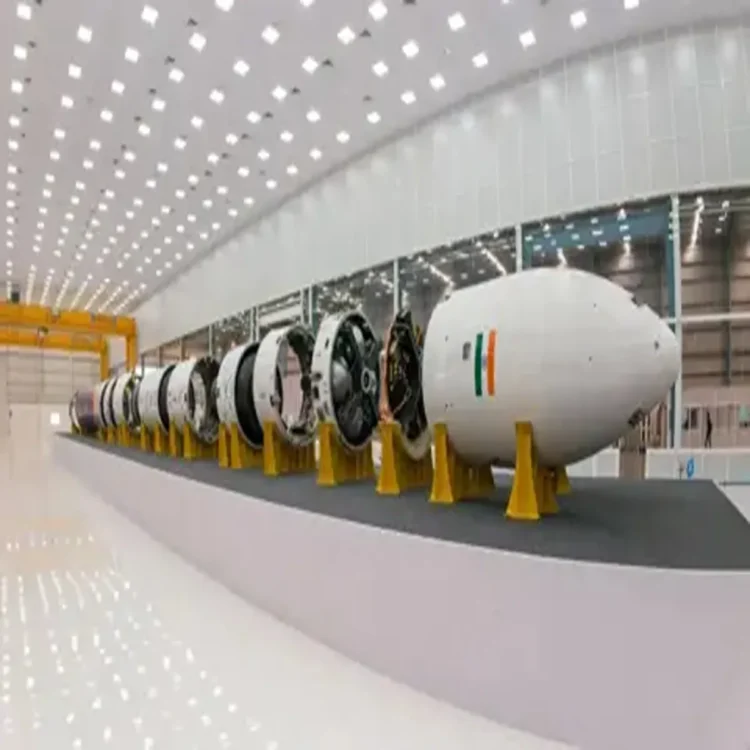
A Landmark Flight for India’s Private Space Industry
The launch took place from the first launch pad at the Satish Dhawan Space Centre in Sriharikota at 12:05 pm after a brief delay caused by a planned hold linked to navigation checks. Originally scheduled for 11:30 am, the mission lifted off around 35 minutes later under cloudy skies, marking a significant achievement for India’s expanding commercial space ecosystem.
Standing nearly seven storeys tall, the four-stage Vikram-1 rocket represents a major step for private participation in the country’s space programme. The mission demonstrated the capability of an Indian private company to independently build and launch an orbital-class rocket designed for commercial satellite deployment.
Advanced Rocket Designed and Built in India
Named in honour of Dr. Vikram Sarabhai, widely regarded as the architect of India’s space programme, Vikram-1 has been developed using lightweight carbon composite materials and propulsion technologies created by Skyroot Aerospace. The launch vehicle is equipped with high-thrust solid rocket boosters and engines manufactured using advanced 3D-printing techniques.
According to the mission plan, the rocket was expected to deploy its payloads into a Low Earth Orbit approximately 450 kilometres above Earth with an orbital inclination of 60 degrees after a flight lasting just under 16 minutes.
Payloads Include Indian and International Experiments
Mission Aagaman carried multiple technology demonstration payloads from organisations including Grahaa Space, Cosmoserve, DCubed and Skyroot’s own SCOPE platform. The launch also transported an artwork titled “Cosmic Bloom,” reflecting the mission’s blend of scientific research and creative expression.
The successful flight strengthens Skyroot Aerospace’s ambition to offer dedicated launch services for satellite operators. The company envisions a future in which customers can book customised launches for placing satellites into specific orbital positions, making access to space more flexible for commercial and research organisations.
Prime Minister Congratulates Skyroot Team
Soon after the successful mission, Prime Minister Narendra Modi personally congratulated Skyroot Aerospace Chief Executive Officer Pawan Kumar Chandana and co-founder Naga Bharath Daka during a telephone conversation. Both company leaders were present at the ISRO Mission Control Centre while the launch was being monitored.
The Prime Minister praised the achievement, describing it as another example of India’s growing technological strength and self-reliance. He expressed confidence that Mission Aagaman would become the beginning of many more milestones for the country’s private space sector.
During the conversation, Chandana informed the Prime Minister that Vikram-1 had been completely designed, engineered and manufactured in India, highlighting the domestic capabilities behind the project.
PM’s Postcard Successfully Reaches Orbit
One of the symbolic payloads on board was a postcard from Prime Minister Modi carrying the words “Vande Mataram.” Confirming the successful completion of this part of the mission, Chandana informed the Prime Minister that the postcard had safely reached orbit, calling it another memorable moment from the historic launch.
With Vikram-1’s successful debut, India has entered a new phase in commercial space exploration, demonstrating that private companies can play a leading role in developing advanced launch systems. The mission is expected to encourage further investment, innovation and international collaboration in India’s rapidly evolving space industry.