
Marine Research – New Coastal Laboratory Strengthens Bay of Bengal Climate Studies
Marine Research – A major step forward for marine and environmental research has been taken with the launch of the NICES-Coastal Observation Research Laboratory (CORAL) at the Centre for Studies on Bay of Bengal (CSBOB) at Andhra University in Visakhapatnam. Developed through a partnership between the National Remote Sensing Centre (NRSC), Hyderabad, and Andhra University, the new facility is expected to support advanced scientific studies on coastal ecosystems, climate change, and ocean-atmosphere interactions in one of India’s most significant marine regions.
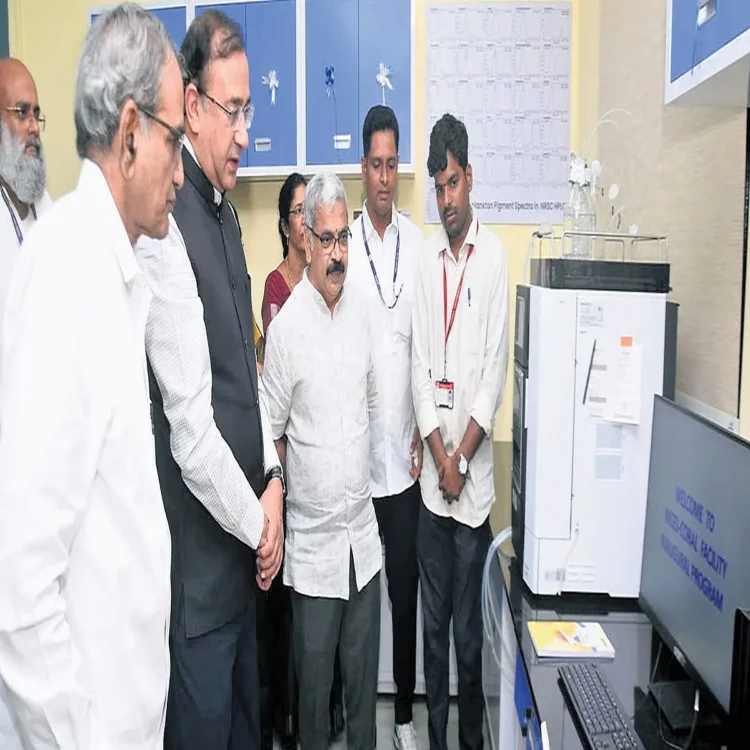
Facility inaugurated with participation of scientists and academics
The laboratory was formally inaugurated on Friday by NRSC Director Prakash Chauhan. The event was attended by Andhra University Vice-Chancellor GP Raja Sekhar, senior scientists, faculty members, researchers, and students. The inauguration marks the beginning of a long-term collaboration aimed at expanding scientific knowledge related to the Bay of Bengal and strengthening India’s coastal research capabilities.
The facility has been established under the National Information System for Climate and Environmental Studies (NICES), an initiative of NRSC. As part of the programme, the NICES-CORAL project has received financial support of approximately Rs 1.6 crore for a three-year period. In addition, sophisticated scientific instruments valued at nearly Rs 12 crore have been installed to facilitate advanced marine and environmental research.
Advanced instruments to support marine ecosystem studies
The newly established laboratory is equipped with a wide range of high-precision analytical systems, including High Performance Liquid Chromatography (HPLC), FTIR Spectrophotometer, Dual Beam UV-VIS Spectrophotometer, Flow Cytometer, Nutrient Auto Analyser, pCO₂ Sensor, Coulometer, Sun Photometer, Ozonometer, and a Water Purification System.
These instruments will allow researchers to examine several critical indicators of marine health, including dissolved inorganic carbon, plankton populations, nutrient concentrations, dissolved oxygen levels, and overall water quality. The data generated through these studies will contribute to a better understanding of ecological changes affecting coastal waters and marine biodiversity.
Strategic location offers unique research opportunities
During the inaugural programme, Prakash Chauhan explained that Visakhapatnam was selected as the location for the laboratory because of its geographical importance along the western Bay of Bengal. The coastal region is shaped by the influence of the Godavari, Krishna, and Mahanadi river systems, while also experiencing considerable monsoon variability and frequent cyclonic activity.
He noted that the area has been witnessing noticeable changes in coastal ecosystems and carbon cycling. At the same time, it continues to play a vital role in fisheries, aquaculture, and marine-based economic activities, making it an ideal location for long-term scientific observations.
Research cruises to generate valuable ocean data
The project also includes regular scientific expeditions across selected sections of the Bay of Bengal. These research cruises will gather detailed oceanographic information to help scientists study interactions between the ocean and atmosphere, land-sea processes, and their influence on marine ecosystems.
According to Chauhan, combining satellite-based observations with field measurements collected during these missions will strengthen scientific understanding of coastal processes, marine biodiversity, and fisheries resources. He added that such research infrastructure would also contribute to India’s Blue Economy by providing reliable scientific data for sustainable marine resource management.
Andhra University plans to expand research capabilities
Vice-Chancellor GP Raja Sekhar said Andhra University intends to further develop the Centre for Studies on Bay of Bengal into a nationally recognised research centre. The university plans to enhance laboratory facilities, appoint additional technical experts, and build stronger partnerships with leading scientific organisations.
He also highlighted that the new laboratory would encourage interdisciplinary research involving ocean sciences, engineering, artificial intelligence, and data science, creating broader academic and research opportunities for students and scientists.
Earlier, CSBOB Director BBV Sailaja presented an overview of the centre’s ongoing research programmes and emphasised the importance of the newly established laboratory in advancing marine and climate research across the Bay of Bengal region.