
ColonialArt – Emily Eden’s Indian Portraits Reveal Art, Power and Colonial Perspectives
ColonialArt – Emily Eden’s paintings and writings from 19th-century India offer a unique but deeply colonial perspective on the people and rulers she encountered during her travels.
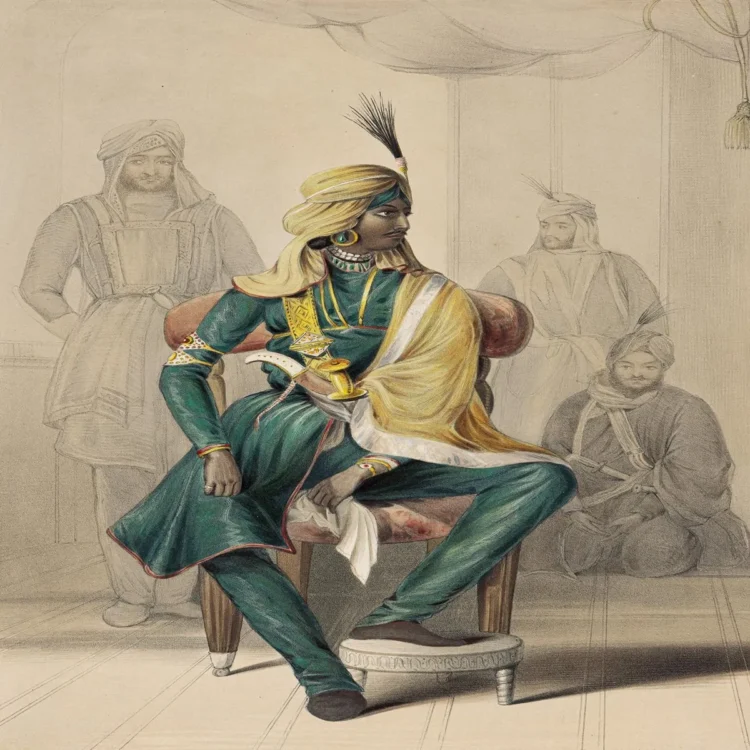
British artist Emily Eden, the sister of Lord Auckland, who served as Governor-General of India between 1836 and 1842, arrived in the country carrying not only her sketchbooks and painting supplies but also the beliefs and attitudes common among many British officials of her era. Her portraits reflected more than artistic interest—they were shaped by the political environment of the East India Company and the priorities of her influential brother. A newly released book, Princes & People of India: Portraits by Emily Eden, published alongside an exhibition at DAG in New Delhi running until August 1, revisits her paintings, letters, and journals while encouraging viewers to examine both their artistic value and their colonial context.
Art Reflecting Colonial Attitudes
Emily Eden’s portraits captured Indian royalty, nobles, and ordinary people, yet her observations often reflected British colonial assumptions. She frequently judged those she met by their wealth, rank, personal behavior, and willingness to engage with British authority. As a result, many of her paintings portrayed the grandeur of Indian courts while also reinforcing ideas that supported colonial narratives about governance and society.
The exhibition does not ignore these historical realities. Instead, it presents Eden as both an adventurous traveler documenting daily life and a keen observer whose personal opinions shaped the way she represented India. Her letters, filled with sharp descriptions and occasional humor, provide another layer to understanding how British visitors viewed the subcontinent during the nineteenth century.
Punjab Occupies a Central Place
A significant section of both the exhibition and the accompanying publication focuses on Punjab and its influential ruler, Maharaja Ranjit Singh. Recognizing that British audiences were especially interested in the Sikh ruler, Eden produced several portraits of him. In her writings, she described his modest personality while also depicting the physical effects of old age.
Among her most memorable works are paintings featuring Ranjit Singh and his prized horses, including one associated with the famous Kohinoor diamond. These artworks now serve as valuable historical records, illustrating the relationship between the Sikh Empire and the British administration during the years leading up to Queen Victoria’s reign and the eventual annexation of Punjab.
Portraits Influenced by Political Interests
Many of Eden’s artistic subjects were individuals whose relationships with the East India Company carried political importance. Her paintings included rulers such as the Raja of Nahan, Afghanistan’s Emir Dost Mohammed Khan and his sons, as well as Sher Singh, who later became ruler of Punjab following the turbulent succession after Ranjit Singh’s death.
Her personal writings reveal that she formed strong opinions about several political figures, sometimes expressing admiration and at other times criticism. These impressions often shifted with changing political circumstances, highlighting how closely her observations were connected to British diplomatic interests rather than remaining purely artistic records.
Paintings That Served as Political Observation
Beyond producing portraits, Emily Eden played an informal yet influential role within the British administration. As the Governor-General’s sister and hostess at official gatherings, she interacted with Indian rulers and their families in settings that were often more relaxed than formal political meetings. These encounters allowed her to observe personalities, household relationships, and court dynamics that official reports might not capture.
Her journals and correspondence became valuable reading for senior British figures, including Queen Victoria. Historians believe these writings offered insights into succession disputes, internal politics, and shifting alliances, particularly during the final years of Maharaja Ranjit Singh’s rule. Along with contemporary Indian accounts such as Sohan Lal Suri’s court chronicle, Eden’s records provide another perspective on a significant period in the history of British-Indian relations.
Lasting Historical and Artistic Legacy
Curator Mary Ann Prior notes that Emily Eden stood apart from many amateur artists of her time because of the consistency and dedication with which she documented her experiences. Rather than focusing on crowded public scenes, she concentrated on carefully composed portraits, paying close attention to textiles, jewelry, turbans, and other details that reflected the appearance of her subjects.
Eden also pursued writing during her years in India, producing the novels The Semi-Detached House and The Semi-Attached Couple. Although the Eden family returned to England after the failure of the First Anglo-Afghan War, her paintings, books, and personal journals remain important historical sources. Today, they offer audiences an opportunity to study not only nineteenth-century India but also the ways colonial art recorded, interpreted, and sometimes distorted the people and events of its time.