
Building Collapse – Delhi Inquiry Holds MCD Accountable for Fatal Saket Tragedy
Building Collapse – A government-ordered magisterial inquiry has placed primary responsibility on the Municipal Corporation of Delhi (MCD) for the fatal building collapse in Saket that claimed six lives on May 30. The report concluded that the incident could have been avoided if timely action had been taken against unauthorized construction and violations of building regulations. It also alleged that official records were manipulated after the disaster in an apparent attempt to conceal administrative failures.
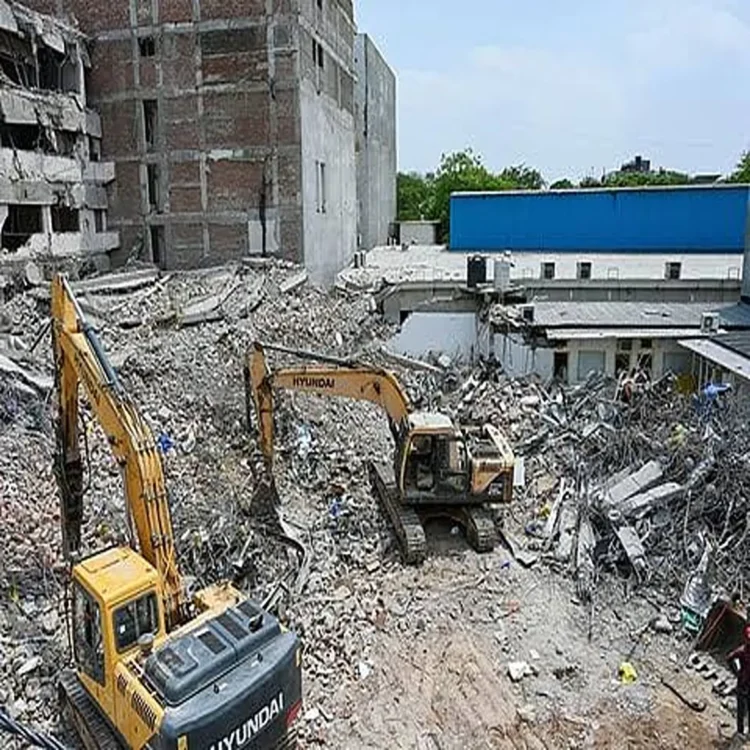
Inquiry Finds Serious Administrative Lapses
The investigation, conducted under the directions of the Delhi government, has been submitted by the South District Magistrate to the Chief Secretary. According to the findings, the civic body failed to enforce existing building bylaws despite receiving advance information about illegal construction activities. The report states that the collapse resulted from unauthorized structural modifications, including the addition of illegal third and fourth floors to the commercial building located near Saket Metro station.
Officials conducting the inquiry concluded that poor oversight and inadequate regulatory enforcement allowed the unsafe structure to remain in use until it eventually gave way.
Earlier Complaint Allegedly Ignored
A key finding of the inquiry is that the MCD did not act on a complaint regarding unauthorized construction that was reportedly received on March 9. Investigators found no evidence of inspections, site verification, demolition proceedings, or preventive measures during the following two months.
The report further observed that the illegal upper floors were formally recorded by the civic body only on May 27, although construction of those floors had reportedly been completed nearly three months before the building collapsed. This delay, according to the inquiry, reflected a significant failure in monitoring and enforcement.
Other Agencies Cleared of Responsibility
The investigation did not find evidence of negligence by other government agencies involved in the case. Both the Delhi Police and the Delhi Jal Board were cleared of direct responsibility for the incident after investigators reviewed their respective roles.
Instead, the report concluded that the primary administrative failures were linked to the municipal authority’s inability to prevent unauthorized construction despite having prior information.
Allegations of Fabricated Official Documents
One of the most serious observations made by the inquiry concerns documents reportedly created after the collapse. Investigators alleged that certain records, including a show-cause notice dated May 27 and a work-stop notice dated May 29, were prepared to create the impression that official action had already been initiated before the tragedy.
The report states that these documents appeared to have been generated to mislead the inquiry and conceal shortcomings in enforcement. Such actions, it noted, raise concerns over accountability within the civic administration.
Technical Explanation Rejected
The inquiry also examined the MCD’s claim that excavation work for an underground water tank contributed to the collapse. However, investigators rejected this explanation, stating that it was not supported by technical evidence or engineering analysis.
According to the report, the theory relied largely on assumptions rather than verified findings. Instead, the inquiry identified unauthorized structural additions and insufficient regulatory supervision as the primary reasons behind the building’s failure.
Recommendations to Improve Building Safety
To reduce the risk of similar incidents in the future, the inquiry has proposed several corrective measures. These include fixing responsibility for both field-level and supervisory officials, conducting mandatory structural safety audits of aging and unauthorized buildings, and ensuring stricter implementation of construction rules.
The report also recommends forming multi-agency inspection teams, introducing GIS-based mapping of vulnerable structures, expanding digital monitoring systems for unsafe buildings, classifying buildings according to risk levels, and taking immediate steps to demolish or evacuate structures found to pose a danger to the public.