
Budget – Delhi Assembly Clears Record Spending Plan Focused on Development
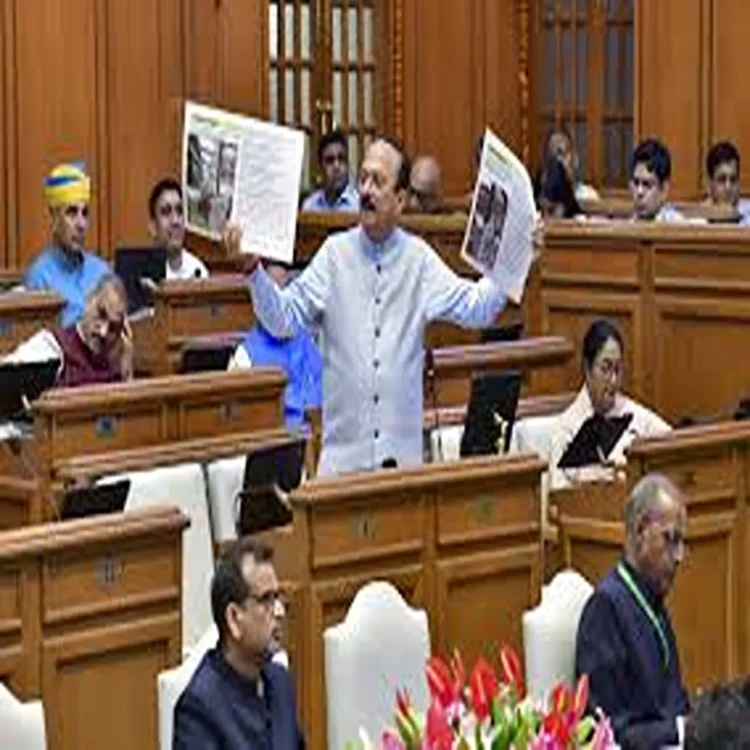
Budget – The Delhi Legislative Assembly on Friday approved the city government’s second Budget, with all members supporting the proposal on the concluding day of the session. Chief Minister Rekha Gupta, who is also in charge of the finance department, described the plan as a shift toward measurable outcomes and efficient delivery of services.
Focus on Results Over Rhetoric
Addressing the House, Gupta said the administration intends to move beyond delays and excuses, placing strong emphasis on execution. She assured lawmakers that incomplete works would be finished, financial transparency would be maintained, and citizens would receive the benefits they are entitled to. According to her, the government aims to replace confrontation with performance-driven governance. She added that Delhi is set to progress at a faster pace and establish a model for other regions.
Record Capital Expenditure Announced
The Chief Minister highlighted that this Budget marks the highest allocation toward capital expenditure in the city’s history. Unlike earlier approaches that leaned heavily on welfare schemes, the current plan is designed to ensure visible improvements on the ground. She noted that infrastructure spending had already been increased in the previous fiscal year and has now been expanded further to accelerate development.
Borrowing Strategy and Fiscal Discipline
Responding to concerns raised during discussions, Gupta clarified that borrowing is not a new practice for Delhi and has been followed for decades. She pointed out that past administrations also relied on loans, often at comparatively higher interest rates. In contrast, she said the current government has maintained financial discipline by borrowing only a small fraction—1.17 percent—of the permitted limit under the Gross State Domestic Product framework. She added that the loans have been secured at one of the lowest interest rates in the country, around 7.4 percent.
Addressing Legacy Debt and Pending Payments
The Chief Minister stated that the government inherited a significant financial burden, with total liabilities exceeding Rs 47,000 crore, including a substantial outstanding amount. She said efforts are underway to clear dues that had remained unpaid for years. These include financial support for sportspersons, welfare schemes for economically weaker sections, scholarships, awards, and initiatives aimed at adolescent girls.
Gupta also raised concerns about irregularities in earlier public works projects. She cited an example where a large payment was reportedly made without corresponding work being completed, calling it a serious lapse that requires accountability.
Financial Challenges in Public Utilities
Highlighting the financial condition of key public services, Gupta noted that the Delhi Transport Corporation is facing losses amounting to nearly Rs 99,000 crore. Similarly, the Delhi Jal Board is also under financial strain, with losses estimated at around Rs 91,000 crore. She indicated that addressing these deficits would be a priority in the coming years.
Infrastructure and Environmental Initiatives
Among the major projects announced, the government plans to construct an elevated road along the Munak canal with an estimated cost of Rs 5,000 crore. The project is expected to reduce traffic congestion in several parts of the city. In addition, expansion of the metro network, promotion of electric vehicles, and extensive road resurfacing have been included in the development agenda.
On the environmental front, Gupta said that 4,200 hectares of ridge land have been officially designated as forest area for the first time. The government has also set a target of planting 3.5 million trees over the next four years to improve green cover.
Administrative Reforms and Public Services
The Budget also outlines steps to simplify administrative procedures. These include streamlining licensing systems, digitising fire safety clearances, and enabling electricity connections in more than 1.5 lakh properties. The government believes these measures will make public services more accessible and efficient for residents.