
Agriculture – ICAR Marks Foundation Day With Strong Focus on Research and Climate Readiness
Agriculture – The Indian Council of Agricultural Research (ICAR) marked its 98th Foundation Day with a renewed focus on strengthening agricultural research, improving farm productivity, and preparing the sector to tackle climate-related challenges. Addressing the gathering, Union Agriculture and Farmers’ Welfare Minister Shivraj Singh Chauhan stressed that scientific efforts should extend beyond genetically modified crops and place equal importance on developing high-yielding non-GM varieties, particularly for pulses.
Greater Focus on Non-GM Crop Research
Speaking at the event, Chauhan said agricultural scientists should accelerate research on non-genetically modified crops alongside ongoing work on genetically modified varieties. He noted that improving the productivity of pulses through advanced non-GM research would help strengthen food security and benefit farmers across the country. According to him, scientific innovation should address practical farming needs while ensuring sustainable agricultural growth.
Government Monitoring Rainfall and Crop Situation
The minister also reviewed the current monsoon conditions, pointing out that the country is experiencing an overall rainfall deficit of around 19 percent. However, he clarified that the impact varies widely between regions. While some districts have recorded rainfall well below normal levels, others have received excess precipitation. To reduce the risk to the ongoing kharif season, district-specific contingency plans have already been prepared and shared with state governments. Nodal officers have been appointed in every state, and the Centre is maintaining regular coordination with them through continuous communication and weekly review meetings.
Fertiliser Supply Remains Stable
Referring to the ongoing tensions in West Asia, Chauhan assured farmers that fertiliser availability remains unaffected. He said the government is keeping a close watch on the situation and that there is no shortage of fertilisers for agricultural activities despite international uncertainties.
New Crop Varieties and Technologies Unveiled
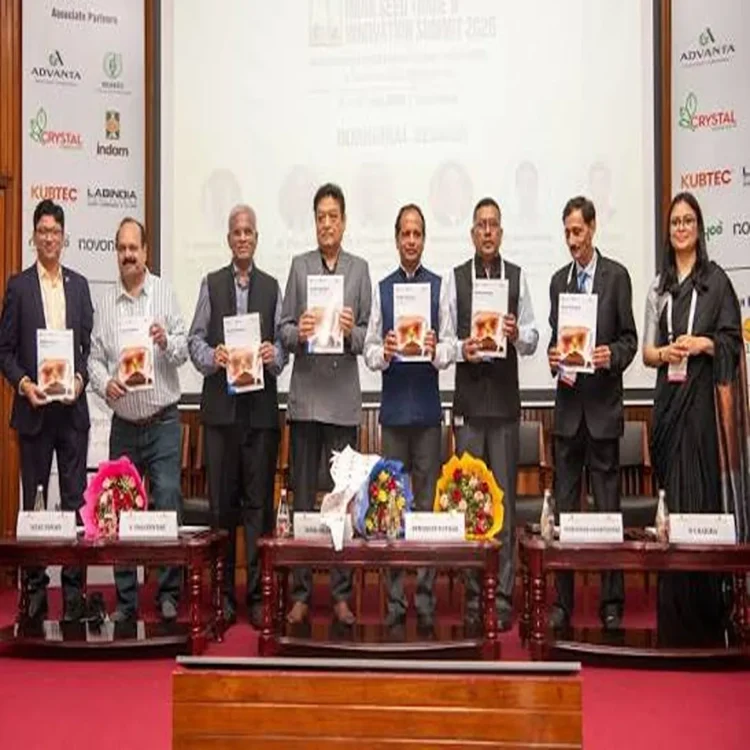
The Foundation Day celebrations also featured the release of 43 improved crop varieties, 17 advanced agricultural technologies, and 14 scientific publications. Among the notable innovations introduced were improved Basmati rice, climate-resilient rice varieties capable of growing in saline and alkaline soils, export-oriented mango production technology, India’s first indigenous vaccine against African Swine Fever, a Digital Swine Disease Atlas, and an affordable cassava harvesting machine designed for small and marginal farmers.
Mission ICAR 100 Targets Scientific Innovation
With ICAR set to complete 100 years in two years, the government has announced Mission ICAR 100, a nationwide programme aimed at launching 100 major initiatives before the centenary celebrations. As part of the mission, the “100 Young Scientists Grand Challenge” will encourage researchers to develop innovative solutions in areas including artificial intelligence, robotics, gene editing, climate-smart agriculture, and smart farming technologies.
The minister also announced the “One Institute, One Grand Innovation” initiative, under which every ICAR institute will work on developing at least one transformative technology over the next two years. In addition, each institute will adopt one aspirational district to strengthen technology outreach. Chauhan said the long-term objective is to ensure that by ICAR’s 100th Foundation Day, scientific innovations developed by the organisation reach nearly 100 million farmers across the country.
Strengthening Technology Transfer to Farmers
Union Minister Rajiv Ranjan Singh, who oversees Fisheries, Animal Husbandry and Dairying as well as Panchayati Raj, highlighted the importance of expanding the reach of agricultural research through the Krishi Vigyan Kendra (KVK) network. He said faster transfer of scientific knowledge and technologies from research institutions to farmers, livestock rearers, and fishers would significantly improve productivity and rural livelihoods.
ICAR Highlights Economic Contribution
Dr. M. L. Jat, Secretary of the Department of Agricultural Research and Education (DARE) and Director General of ICAR, presented the organisation’s achievements during 2025-26 while outlining its future roadmap for research, education, innovation, and agricultural extension. He stated that higher production across crops, horticulture, livestock, and fisheries generated an estimated additional economic value of nearly Rs 1.70 lakh crore during the year. Of this, agricultural research alone contributed around Rs 55,000 crore, reflecting the substantial economic benefits generated through sustained investment in agricultural science.