
Rubio: promises stricter scrutiny and justifies visa restrictions
Rubio: In a forceful defense of the Trump administration’s stricter visa and refugee regulations, US Secretary of State Marco Rubio stated that the US has a duty to understand “who you are, why you’re coming, and what you’ve done in the past.” These statements are likely to strike a deep chord with India’s sizable student and skilled worker populations.
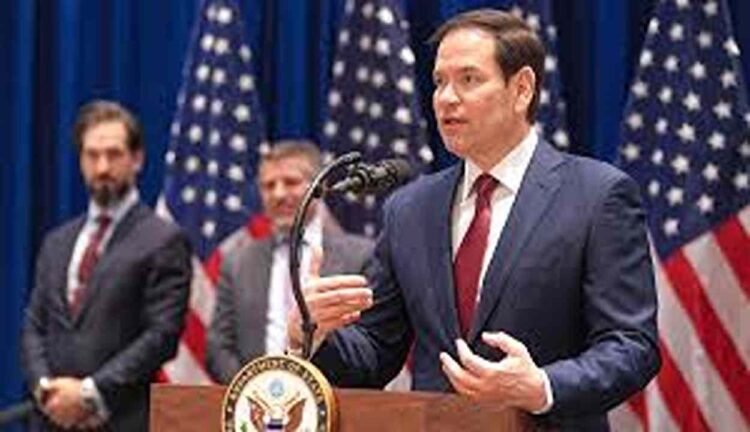
Rubio stressed that visas are a privilege, not a right, and must be in line with US national security objectives at a comprehensive press conference, claiming that the government had refused or canceled tens of thousands of visas in the last year.
Rubio said that the legislation gives the US government “the right, and in fact the obligation” to cancel visas for those who participate in activities that are against US interests. He added that “our visa system… should reflect the national interest.”
According to Rubio, between 60,000 and 70,000 visas have been cancelled or rejected “for different and a variety of reasons,” including situations involving applicants seeking readmission as well as those involving those who are already in the United States. According to him, those impacted were tourists or researchers, while others were students.
He said, “If you have the authority to deny someone a visa before they get one, you most definitely have the authority to revoke it once they get one and then do something they shouldn’t be doing.”
The secretary vehemently denied claims that the program is punitive, stating that security and legal issues, not political considerations, are the reasons for visa revocations.
According to Rubio, “who you allow to visit your country should reflect the national interest.” “A visitor is a visa. It’s not a privilege.
Citing years of insufficient screening that let millions of people to enter the US, Rubio further supported the administration’s decision to stop or restrict refugee admissions, especially for religious minorities.
He said that in some instances, applicants came from locations without trustworthy records. “We know for a fact that there are people in this country who got in through some form of vetting that was wholly insufficient,” he said.
In terms of legal immigration, he claimed that the US is still “the most generous country in the world,” pointing out that around a million individuals would be granted green cards this year. However, he cautioned that the days of “reckless migratory incompetence” are passed.
“Our nation wants to halt that until we can improve the procedures,” Rubio said.
Rubio said that the administration is working on solutions to address the backlog of visas for foreign religious workers, including priests, and anticipates making an announcement “early next month” after discussions with religious leaders.
Regarding student and diversity-based visa programs, Rubio said that the purpose of recent suspensions was to look for systematic problems in the screening processes.
He said, “You suspend the program to determine whether something… should have been a red flag but wasn’t identified.”
Rubio’s comments coincide with an increase in fear among Indian professionals and students, who make up one of the biggest groups of people with US visas, especially in the fields of higher education and skilled work.
His focus on post-entry inspection and revocation power indicates a move toward tougher enforcement that may have an impact on both new applicants and US citizens. Rubio said that the strategy complies with international standards and sovereignty.
Rubio said that several nations have immigration laws that are “far more restrictive” than those of the US, adding that “we have a right, like every sovereign country does, to know who you are.”
The remarks support the Trump administration’s overarching message that national interest, security screening, and enforcement will be the primary governing factors for immigration and visas. In India, where US education, employment permits, and permanent residence are still highly desired, this position is certain to provoke heated discussion.