
IranStrikes – Explosions Reported Across Iran as US Continues Overnight Military Campaign
IranStrikes – Explosions echoed across several Iranian provinces late Friday after the United States announced another phase of military operations targeting Iranian defense infrastructure, marking the seventh straight night of strikes.
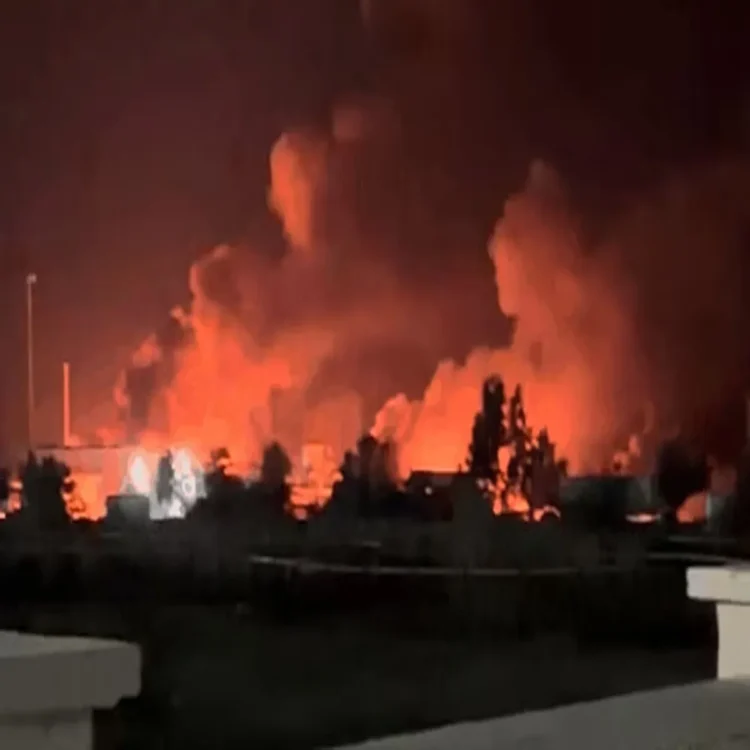
Residents in different parts of Iran reported hearing multiple explosions as tensions between Washington and Tehran continued to escalate. Iranian media outlets said the blasts occurred in several regions, though officials had not immediately released confirmed information about casualties, the intended targets, or the extent of the destruction.
Blasts Reported in Multiple Provinces
According to Iran’s semi-official Mehr News Agency, explosions were heard in Bushehr province as well as in Sirik and Qeshm counties located in Hormozgan province. Authorities did not provide additional details about the incidents, and emergency assessments were still underway.
Separately, the state-run IRNA news agency reported that at least five explosions were heard in the central province of Yazd. As of Friday night, there had been no official confirmation regarding damage to infrastructure or possible injuries resulting from the reported blasts.
US Military Announces Fresh Operations
Shortly after reports of the explosions emerged, the US Central Command (CENTCOM) confirmed through a statement on the social media platform X that American forces had launched another series of strikes against Iranian military assets.
CENTCOM stated that the latest operation was intended to further reduce Iran’s military capabilities and formed part of an ongoing campaign that has continued for seven consecutive nights. The command maintained that the strikes were focused on degrading military infrastructure considered relevant to ongoing regional security concerns.
Earlier Precision Strikes Targeted Military Facilities
The latest announcement followed operations carried out a day earlier in which US forces reportedly used fighter aircraft, drones, and naval assets to conduct precision attacks on dozens of Iranian military locations.
According to CENTCOM, those strikes targeted coastal surveillance systems, air defense positions, logistics facilities, and maritime infrastructure. One of the key locations identified by the US military was the surveillance tower at Shahid Kalantari Port in Chabahar, situated along Iran’s Gulf of Oman coastline.
US officials said the facility was part of a broader maritime monitoring network allegedly used by Iran’s Islamic Revolutionary Guard Corps to observe and track commercial shipping passing through the Strait of Hormuz, one of the world’s most strategically important waterways.
Iran Claims Retaliatory Action
Iran’s Islamic Revolutionary Guard Corps (IRGC) responded by announcing that it had carried out retaliatory operations earlier on Friday. In a statement released through its official outlet, Sepah News, the IRGC claimed its forces struck a facility in Bahrain that housed US unmanned surface vessels.
The statement further asserted that a significant number of those vessels had been destroyed during the operation. The IRGC also claimed it targeted what it described as the primary artificial intelligence center used by the United States in Bahrain for military targeting operations, saying the installation had been completely destroyed. These claims have not been independently verified.
Drone Reportedly Shot Down
In a separate announcement, the IRGC said its air defense units intercepted and brought down an AeroVironment RQ-11 Raven reconnaissance drone over Ramshir County in Iran’s southwestern Khuzestan province.
The reported drone interception added another development to an increasingly volatile security situation as both sides continued to exchange military actions and public statements.
Regional Tensions Remain High
The latest military exchanges highlight the continuing deterioration of relations between the United States and Iran. While both countries have issued competing claims regarding recent operations, independent verification of several battlefield assertions remains limited.
With military activity continuing across multiple locations, regional observers are closely monitoring developments for signs of further escalation that could affect security and commercial navigation across the wider Middle East.