
Politics – Shiv Sena Editorial Accuses Centre of Ignoring Sonam Wangchuk Protest
Politics –The Shiv Sena (Uddhav Balasaheb Thackeray) has intensified its criticism of the Union government, alleging that it has failed to respond adequately to the ongoing hunger strike led by climate activist Sonam Wangchuk while overlooking concerns linked to the NEET-UG examination controversy.
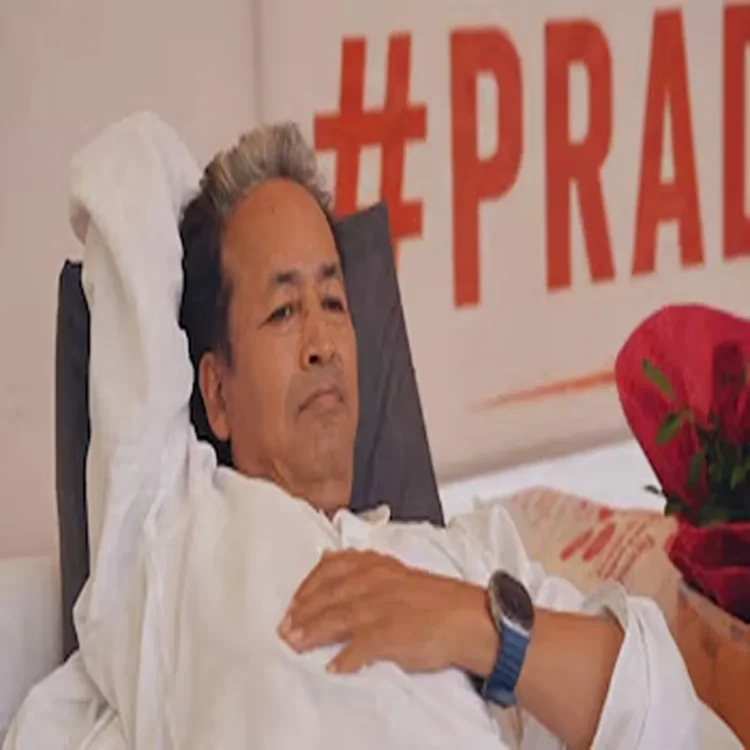
The Uddhav Balasaheb Thackeray-led Shiv Sena on Saturday launched a fresh political attack on the central government through an editorial published in its party newspaper Saamana. The editorial accused the Centre of disregarding noted climate activist Sonam Wangchuk and questioned its handling of issues raised during his ongoing protest at Delhi’s Jantar Mantar. According to the party, Wangchuk and a student identified as Neha have continued their hunger strike for 21 days, demanding the resignation of Union Education Minister Dharmendra Pradhan over the alleged irregularities in the NEET-UG examination paper leak case.
Editorial Backs Wangchuk’s Protest
The editorial described Wangchuk’s campaign as an effort aimed at protecting national interests rather than advancing any political agenda. It said the activist had travelled from Ladakh to the national capital to draw attention to issues that, in the party’s view, deserve wider public discussion. The publication also alleged that large-scale corporate activity in Ladakh is threatening the region’s environmentally sensitive landscape and affecting local tribal communities.
According to the editorial, Wangchuk became a target after voicing concerns about these developments. It argued that raising questions about public issues should not be viewed negatively and maintained that his movement represents broader public interests rather than an individual cause.
BJP Leaders Criticised Over Remarks
The Saamana editorial also criticised comments made by BJP MP Manoj Tiwari regarding Wangchuk. Referring to Tiwari’s reported remarks describing the activist as part of an “Aam Aadmi gang” and an obstacle to India’s progress, the Shiv Sena accused BJP leaders of attempting to damage Wangchuk’s public image.
Responding to those comments, the editorial questioned Tiwari’s criticism and revisited earlier political developments, including the BJP’s participation in the anti-corruption movement led by Anna Hazare at Delhi’s Ramlila Maidan. It argued that political positions have shifted over time and accused the ruling party of adopting inconsistent standards when dealing with public protests and activism.
NEET-UG Issue Highlighted
The editorial placed significant emphasis on the alleged NEET-UG paper leak controversy, claiming the incident has deeply affected students and their families across the country. It stated that the examination dispute has caused widespread emotional stress among candidates preparing for medical admissions.
The publication further alleged that several student suicides have been linked to the distress surrounding the examination process and criticised the government for what it described as an inadequate response to students’ concerns. It also claimed that doctors monitoring Neha’s health have expressed serious concern because of the prolonged fast.
Government’s Response Questioned
Drawing a comparison between the Prime Minister’s international engagements and domestic responsibilities, the editorial argued that the government has failed to show compassion towards Wangchuk’s protest. It criticised the leadership for not directly engaging with the fasting activist despite the prolonged demonstration taking place in the national capital.
The article suggested that a humanitarian gesture from the country’s leadership could have helped address public concerns surrounding the protest, while also accusing the government of remaining indifferent to growing criticism from opposition parties.
Tribute to Wangchuk’s Contributions
The Shiv Sena editorial also highlighted Wangchuk’s contributions beyond environmental activism. It referred to his work in developing solar-powered insulated tents designed for Indian Army personnel deployed in high-altitude regions. According to the party, the technology has helped soldiers remain in challenging weather conditions by maintaining warmer temperatures inside the shelters.
Editorial Ends With Political Warning
In its concluding remarks, the editorial warned that governments should avoid becoming disconnected from public sentiment. It compared political arrogance to examples from history, arguing that excessive confidence has often led to eventual decline. The publication claimed that the Centre’s approach towards Wangchuk’s hunger strike would ultimately be judged by the public and by history.