
Iran Talks – Pezeshkian Stresses Strict Compliance With New US Agreement
Iran Talks – Iranian President Masoud Pezeshkian has emphasized that the future success of the newly signed memorandum of understanding between Iran and the United States will depend entirely on how faithfully both sides carry out the commitments outlined in the agreement.
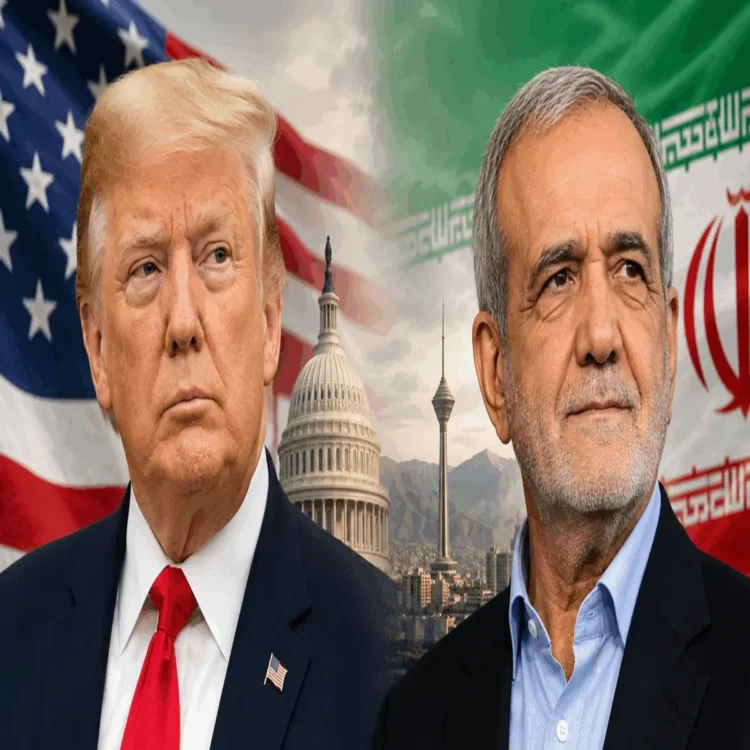
Following the conclusion of negotiations in Switzerland, Pezeshkian stated on Tuesday that meaningful progress can only be achieved through practical implementation rather than public statements that fall outside the agreed framework. In a message shared on social media, he noted that adherence to accepted responsibilities would be the key measure of success as both countries move into the next phase of engagement.
Focus on Implementing Agreed Commitments
The Iranian president’s remarks highlighted Tehran’s position that the agreement should be judged by concrete actions. He stressed that all parties involved must remain committed to the terms already accepted during negotiations and avoid comments that could complicate the diplomatic process.
The memorandum of understanding was finalized after discussions in Switzerland, with the official joint statement released a day after the talks concluded. The agreement is expected to serve as the foundation for future discussions between Tehran and Washington while establishing mechanisms for monitoring progress.
Netanyahu Reaffirms Security Position
Pezeshkian’s comments came shortly after US President Donald Trump expressed confidence that ongoing regional issues could be addressed quickly through discussions with Israeli Prime Minister Benjamin Netanyahu.
However, Netanyahu maintained a firm position regarding Israeli military deployments in southern Lebanon. The Israeli leader reiterated that the Israeli Defence Forces would continue operating in the designated security zone, arguing that national security considerations remain a priority regardless of developments in diplomatic negotiations.
He also repeated Israel’s long-standing stance on Iran’s nuclear program, stating that his government would not permit Tehran to acquire nuclear weapons. Netanyahu said Israel would continue taking necessary measures to protect its citizens and national interests.
Next Round of Talks Takes Shape
Iranian Deputy Foreign Minister Kazem Gharibabadi provided additional details about the upcoming stage of negotiations. According to Iranian media reports, future meetings are expected to include several senior regional and international figures.
Among those expected to participate are Iran’s Parliament Speaker Mohammad Bagher Ghalibaf, Foreign Minister Abbas Araghchi, US Vice President JD Vance, Pakistan Prime Minister Shehbaz Sharif, and Qatar Prime Minister Mohammed bin Abdulrahman Al Thani.
Gharibabadi said the participants would focus on implementing the agreement and advancing discussions on key political and economic issues.
Four Working Groups to Oversee Agreement
To support implementation, officials have agreed to establish four specialized working groups. These bodies will focus on sanctions relief, nuclear-related matters, reconstruction and economic development, and compliance monitoring.
According to Gharibabadi, the structure is intended to create a clear framework for carrying out the commitments outlined in the memorandum while ensuring accountability from all sides involved.
He also said that a conflict-prevention mechanism would be established in Lebanon with the participation of member countries, Pakistan, and Qatar as part of broader regional security efforts.
Financial Measures and Strait of Hormuz Remarks
Gharibabadi further stated that the release of USD 12 billion, divided into two separate tranches of USD 6 billion each, would move directly into the implementation stage under the agreement.
Meanwhile, Iranian Parliament Speaker Mohammad Bagher Ghalibaf made comments regarding the Strait of Hormuz, one of the world’s most strategically important maritime routes. Speaking after returning from Switzerland, he said Iran would continue administering the waterway while respecting international regulations.
Ghalibaf argued that conditions surrounding the strait would not return to their pre-conflict status and claimed that Iran demonstrated significant influence during recent negotiations. He maintained that Tehran played an important role in shaping the outcomes reached during the talks and would continue to exercise oversight of the strategic passage in accordance with international rules.