
EnergyMarket – Australian Households Set for Lower Electricity Bills From July
EnergyMarket – Australian households and small businesses in several regions are expected to receive relief from electricity costs starting July 1 after the country’s energy regulator confirmed reductions in regulated power prices. The decision comes as lower wholesale electricity costs and rising renewable energy generation continue to reshape Australia’s energy market.
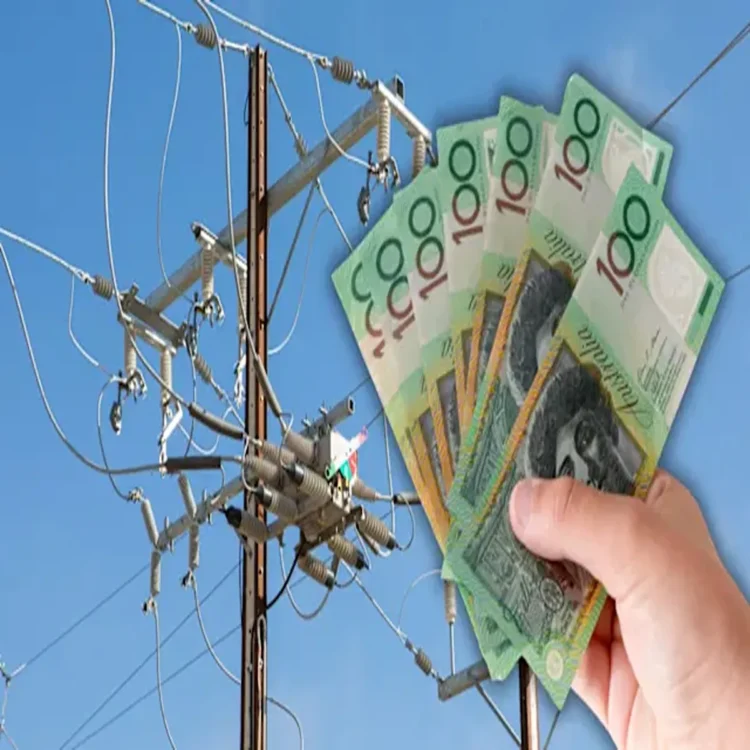
Regulator Announces New Electricity Pricing Changes
The Australian Energy Regulator (AER) released its final Default Market Offer for the 2026–27 financial year, outlining changes to electricity prices for consumers on standard retail plans. According to the regulator, residential customers in New South Wales will see electricity prices fall between 3.4 percent and 5 percent. In Queensland’s southeast region, prices are set to decrease by 7.2 percent.
However, South Australian households are expected to experience a modest increase of around 1.4 percent in electricity charges.
The Default Market Offer acts as a benchmark price for electricity plans and serves as a safety net for households and small businesses that remain on standing contracts with retailers.
Small Businesses Also Expected to Benefit
The regulator stated that small businesses across New South Wales, Queensland, and South Australia would also receive reductions in electricity prices. Officials said the lower rates reflect improving conditions across the power sector, including reduced wholesale market pressure.
Although some parts of the country, including Western Australia, Tasmania, the Northern Territory, and regional Queensland, operate under different pricing arrangements, the Default Market Offer continues to influence broader electricity pricing trends nationwide.
Renewable Energy Linked to Falling Costs
Australia’s Minister for Climate Change and Energy, Chris Bowen, said the easing electricity prices coincide with a major shift in the country’s energy generation mix. He noted that Australia’s main electricity grids crossed the 50 percent renewable generation mark in late 2025, helping lower wholesale electricity prices.
According to Bowen, the growing contribution from renewable sources such as solar and wind energy, along with battery storage systems, has reduced dependence on ageing coal-fired power stations. He said these developments are gradually translating into lower electricity bills for consumers.
The government has continued to promote renewable energy investment as part of its long-term strategy to stabilise energy supply and reduce overall power costs.
Lower Wholesale Costs Support Price Reductions
AER Chair Clare Savage explained that declining wholesale electricity prices played a major role in the new pricing outcomes. She said lower spot market volatility and stronger renewable energy production helped ease pressure across the electricity sector.
Savage added that increased generation from wind farms and battery storage facilities contributed to improved market stability during the past year. She also noted that wholesale electricity prices softened despite global uncertainty linked to tensions in the Middle East.
Energy analysts have observed that renewable energy sources are becoming increasingly influential in Australia’s electricity market, especially during periods of high daytime solar generation.
New Solar Initiative Introduced for Consumers
Alongside the pricing update, the regulator announced a new initiative designed to encourage better use of renewable electricity during peak solar production hours.
Under the new “solar sharer offer,” electricity retailers will be required to provide optional plans that include three hours of free electricity during midday. The offer will be available to customers with smart meters installed at their properties.
The initiative aims to encourage households to use more electricity during times when solar generation is strongest, helping balance demand across the grid while improving efficiency in the energy system.
Officials believe the program could help consumers reduce overall energy expenses while supporting greater integration of renewable power into Australia’s electricity network.