
Earthquake – Nepal Records Morning Quake as Seismic Activity Draws Global Attention
Earthquake – Seismic activity updates and earthquake preparedness matter worldwide – A mild earthquake was recorded in Nepal early on Thursday morning, while significant seismic events reported in Japan and Venezuela highlighted continued global concerns over earthquake preparedness and disaster response.
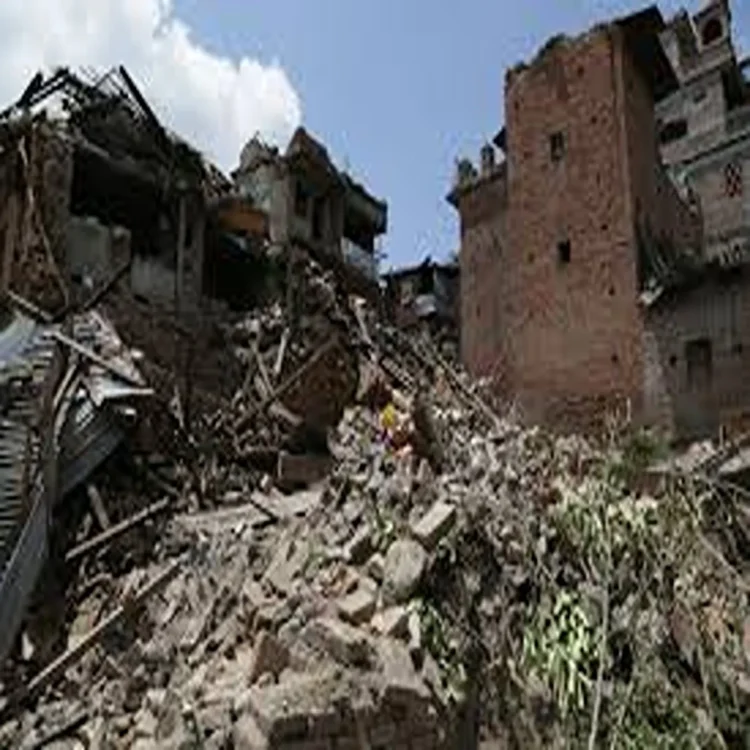
The National Centre of Seismology (NCS) reported that a magnitude 3.8 earthquake struck Nepal at 5:21 AM IST on Thursday. According to the agency, the tremor originated at a depth of 25 kilometres beneath the surface. The recorded coordinates placed the epicentre at latitude 28.762° North and longitude 81.918° East. No immediate reports of casualties or major property damage were available following the earthquake.
Why Earthquake Depth Matters
Experts explain that the depth of an earthquake plays an important role in determining its impact. Earthquakes occurring closer to the Earth’s surface often produce stronger shaking because seismic waves have a shorter distance to travel before reaching populated areas. As a result, shallow earthquakes have a greater potential to affect buildings, roads, and other infrastructure compared to deeper seismic events of similar magnitude.
According to information published by the United States Geological Survey (USGS), earthquakes are generally classified into three depth categories. Those occurring between 0 and 70 kilometres are considered shallow, events between 70 and 300 kilometres fall into the intermediate category, while earthquakes between 300 and 700 kilometres are classified as deep. Seismic events deeper than 70 kilometres are commonly referred to as deep-focus earthquakes.
Japan Issues Safety Advisory After Strong Tremor
Elsewhere in Asia, Japan also experienced strong ground shaking on Thursday morning. The earthquake originated off the coast of Iwate Prefecture, with the highest seismic intensity measured at 6-upper in Hashikami Town of Aomori Prefecture.
Japanese Prime Minister Sanae Takaichi urged residents in the affected regions to remain cautious and continue monitoring official advisories. She instructed government ministries and disaster management agencies to provide timely information regarding evacuation measures and damage assessments. Authorities also confirmed that the earthquake did not pose any tsunami threat.
The Prime Minister further stated that emergency officials would continue gathering detailed reports while overseeing disaster response efforts. Citizens living in areas that experienced severe shaking were advised to remain alert in case of additional earthquakes of similar intensity.
Venezuela Experiences Powerful Back-to-Back Earthquakes
Meanwhile, South America also witnessed significant seismic activity as two powerful earthquakes struck the same region near Venezuela’s capital, Caracas, on Wednesday evening. According to the USGS, the first earthquake measured magnitude 7.2 and occurred near San Felipe, approximately 284 kilometres west of Caracas.
Preliminary assessments indicated that the earthquakes caused severe structural damage, including the collapse of several buildings. Initial estimates suggested that the human impact could be extensive, although authorities were continuing rescue operations and damage assessments. Emergency agencies remained engaged in evaluating the full extent of losses as more information became available.
Global Focus on Preparedness
The series of earthquakes reported across Nepal, Japan, and Venezuela within a short period serves as another reminder of the importance of effective disaster preparedness, resilient infrastructure, and timely public communication. While Nepal’s earthquake was relatively minor, the stronger tremors recorded in Japan and Venezuela prompted emergency responses and renewed attention to earthquake readiness in vulnerable regions around the world.