
Diplomacy – G7 Leaders Tackle Ukraine War and Middle East Challenges
Diplomacy – The leaders of the world’s leading industrialized democracies gathered in France on Tuesday for a crucial round of discussions at the G7 Summit, where the ongoing war in Ukraine and rising tensions across the Middle East dominated the agenda. Ukrainian President Volodymyr Zelenskyy attended the meeting as a special guest at the invitation of the French government.
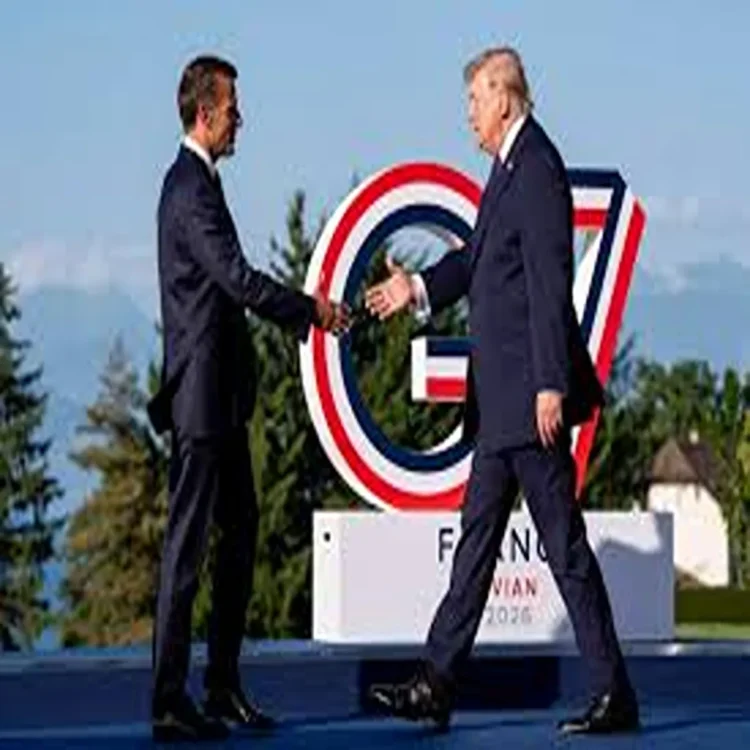
Focus Returns to Ukraine Conflict
The summit’s discussions on Ukraine gained renewed attention following U.S. President Donald Trump’s recent announcement of a deal aimed at ending the conflict between the United States and Iran. Over recent weeks, developments involving Iran had largely shifted global attention away from the war in Ukraine, which began after Russia launched its large-scale invasion in 2022.
Speaking during meetings at the summit, Trump said he had held separate conversations with both Ukrainian President Volodymyr Zelenskyy and Russian President Vladimir Putin. He indicated that efforts to address the Ukraine conflict would receive increased attention now that progress had been made regarding tensions with Iran.
France Pushes for Continued Support
French President Emmanuel Macron emphasized the importance of maintaining international backing for Ukraine. He said he intended to encourage Washington to remain actively involved in supporting Kyiv while also increasing diplomatic pressure on Moscow to advance peace efforts.
The discussions came shortly after a major wave of Russian drone and missile strikes targeted several Ukrainian cities. According to reports, the attacks resulted in multiple fatalities and caused significant damage, including a fire at a religious site.
Macron stressed that any future peace negotiations should include direct participation from both Ukraine and Russia while also involving European and American representatives to ensure broader international support.
Ukraine Advances Toward European Union Membership
Amid the ongoing conflict, Ukraine has taken another significant step toward closer integration with Europe. The country formally began negotiations aimed at securing membership in the European Union, a process expected to require extensive political and institutional reforms over several years.
Ukrainian officials view EU membership as an important element of the country’s long-term stability and post-war security. While Kyiv has repeatedly expressed interest in joining NATO, that objective remains uncertain due to concerns among some allies and opposition from the current U.S. administration.
Middle East Stability Also High on Agenda
Alongside discussions on Ukraine, G7 leaders devoted substantial attention to developments in the Middle East. A dedicated session focused on regional stability and preventing further escalation following recent tensions involving Iran.
Leaders from Egypt, Qatar and the United Arab Emirates joined parts of the discussions, highlighting the broader international effort to promote dialogue and maintain regional security.
Recent disagreements between Trump and several European leaders over decisions related to Iran have created diplomatic friction. France, Germany, Italy and the United Kingdom have previously expressed concerns regarding limited consultation before major policy moves connected to the conflict.
Economic Concerns Drive Diplomatic Efforts
Beyond security issues, economic considerations remain a key concern for participating nations. Rising energy costs and disruptions to global shipping routes have increased pressure on governments to stabilize the situation in the Middle East.
One major focus has been the Strait of Hormuz, a critical maritime passage for global oil transportation. Several Western nations have called for swift implementation of recent diplomatic agreements to ensure the safe reopening of tanker traffic through the region.
France and the United Kingdom have supported initiatives aimed at restoring maritime security, while Trump suggested that a large-scale international military presence may not be necessary, though cooperation among allied nations remains welcome.
Packed Schedule for World Leaders
The summit continues with additional meetings involving President Zelenskyy and leaders from partner nations. Trump is also scheduled to hold talks with senior officials from Qatar and the United Arab Emirates before attending cultural events and a formal dinner alongside fellow G7 leaders.
The G7 group consists of France, the United States, Canada, Germany, Italy, Japan and the United Kingdom. Several partner countries, including Brazil, India, Kenya and South Korea, were invited to participate in selected discussions, reflecting the growing importance of international cooperation on global security and economic challenges.