
DefenseAI – US Air Force Signals Major Shift Toward Autonomous Warfare
DefenseAI – The United States Air Force has indicated that autonomous fighter aircraft could eventually surpass human pilots in combat performance, underscoring how rapidly artificial intelligence is reshaping global military strategies.
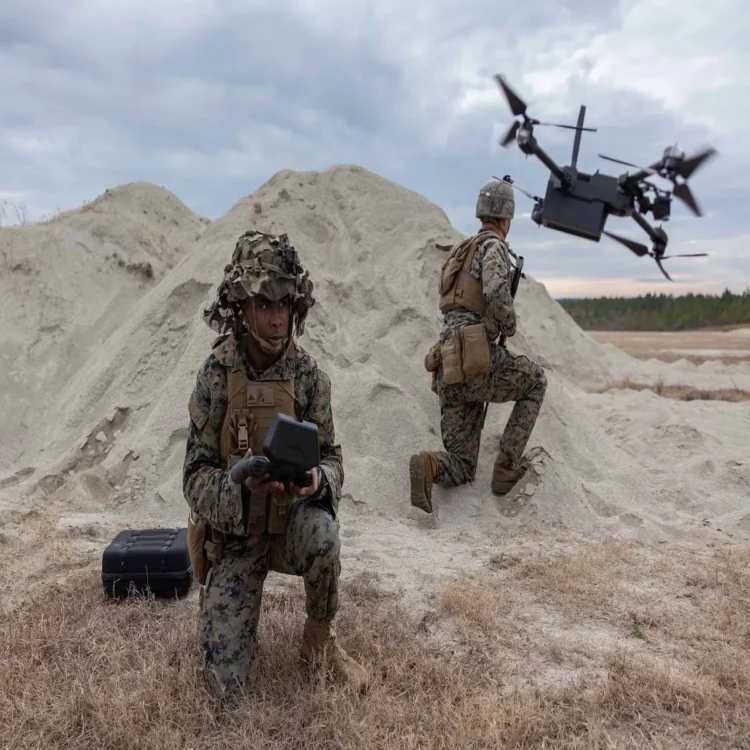
A senior US Air Force commander told American lawmakers this week that future combat scenarios may increasingly rely on autonomous systems rather than traditional manned fighter jets. The remarks came during a Senate Armed Services Subcommittee hearing focused on Air Force modernization and future battlefield readiness.
Pentagon Focuses on AI-Driven Combat Systems
Lieutenant General Christopher Niemi, who is expected to take on the role of the Air Force’s first Chief Modernisation Officer, said military planners are preparing for a future where robotic aircraft play a central role in air warfare.
Speaking during the hearing, Niemi stated that autonomous combat jets may eventually outperform aircraft controlled by human pilots. He warned that failing to keep pace with such developments could place the United States at a strategic disadvantage in future conflicts.
According to Air Force officials, the military is investing heavily in its Collaborative Combat Aircraft programme, an initiative designed to develop unmanned aircraft capable of operating alongside advanced fighter jets including the F-22 and the upcoming F-47 platform.
Autonomous Aircraft Expected to Support Fighter Missions
The new unmanned systems are being developed to handle a variety of combat-related operations. Officials explained that these aircraft could eventually conduct surveillance missions, electronic warfare operations, and precision strike tasks with varying degrees of independence.
Niemi noted that, during the initial stages, autonomous aircraft would remain under the supervision of pilots operating nearby fighter jets. However, he acknowledged that the technology is advancing quickly and may dramatically alter the nature of aerial combat in the coming years.
Military analysts believe these systems will also serve as testing grounds for real-world applications of artificial intelligence in combat situations. The Pentagon sees such projects as essential for maintaining military superiority amid growing global competition in defence technology.
Lawmakers Raise Concerns Over Future War Strategies
During the hearing, several lawmakers questioned whether the US military remains too dependent on expensive high-end fighter aircraft while rival nations invest more aggressively in low-cost drone systems and autonomous weapons.
Senator Richard Blumenthal referred to lessons emerging from the war in Ukraine, where inexpensive drones have become a major part of battlefield operations. He suggested that future conflicts may increasingly favour countries capable of producing large numbers of affordable autonomous systems.
Niemi agreed that future military operations would likely require a balance between sophisticated manned aircraft and scalable unmanned platforms. He emphasized that both advanced technology and mass-produced systems would be necessary to maintain operational effectiveness.
Drone Production and Industrial Capacity Under Scrutiny
Air Force officials also discussed concerns surrounding manufacturing capacity and the speed of military production. The Pentagon is examining ways to build modular unmanned aircraft that can be produced more efficiently and adapted quickly for different combat situations.
Niemi pointed to reports indicating that Ukraine is producing drones at an extraordinary pace, highlighting how rapidly military manufacturing priorities are changing worldwide.
Defence experts say the growing importance of drones and autonomous systems is forcing major military powers to rethink long-term procurement strategies and battlefield planning.
China Competition and Global Defence Partnerships
The hearing also reflected broader American concerns about strategic competition with China. US defence officials believe Beijing is making substantial investments in artificial intelligence, autonomous weapons programmes, and advanced military technologies.
At the same time, allied nations are closely monitoring these developments. India, which has been modernising its defence capabilities and strengthening military cooperation with Washington, is also increasing investments in drones, surveillance systems, and AI-driven technologies.
India has already acquired American MQ-9B drones and continues to expand defence coordination with the United States amid rising security concerns in the Indo-Pacific region.
Military planners across several countries are now studying how artificial intelligence could influence future combat operations, logistics management, and tactical decision-making. Although fully autonomous fighter aircraft are still under development, defence officials believe technological progress in this field is moving significantly faster than many governments predicted just a decade ago.