
ChurchRelations – Archbishop Mullally Meets Pope Leo XIV During Landmark Vatican Visit
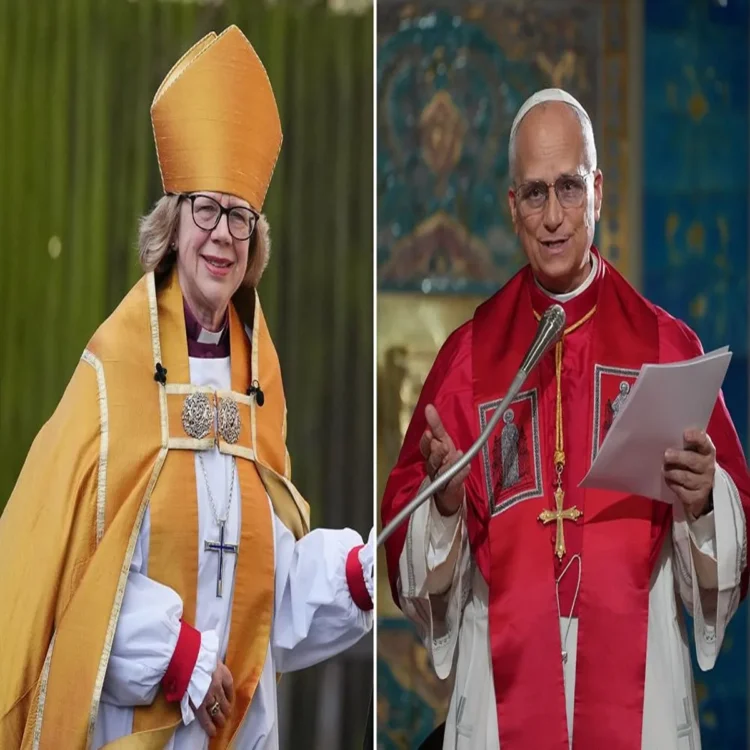
ChurchRelations – The newly installed Archbishop of Canterbury, Sarah Mullally, began her first international visit with a significant meeting at the Vatican on Monday, where she held talks with Pope Leo XIV. The visit marks an important moment for Anglican–Catholic relations, as Mullally steps into her role as the first woman to lead the Church of England and guide millions of Anglicans worldwide.
A Symbolic First Meeting at the Vatican
Mullally arrived early at the Apostolic Palace for a private audience with the pope. The two religious leaders later proceeded to the Urban VIII Chapel, where they shared a quiet moment of prayer, according to official Vatican statements. The meeting is seen as both symbolic and practical, reflecting ongoing efforts to maintain dialogue between the two historic Christian traditions.
Her visit to Rome spans four days and includes stops at major basilicas, where she has spent time in reflection at the tombs of Saints Peter and Paul. She has also engaged with senior Vatican officials as part of a broader effort to strengthen ties.
Strengthening Dialogue Between Churches
According to Lambeth Palace, the purpose of the visit is to deepen engagement between the Anglican and Roman Catholic churches through prayer, personal meetings, and structured theological discussions. The initiative aims to reinforce shared values while encouraging cooperation at both international and community levels.
Relations between the two churches date back centuries but have been marked by division since the Church of England separated from Rome in 1534 under King Henry VIII. Although formal dialogue began in the 1960s, differences remain, particularly regarding the ordination of women and certain social issues.
Ongoing Differences on Key Issues
One of the most significant points of divergence is the role of women in church leadership. The Church of England began ordaining women as priests in 1994 and appointed its first female bishop in 2015. Mullally’s elevation to Archbishop of Canterbury represents another milestone in that progression.
However, the Roman Catholic Church continues to limit priesthood roles to men, reflecting a fundamental theological difference. This issue remains central to discussions between the two traditions.
Internal Divisions Within the Anglican Communion
Mullally’s appointment has not been universally welcomed within the Anglican Communion. The global body, which includes around 100 million members across 165 countries, remains divided on topics such as gender roles and LGBTQ+ inclusion.
While many in the United Kingdom and other Western nations have praised her leadership as a historic step forward, more conservative groups—particularly in parts of Africa—have expressed strong opposition. The Global Anglican Future Conference (Gafcon), representing several rapidly growing churches, has criticized her appointment and raised concerns about doctrinal direction.
In North America, conservative Anglican groups have also distanced themselves from more liberal branches, aligning with Gafcon’s stance.
A Challenging but Important Moment
Prior to their meeting, Pope Leo XIV had sent a message congratulating Mullally on her appointment while acknowledging the complexities of her new role. He noted that relations between the two churches have faced both progress and setbacks over time.
The pope emphasized the importance of continuing dialogue despite differences, referencing past efforts by earlier leaders to bridge gaps. He also highlighted the evolving challenges that have shaped recent discussions between the churches.
Historical Context and Recent Developments
The meeting comes as both churches reflect on decades of ecumenical engagement. This year marks 60 years since the first formal joint statement between Anglican and Catholic leaders, signed in 1966.
More recently, a notable moment occurred when King Charles III and Queen Camilla visited the Vatican and joined in prayer at the Sistine Chapel. That event was widely seen as a gesture of unity, recalling shared spiritual roots despite institutional separation.
Looking Ahead
Mullally has also expressed support for the pope’s emphasis on global peace, aligning with broader humanitarian messages coming from the Vatican. Her visit underscores a continued willingness on both sides to engage in meaningful dialogue, even as doctrinal differences persist.
Observers suggest that while full unity may remain distant, such meetings play a crucial role in fostering understanding and cooperation in an increasingly complex global religious landscape.