
Politics – NDA Leaders Launch Nationwide Protests After Women’s Bill Setback
Politics – The recent failure of the Constitution (131st Amendment) Bill, which aimed to ensure reservation for women in the Lok Sabha and state Assemblies, has triggered political reactions across the country. Leaders from the National Democratic Alliance (NDA) have begun coordinated protests, expressing concern over what they describe as a missed opportunity to strengthen women’s participation in governance.
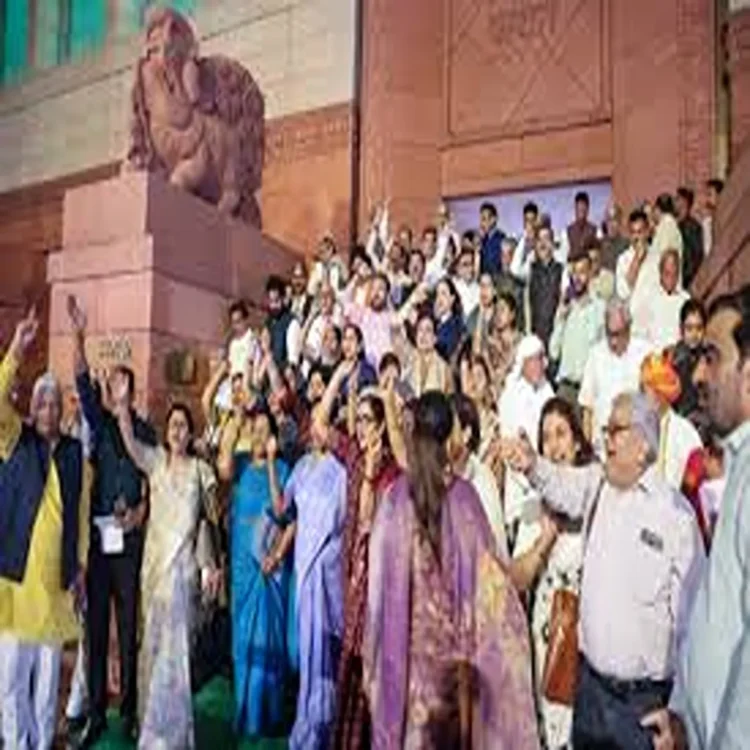
NDA Organises Nationwide Demonstrations
In response to the Bill not securing the required two-thirds majority in the Lok Sabha last week, NDA-affiliated parties initiated protest marches in several regions. These demonstrations are intended to highlight support for women’s reservation and to register dissatisfaction with the outcome of the parliamentary vote.
Maharashtra minister and senior BJP leader Pankaja Munde joined the protests on Tuesday, reinforcing the alliance’s position on the issue. She described the Bill’s rejection as deeply disappointing and said it had sparked widespread reactions from women across the country.
Public Response Reflects Disappointment
Speaking at a press conference, Munde noted that many women had reached out through messages and social media platforms, expressing frustration over the stalled legislation. According to her, this response reflects a growing expectation among women for greater representation in decision-making bodies.
She stated that while women have already secured reservation in local governance institutions, similar opportunities at higher legislative levels remain essential. “Representation must extend to policy-making spaces, including Parliament and state Assemblies,” she said.
Allegations Against Opposition Parties
Munde also criticised several opposition parties, holding them responsible for the Bill’s failure. She accused political groups such as the Congress, Samajwadi Party, DMK, and Trinamool Congress of opposing the measure and thereby blocking progress on women’s empowerment.
She further alleged that some opposition members reacted positively to the Bill’s defeat, a claim that adds to the growing political tension surrounding the issue. According to Munde, such actions may influence public perception, particularly among women voters.
Women’s Reservation Framed as a Right
Emphasising the broader significance of the legislation, Munde said that providing reservation to women should not be viewed as a concession but as a rightful step toward equality. She argued that inclusive representation is necessary for balanced policy-making and long-term social progress.
The minister also addressed concerns raised about the proposed delimitation exercise, calling it a procedural requirement driven by population changes since Independence. She questioned the rationale behind opposing the Bill on such grounds.
NDA Plans Continued Engagement
Following the protests, Munde indicated that the NDA intends to continue engaging with the public on the issue. She highlighted that many women are actively voicing their opinions online, viewing the Bill’s failure as a setback to their aspirations.
The alliance plans to channel this sentiment into a broader movement, encouraging women to participate actively in the democratic process. According to Munde, this could translate into electoral responses in the future.
She added that symbolic actions, including submission of protest memorandums, are being carried out in various locations. These efforts aim to keep the conversation around women’s representation active and visible.
Political Debate Likely to Continue
The developments have added a new dimension to the ongoing political discourse on gender representation in India. While the Bill’s immediate future remains uncertain, the reactions from both ruling and opposition parties suggest that the issue will continue to feature prominently in public and political discussions.
Observers note that the response from women voters could play a significant role in shaping future policy decisions and electoral outcomes.