
Markets – Indian Equity Benchmarks End Week Sharply Lower Amid Global Inflation Concerns
Markets – Indian equity markets ended the week on a weak note as rising global inflation concerns, elevated crude oil prices, and geopolitical uncertainty weighed heavily on investor confidence. Both benchmark indices registered notable weekly losses, reflecting cautious market sentiment amid growing concerns over global economic conditions.
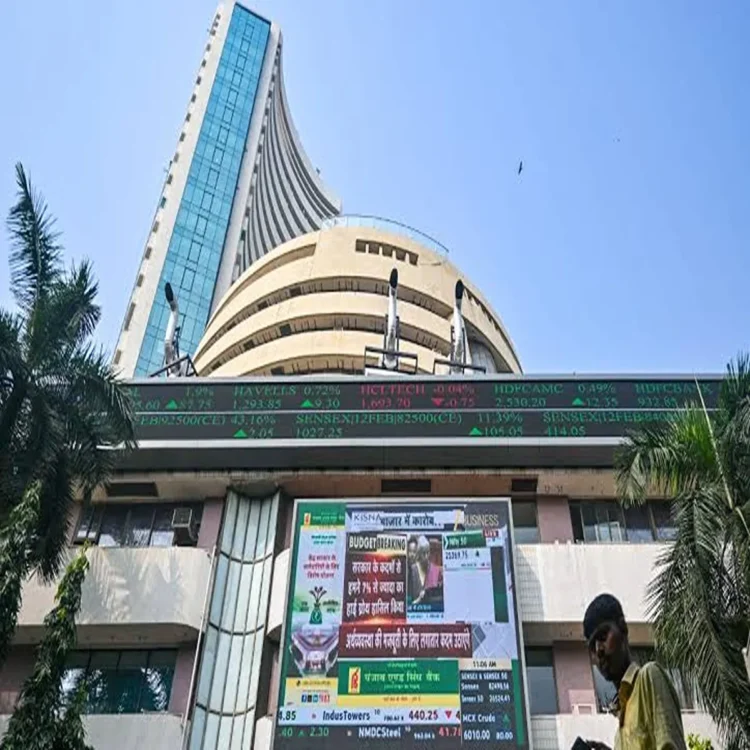
Benchmark Indices Record Weekly Decline
The NSE Nifty 50 slipped 2.33 percent during the week and closed the final trading session at 23,767, down 0.43 percent for the day. The BSE Sensex also ended lower, falling 331 points or 0.43 percent to settle at 76,059. On a weekly basis, the Sensex declined 2.68 percent, highlighting sustained selling pressure across the broader market.
Market experts attributed the decline to a combination of international developments that have raised uncertainty for investors across global financial markets.
Rising Crude Prices Add to Inflation Worries
Analysts said inflation concerns strengthened after renewed tensions in West Asia and disruptions in Red Sea shipping routes pushed international crude oil prices beyond the $100 per barrel mark. The surge in energy prices has increased expectations that central banks may maintain tighter monetary policies for longer.
Higher bond yields in both the United States and India during the week further reinforced expectations that interest rates could remain elevated, affecting overall market sentiment and reducing investor appetite for risk.
Global Factors Weigh on Domestic Sentiment
Investor confidence was also affected by the return of uncertainty surrounding US tariff policies, creating fresh challenges for export-driven industries. Alongside these concerns, continued geopolitical instability in the Middle East and weakness across several Asian equity markets added to the cautious mood in domestic trading.
Fresh economic indicators also contributed to the subdued outlook. The latest Purchasing Managers’ Index (PMI) data for July pointed to slower business activity and softer economic momentum, encouraging investors to adopt a more defensive approach throughout the week.
Large-Cap Stocks Face Strong Selling Pressure
Large-cap companies experienced the sharpest selling as investors reduced exposure to relatively expensive stocks. Although the broader market also declined, heavyweight stocks underperformed compared to several mid-sized companies.
The Nifty Midcap100 index dropped 1.90 percent during the week, while the Nifty Smallcap100 index fell 2.18 percent, indicating that selling pressure extended beyond the benchmark indices.
Sector Performance Remains Mixed
Sector-wise, banking and real estate stocks witnessed significant declines as investors booked profits and reacted to concerns over interest rates and economic growth. In contrast, FMCG and automobile companies managed to outperform the broader market.
Strong quarterly earnings supported buying interest in these sectors, helping them remain relatively resilient despite the overall weakness in equities.
Earnings Recovery Depends on Global Stability
According to market participants, corporate earnings are expected to improve more meaningfully during the second half of FY27. However, that outlook depends largely on crude oil prices stabilising and geopolitical tensions in West Asia easing in the coming months.
Until greater clarity emerges on these factors, analysts believe market volatility could remain elevated.
Key Technical Levels and Upcoming Triggers
Technical analysts expect the Nifty to encounter immediate resistance in the 23,800 to 24,000 range. On the downside, the 23,700 to 23,600 zone is viewed as an important support area that traders will monitor closely.
For the Bank Nifty index, immediate support is seen around 56,000 to 56,100, while resistance is expected near the 56,800 to 56,900 range.
Looking ahead, investors will closely monitor movements in global crude oil prices, monetary policy signals from the US Federal Reserve, inflation readings, GDP growth data, and India’s upcoming Index of Industrial Production (IIP) figures, all of which are expected to influence market direction in the near term.