
Legislation – Opposition Raises Concerns Over Delimitation Link With Women’s Quota Reform
The ongoing debate over electoral reforms has intensified after senior opposition leaders questioned the government’s approach to linking delimitation with changes to the women’s reservation framework. Rashtriya Janata Dal leader and Bihar’s Leader of Opposition, Tejashwi Yadav, has alleged that the two issues are being strategically combined, raising concerns about their broader political implications.
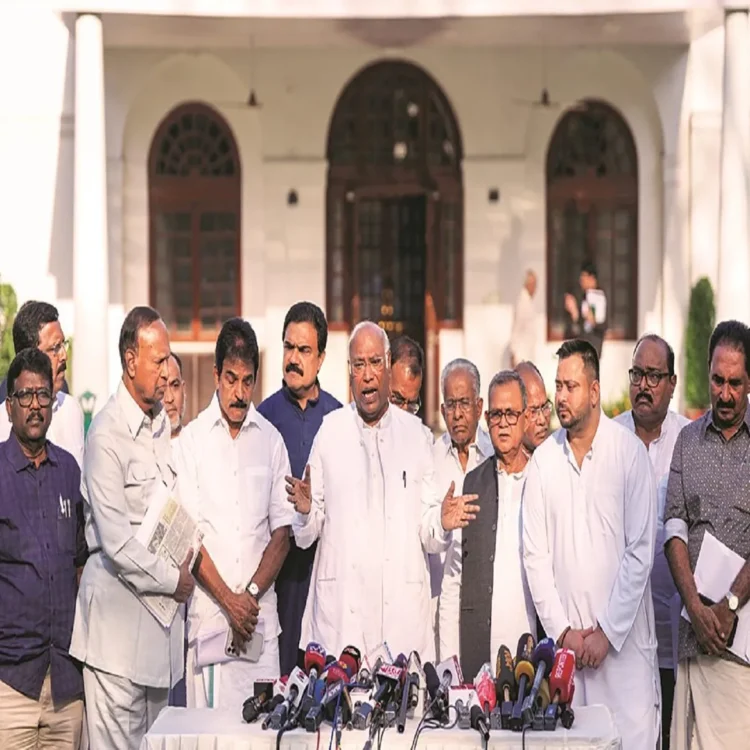
Opposition Questions Timing and Intent
Speaking to reporters, Yadav argued that the introduction of the Delimitation Bill alongside amendments to the women’s reservation law appears deliberate. He maintained that both matters are fundamentally different and should be addressed separately. According to him, the women’s reservation legislation had earlier received unanimous support in Parliament, but the latest developments have shifted focus away from its original intent.
Yadav also pointed out that while there had been demands to extend reservation benefits to include Other Backward Class women, this aspect was not incorporated into the law. He questioned why the implementation of the reservation has been deferred for several years, suggesting that the delay raises doubts about the government’s commitment.
Concerns Over Democratic Framework
The opposition leader further accused the central government of attempting to influence the democratic structure through legislative changes. He expressed apprehension that combining delimitation with reservation amendments could alter political representation in ways that may not reflect equitable distribution.
Yadav stated that such moves could impact constitutional principles and weaken democratic institutions if not carefully examined. He emphasized that opposition parties would continue to resist any measure they believe undermines the balance of representation.
Parliamentary Debate and Voting Outcome
The Lok Sabha recently witnessed an extended session lasting nearly 12 hours to deliberate on the proposed amendments. One of the key aspects of the discussion was removing the requirement to implement women’s reservation only after a national census is conducted.
Following the debate, voting results showed 251 members supporting the proposals, while 185 voted against them, out of a total of 333 participants. With the majority in favor, multiple bills, including a constitutional amendment and the Delimitation Bill, were formally introduced in the House.
Government’s Plan for Early Implementation
The government has indicated its intention to bring women’s reservation into effect before the 2029 general elections. This would involve modifying the earlier law passed in 2023 and introducing further constitutional changes to separate the delimitation process from the census timeline.
Officials have suggested that this approach would expedite implementation and ensure that reservation benefits are not delayed due to procedural requirements. However, critics argue that such changes must be carefully scrutinized to avoid unintended consequences.
Opposition Supports Reservation but Opposes Delimitation
Despite their objections, opposition parties have reiterated their support for the early rollout of women’s reservation. Their primary concern remains the inclusion of delimitation within the same legislative framework.
Leaders across parties have maintained that while increasing representation for women is a positive step, it should not be accompanied by structural changes that could redefine electoral boundaries without wider consensus.
The debate is expected to continue in the coming weeks, with both sides presenting their arguments as the legislative process moves forward. The outcome will likely have a significant impact on the country’s electoral system and representation in future elections.