
WaterQuality – Delhi’s Yamuna Water Quality Shows Mixed Trends in May Pollution Report
WaterQuality – River pollution monitoring and environmental health update – The latest assessment of the Yamuna River in Delhi highlights mixed changes in water quality during May, with some monitoring locations recording lower contamination levels while others continue to reflect serious pollution concerns. The findings suggest that untreated sewage remains a major contributor to the river’s deteriorating condition despite marginal improvements at a few stretches.
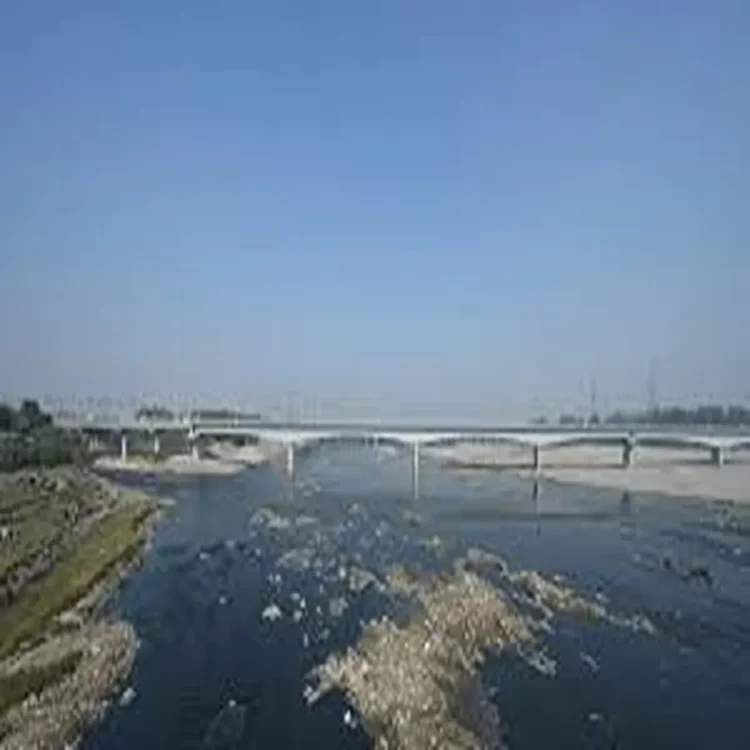
Pollution Indicators Continue to Raise Concern
According to the Delhi Pollution Control Committee (DPCC), the May water quality assessment reveals that faecal coliform concentrations declined at several monitoring stations compared to April. However, the recorded values at most locations still remained significantly above both the desirable standard of 500 MPN per 100 ml and the permissible limit of 2,500 MPN per 100 ml. These figures indicate that contamination from untreated wastewater continues to affect the river across the national capital.
The report also highlights persistently high Biological Oxygen Demand (BOD), an important indicator used to measure organic pollution in water bodies. Elevated BOD levels mean that microorganisms require more dissolved oxygen to decompose organic waste, reducing the oxygen available for fish and other aquatic organisms. Such conditions can disturb the river’s ecological balance and negatively affect aquatic biodiversity.
Water Samples Collected Across Eight Locations
As part of its routine monitoring programme, the DPCC collected water samples from eight locations along the Yamuna’s course through Delhi. These include Palla, Wazirabad, ISBT Bridge, ITO Bridge, Nizamuddin Bridge, Hindon Cut, Okhla Barrage and Asgarpur in Haryana’s Kidwali area.
Scientists evaluated several water quality indicators, including Biological Oxygen Demand, dissolved oxygen, chemical oxygen demand, pH levels and faecal coliform concentration. Together, these parameters provide a comprehensive picture of the river’s pollution status and help authorities assess environmental risks.
Improvement Recorded at Selected Monitoring Points
Five monitoring stations registered modest improvements in faecal coliform levels during May. At the ISBT Bridge, contamination declined from 1,70,000 MPN per 100 ml in April to 1,30,000 MPN per 100 ml. Although this represents a reduction, the reading remains far above accepted environmental standards.
At Palla, faecal coliform levels dropped from 2,800 MPN per 100 ml in April to 2,200 MPN per 100 ml in May. Wazirabad also showed progress, with readings decreasing from 9,200 MPN per 100 ml to 3,500 MPN per 100 ml during the same period.
Similar trends were observed at the ITO Bridge, where contamination reduced from 1,50,000 MPN per 100 ml to 1,20,000 MPN per 100 ml. Meanwhile, the Nizamuddin Bridge recorded an improvement from 1,40,000 MPN per 100 ml in April to 1,10,000 MPN per 100 ml in May.
Pollution Levels Still Exceed Safe Standards
Despite the improvements reported at several locations, the overall findings underline that pollution in the Yamuna remains a significant environmental challenge. Most monitoring points continue to record faecal coliform levels well beyond prescribed limits, pointing to the continued discharge of untreated sewage into the river.
Environmental experts have consistently stressed that long-term improvement will require stronger wastewater treatment infrastructure, better sewage management and sustained monitoring. Until these measures are effectively implemented, the Yamuna is likely to remain under considerable ecological stress, posing risks to both aquatic life and public health.