
Delimitation – Centre Proposes Expanding Lok Sabha Seats to 850
Delimitation – The Union government has introduced a set of draft legislations that could significantly reshape India’s parliamentary structure, including a proposal to increase the strength of the Lok Sabha from 543 to 850 seats. The move is linked to a long-pending delimitation exercise and is expected to play a key role in implementing the one-third reservation for women in Parliament and state assemblies.
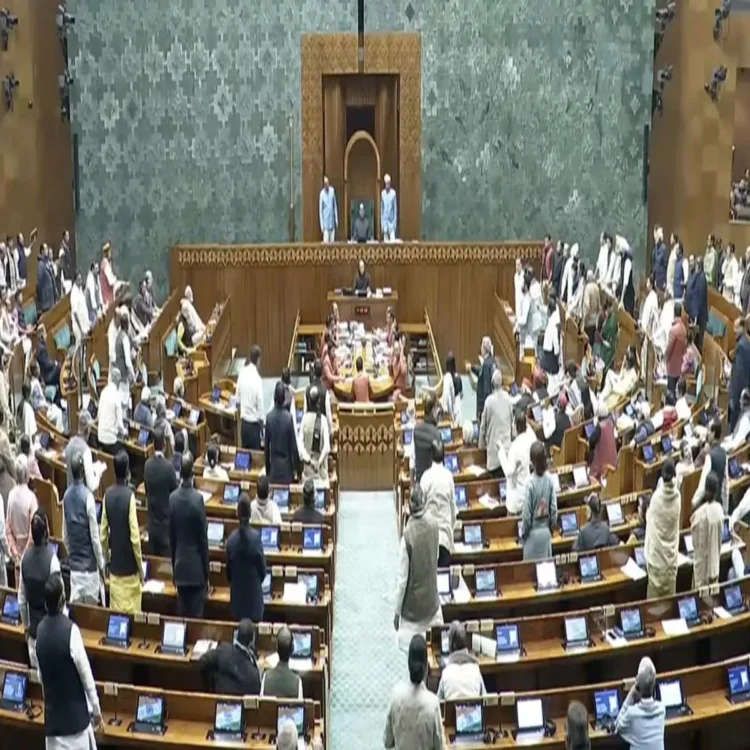
Proposal Details and Seat Distribution
According to the draft framework circulated among Members of Parliament, the proposed expansion would allocate 815 seats to states and up to 35 seats to Union Territories. The plan is tied to a fresh delimitation process, which would redraw constituency boundaries based on population data.
A key feature of the proposal is that the reservation of seats for women—mandated under the recently passed law—would only come into effect after delimitation is completed using the most recent census figures officially published. Additionally, the reserved seats for women would not remain fixed but would rotate across constituencies over time.
Legislative Changes and Constitutional Amendments
The government is set to introduce three bills during the upcoming parliamentary session beginning April 16. These include the Constitution (One Hundred and Thirty-First Amendment) Bill, 2026, the Delimitation Bill, 2026, and the Union Territories Laws (Amendment) Bill, 2026.
One of the major changes proposed is to Article 81 of the Constitution, which currently governs the composition of the Lok Sabha. The amendment seeks to formally increase the maximum number of representatives from states while setting a cap for Union Territory representation.
Another important change involves Article 82, where the draft bill proposes removing the requirement that delimitation must follow the first census after 2026. Instead, Parliament would be empowered to decide which census data should be used for redrawing constituencies.
Background of Delimitation Freeze
The present strength of the Lok Sabha is based on the 1971 Census. A constitutional freeze on delimitation was first introduced through the 42nd Amendment, which halted seat redistribution for 25 years until 2001. This freeze was later extended until 2026, delaying any major restructuring of parliamentary constituencies for decades.
The new proposal marks the first serious step toward revisiting this freeze and adjusting representation in line with demographic changes.
Concerns Raised by Opposition Parties
Opposition leaders have raised concerns over the implications of the proposed changes. Some parties argue that the absence of a clear commitment to proportional seat increases across all states could lead to regional imbalances.
Critics have pointed out that if delimitation is carried out using more recent population data, states in northern India—where population growth has been higher—could gain a larger share of seats. In contrast, southern states, which have seen slower population growth, may experience reduced or stagnant representation.
Leaders from various opposition parties have questioned the timing and intent behind linking women’s reservation to delimitation, suggesting it could influence electoral outcomes in future general elections.
Political Reactions and Next Steps
The Congress party has strongly criticized the proposed framework, alleging that the approach could undermine the balance of parliamentary democracy. Meanwhile, members from other opposition groups have emphasized the need for broader consensus before implementing such structural changes.
An opposition meeting has been scheduled ahead of the parliamentary session to discuss strategy and formulate a unified response to the proposed legislation.
As Parliament prepares to debate these bills, the outcome could have long-term implications for representation, electoral dynamics, and the implementation of gender-based reservations in India’s political system.