
JalJeevanMission – Cabinet Extends Rural Drinking Water Programme Until December 2028
JalJeevanMission – The Union Cabinet on Tuesday approved a major extension of the government’s flagship rural drinking water initiative, ensuring continued implementation of the Jal Jeevan Mission until December 2028. The decision, which significantly increases the financial commitment to the programme, reflects the Centre’s ongoing push to strengthen infrastructure and improve essential public services across the country.
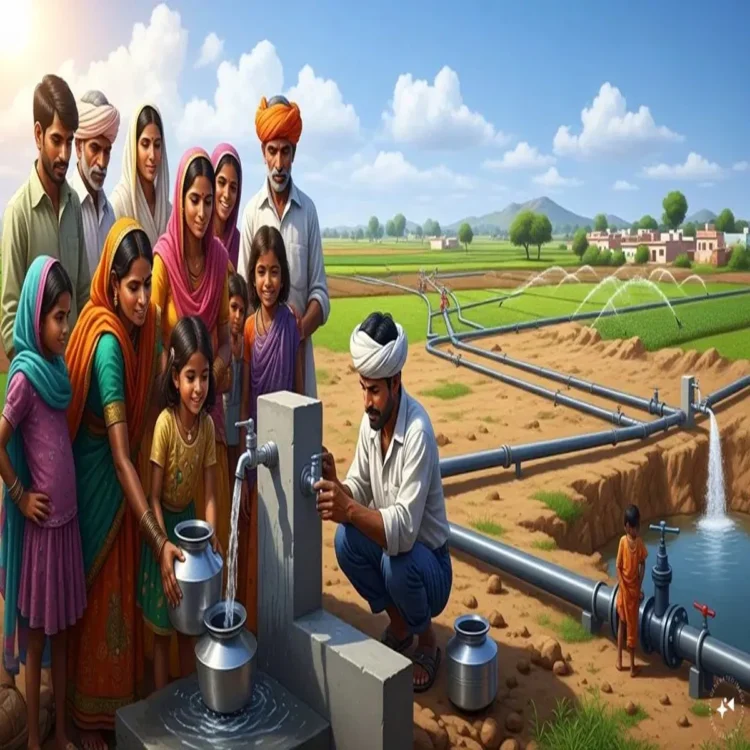
The revised plan raises the overall budget allocation for the mission to nearly Rs 8.7 lakh crore. Officials said the extension will also shift the programme’s focus from merely building infrastructure to ensuring reliable and sustained delivery of safe drinking water to households.
Policy Shift Toward Service Delivery
After the Cabinet meeting and a session of the Cabinet Committee on Economic Affairs, Information and Broadcasting Minister Ashwini Vaishnaw briefed the media about the key decisions taken by the government. According to him, the Jal Shakti Ministry’s proposal to restructure the mission’s implementation has received formal approval.
The minister explained that the earlier phase of the programme concentrated primarily on creating the physical infrastructure needed to bring piped water to rural homes. With many of these systems now established, the government intends to prioritize long-term service delivery, efficiency, and operational sustainability.
Under the revised framework, structural reforms will be introduced to improve monitoring, management, and maintenance of rural water supply networks. The Centre will provide financial assistance amounting to about Rs 3.59 lakh crore as part of the expanded outlay.
Digital Monitoring Through National Framework
A new nationwide digital system, named Sujalam Bharat, will be introduced to support the upgraded approach. This platform aims to digitally track the entire rural drinking water supply chain, from the source of water to the household tap.
Each village across the country will receive a unique identification code called a Sujal Gaon or Service Area ID. This identification system will allow authorities to map water infrastructure, monitor supply systems, and improve accountability in service delivery.
Officials say the digital framework will help administrators quickly identify operational issues such as supply interruptions, maintenance needs, or infrastructure gaps. By using data and real-time monitoring, the government expects to improve the reliability and transparency of rural water supply services.
Madurai Airport to Receive International Status
Alongside the water mission decision, the Union Cabinet also approved a proposal to grant international airport status to Madurai Airport in Tamil Nadu. The move is expected to strengthen connectivity between southern India and global destinations while supporting tourism, trade, and regional economic activity.
The recognition as an international airport will enable expanded flight operations and encourage greater international passenger traffic through the facility.
New Highway Corridor Approved
Infrastructure development also featured prominently in the Cabinet’s decisions. The Cabinet Committee on Economic Affairs cleared the construction of a four-lane highway corridor along the Badnawar–Petlawad–Thandla–Timarwani section of National Highway-752D.
The proposed corridor will cover approximately 80.45 kilometres and will be developed at an estimated capital cost of Rs 3,839.42 crore. According to officials, the project will significantly improve regional road connectivity in Madhya Pradesh.
Once completed, the highway will link Ujjain with the Timarwani interchange on the Delhi–Mumbai Expressway. Authorities expect the corridor to facilitate smoother movement of goods and passengers, reduce travel time, and support economic activity in surrounding areas.
Railway Capacity Expansion Projects
The government also approved two railway expansion projects with a combined investment of about Rs 4,474 crore. These projects include the construction of a fourth railway line on the Sainthia–Pakur route and another fourth line between Santragachi and Kharagpur.
Officials said the additional lines are intended to improve rail traffic management and increase carrying capacity on important routes. With passenger and freight demand rising steadily, the expansion will help reduce congestion and improve operational efficiency within the railway network.
Taken together, the Cabinet’s decisions highlight the government’s continued emphasis on infrastructure development across multiple sectors, including water supply, transportation, and aviation.