
Pentagon – US Warplanes Gain Advantage as Iran Air Defences Weaken
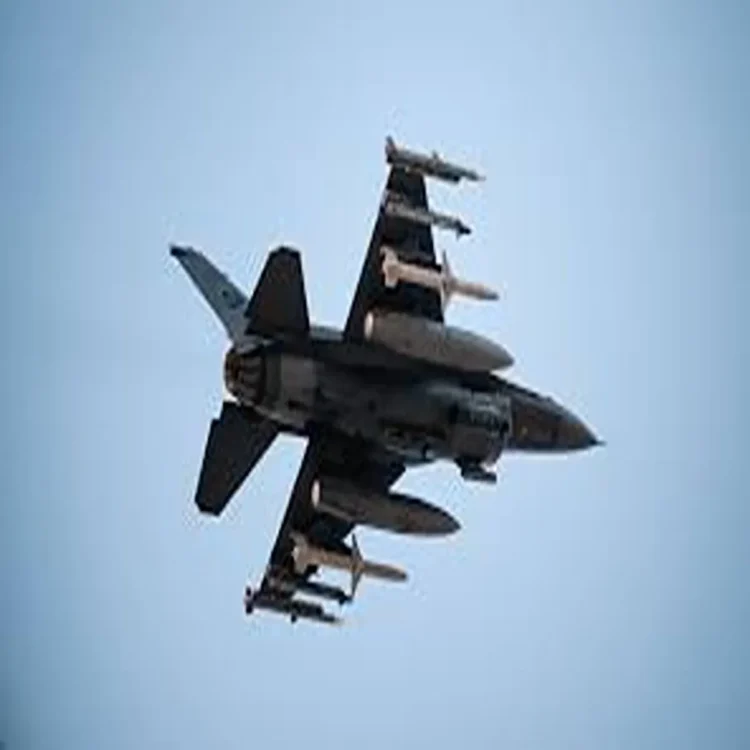
Pentagon – The United States military says its fighter aircraft are now operating far deeper inside Iranian territory after a large portion of Iran’s advanced air defence systems were damaged during the opening phase of Washington’s ongoing military campaign. According to senior Pentagon officials, the weakening of those defensive capabilities has allowed American aircraft to move with considerably fewer obstacles in Iranian airspace.
Air Defence Systems Lose Effectiveness
Chairman of the Joint Chiefs of Staff Gen. Dan Caine told reporters at the Pentagon that many of Iran’s most sophisticated surface-to-air missile systems are no longer presenting a serious threat to American aircraft. He said the change has significantly altered the operational environment for US forces.
During a press briefing alongside Secretary of War Pete Hegseth, Caine explained that US fighters are now able to conduct missions deeper inside Iran with much greater freedom than at the beginning of the operation.
According to him, the majority of Iran’s high-end air defence systems have either been destroyed, disabled, or forced offline after several days of targeted American air strikes. As a result, US aircraft are able to maneuver across wider areas of Iranian airspace while continuing their military objectives.
Thousands of Targets Hit Since Start of Operation
Pentagon officials stated that the campaign, known as Operation Epic Fury, has already involved extensive strikes against Iranian military infrastructure. Caine said American forces have targeted more than 5,000 locations since the operation began.
These strikes have focused on facilities linked to missile launch operations, drone production centers, and other key elements of Iran’s military network. Strategic Command bombers were recently used to attack deeply buried missile launch sites located along Iran’s southern region.
The bombers reportedly deployed dozens of 2,000-pound GPS-guided bunker-penetrating weapons designed to destroy underground launch platforms and storage areas.
Drone Manufacturing Network Targeted
In addition to missile facilities, US forces have also carried out attacks on factories associated with Iran’s unmanned aerial vehicle program. According to Caine, several sites producing one-way attack drones have been struck as part of the effort to weaken Iran’s autonomous weapons capabilities.
Pentagon officials say the impact of these strikes is already visible on the battlefield. The number of missile launches and drone attacks carried out by Iranian forces has fallen significantly since the campaign began.
Caine said ballistic missile attacks have dropped by roughly 90 percent compared with the early stage of the conflict. Meanwhile, the use of one-way attack drones has declined by around 83 percent.
Naval Forces Also Targeted in the Gulf
The US military campaign has not been limited to land-based targets. American forces have also conducted operations aimed at reducing Iran’s naval strength in the Gulf region.
According to the Pentagon, more than 50 Iranian naval vessels have been destroyed since the operation began. These strikes have involved a combination of fighter aircraft, long-range bombers, artillery, and sea-launched missiles.
Among the ships reportedly eliminated during the campaign was a vessel used to deploy drones for maritime operations.
Strikes Expanding to Military Industry
With air superiority largely established, US aircraft have begun striking deeper targets tied to Iran’s defence manufacturing sector. Caine said American forces are now focusing on facilities involved in weapons production and military research.
The strikes include locations linked to research and development programs as well as industrial infrastructure supporting missile and drone manufacturing.
Secretary of War Pete Hegseth described the ongoing campaign as a demonstration of sustained military precision. He said the objective remains to dismantle Iran’s missile capabilities, weaken its naval power, and prevent the country from acquiring nuclear weapons.
Pentagon Warns Risks Still Remain
Despite the advantages gained by US forces, military officials cautioned that operations over Iranian territory still carry risks. Caine acknowledged that threats to aircraft cannot be completely eliminated during combat operations.
He said the US military continues to maintain search and rescue capabilities in case aircraft encounter difficulties or are forced down during missions.
Pentagon leaders also noted that Iranian forces are adapting their tactics in response to the ongoing campaign. While acknowledging the resistance being mounted by Iranian forces, Caine said the US military remains confident in its assessment of the battlefield situation.