
ElectionCommission – National Conference Strengthens Poll Coordination Framework
ElectionCommission – The Election Commission of India convened a National Round Table Conference bringing together senior officials from the central and state poll bodies at Bharat Mandapam in New Delhi. The meeting marked a significant step toward improving coordination between the Election Commission of India (ECI) and State Election Commissions (SECs) across the country.
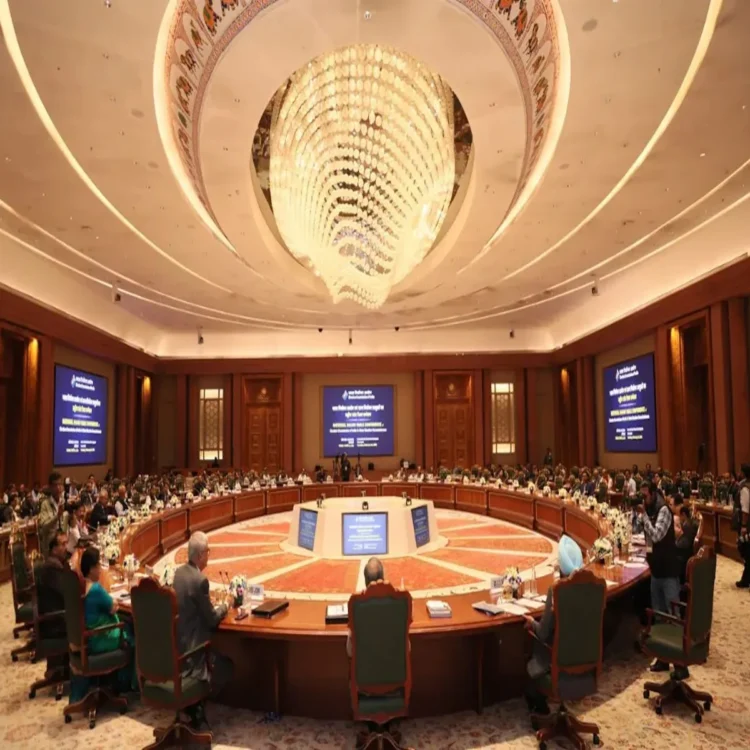
The conference was presided over by Chief Election Commissioner Gyanesh Kumar, alongside Election Commissioners Sukhbir Singh Sandhu and Vivek Joshi. Senior representatives from various states participated in the discussions, focusing on improving electoral administration and strengthening collaboration within constitutional boundaries.
Focus on Coordination and Electoral Roll Integrity
In his opening remarks, the Chief Election Commissioner highlighted the need for closer institutional alignment between the ECI and SECs. He stressed that while both bodies operate under distinct constitutional mandates, cooperation remains essential for maintaining the credibility of India’s electoral system.
Particular emphasis was placed on improving the management of electoral rolls, encouraging the adoption of technology, and sharing administrative best practices. According to officials, these steps are intended to enhance transparency, efficiency, and public trust in elections at all levels.
Gyanesh Kumar also addressed the Special Intensive Revision process, which began in Bihar. He noted that the exercise was completed without any appeals and has since been rolled out in 12 states. Electoral rolls in 11 of these states have already been published. He credited booth-level officers, electoral registration officers, and other field officials, along with political party representatives, for their role in ensuring the accuracy of voter lists.
Engagement with Political Parties and Voter Transparency
The Commission detailed its outreach efforts with political stakeholders during the revision process. Nearly 4,000 meetings were conducted at the constituency level, with around 28,000 representatives from various political parties participating. Officials said these interactions were aimed at improving transparency and ensuring inclusive participation in the revision of voter rolls.
Beyond updating electoral rolls, the Commission reiterated its focus on simplifying voter identification procedures and strengthening safeguards to ensure that only eligible Indian citizens are enrolled. Officials also underlined the importance of making the voting process accessible and easy to understand for citizens.
During an international conference held alongside the event, a model polling station was set up to demonstrate India’s voting procedures. Delegates from more than 70 countries reportedly took part in a mock voting exercise, observing the use of Electronic Voting Machines and voter verification processes. According to the Commission, several countries have expressed interest in further engagement and knowledge exchange.
Call for Trust and Digital Collaboration
Election Commissioner Sukhbir Singh Sandhu urged state election bodies to continue learning from one another and to adopt proven administrative practices. He said public trust forms the backbone of any democratic process and called for sustained cooperation between the ECI and SECs.
Election Commissioner Vivek Joshi highlighted the importance of digital integration. He encouraged greater use of the ECINET platform to streamline coordination between national and state election authorities. Officials said digital tools could help standardize procedures and improve communication, particularly in areas such as voter data management and election planning.
Adoption of National Declaration
The conference concluded with the adoption of a National Declaration reaffirming that accurate and transparent electoral rolls form the foundation of democracy. Participants resolved to work toward harmonising laws governing local body elections with those applicable to parliamentary and state assembly polls, while respecting constitutional provisions.
Officials described the conference as a platform for constructive dialogue that strengthened the principles of cooperative federalism in electoral management. The event was held after a gap of 27 years, marking a renewed effort to foster institutional synergy.
Launch of New Publication on Global Democracy Dialogue
During the conference, the ECI also released a publication titled “A Confluence of Democracies.” The document records proceedings from the India International Conference on Democracy and Election Management 2026. The event saw participation from nearly 100 international delegates representing over 70 countries, along with national and global experts. The publication covers thematic discussions, bilateral meetings, and the adoption of the Delhi Declaration 2026.
Officials said the round table discussions and related initiatives are expected to support continued innovation in election management, including technology sharing and improved coordination mechanisms between national and state authorities.