
TradeDeal – India-US Framework Signals New Era in Economic Ties
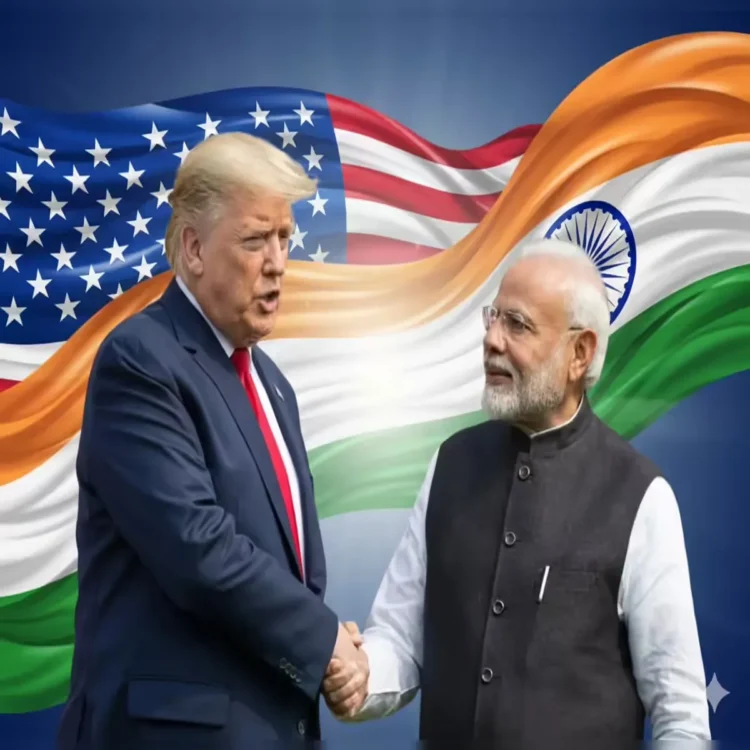
TradeDeal – The newly unveiled trade framework between India and the United States is being viewed by policy observers as a constructive step toward strengthening economic ties, expanding exports, and reinforcing long-term strategic cooperation between the two countries.
Fresh Impetus for Bilateral Commerce
Atman Trivedi, a partner at DGA-Albright Stonebridge Group and a former senior official at the US Commerce Department, described the agreement as an encouraging development that creates new commercial opportunities. Trivedi previously served as Senior Director for Policy in Global Markets and played a leading role in establishing the US-India Strategic and Commercial Dialogue.
According to him, the framework provides businesses on both sides with broader access to each other’s markets. He noted that the agreement is expected to generate meaningful export growth and offer greater opportunities for small and medium-sized enterprises in both countries.
Expanded Access Across Key Sectors
From the US perspective, the deal opens important segments of the Indian market, including industrial goods and several other sectors that were previously constrained by higher tariff levels. India, in turn, gains expanded space to advance its manufacturing ambitions while increasing its exports to the American market, which is already its largest overseas destination.
Trivedi pointed out that Indian products are likely to find greater acceptance in the US under the revised tariff structure. He added that this could support India’s broader objective of boosting domestic production for global markets.
Tariff Reductions Reshape Competitive Landscape
One of the central elements of the framework is the reduction of tariffs. Historically, India’s average applied tariffs have been relatively high. The agreement reduces many of these barriers, making it easier for American companies to sell goods into India, the world’s most populous country.
On the Indian side, tariff reductions on industrial goods — in some cases bringing them down to zero — represent a significant concession. Meanwhile, the US has agreed to cut tariffs on certain Indian exports from as high as 50 percent to 18 percent.
This adjustment could enhance India’s competitive position in the US market. Countries such as Vietnam, Malaysia, Indonesia, Bangladesh, and Pakistan continue to face comparatively higher tariffs on similar exports to the United States. As a result, Indian exporters may gain a relative pricing advantage in key categories.
Strategic Sectors and Purchase Commitments
The framework also outlines ambitious purchase commitments, including India’s plan to procure goods and services valued at up to $500 billion over the coming years. Trivedi indicated that energy and defence acquisitions are expected to form a substantial portion of this target.
Energy imports, defence equipment, and civilian aircraft — including purchases from major US manufacturers — are likely to feature prominently. Industrial goods are also expected to play a role.
However, he acknowledged that achieving the $500 billion goal within five years will require sustained effort. As of 2024, India’s imports of US goods stood at approximately $87 billion, underscoring the scale of the proposed expansion.
Non-Tariff Barriers and Policy Challenges
While tariff reductions mark progress, non-tariff barriers remain an area of concern. US companies operating in India have often cited regulatory issues such as compulsory licensing requirements, conformity assessments, standards-related hurdles, and localisation mandates.
From India’s standpoint, unresolved issues include greater access for services exports and improved mobility for skilled professionals. The question of H-1B visas, particularly amid heightened political debate around immigration in the United States, continues to be sensitive and may not be fully addressed within the trade framework.
Geopolitical Context and Future Outlook
Negotiations for the framework unfolded against a backdrop of longstanding trade differences and geopolitical developments. Trivedi noted that regional tensions earlier this year disrupted momentum in talks, contributing to delays.
Despite these challenges, he expressed optimism that the agreement could inject renewed energy into the broader relationship. He expects progress not only in trade but also in technology collaboration, defence cooperation, and energy partnerships.
Over the past two decades, economic and strategic engagement between India and the United States has expanded steadily, even as trade disputes occasionally strained ties. With bilateral trade reaching record levels in recent years, both governments have consistently described each other as key partners in the Indo-Pacific region.
The new framework is widely seen as an effort to align economic cooperation more closely with shared strategic priorities, setting the stage for deeper integration in the years ahead.