
Trump: Greenland Strategy Sparks Fresh Debate Over Arctic Security and Global Trade
Trump: Former US President Donald Trump reignited international debate by sharply escalating his language over Greenland, framing the Arctic island as a central issue of global security, trade pressure, and geopolitical influence. His statements have once again placed Greenland at the heart of discussions involving NATO responsibility, European alliances, and the future balance of power in the Arctic region.
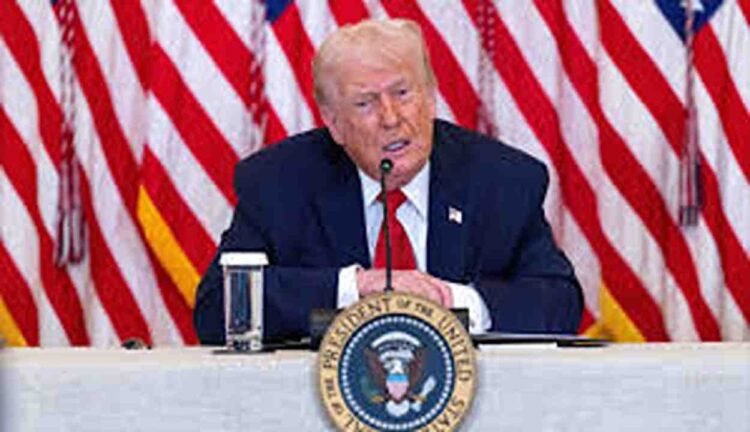
Trump argued that for decades Denmark failed to address what he described as an expanding Russian security presence near Greenland. According to his narrative, warnings from NATO were repeatedly ignored, leaving the strategically located island exposed to external threats. He claimed that this long-standing inaction has now reached a point where decisive steps can no longer be delayed.
Rising Pressure Through Economic Measures
Trump’s latest remarks came alongside a strong economic warning aimed at several European nations. He announced plans to introduce import tariffs on goods from countries he believes are obstructing American strategic interests related to Greenland. The initial proposal included a ten percent import tax, with a sharp increase threatened if negotiations failed to meet US expectations.
By linking trade penalties directly to security and territorial negotiations, Trump highlighted his belief that economic tools can be as powerful as military force. He presented tariffs not merely as trade policy but as leverage designed to compel diplomatic engagement. This approach reflects a broader pattern in his political strategy, where trade pressure is used to influence allies and rivals alike.
Impact on Transatlantic Relationships
The proposed measures immediately raised concerns across Europe. Leaders warned that such actions could strain transatlantic partnerships that have been built over decades. NATO, which has served as the backbone of collective security since the mid-twentieth century, could face internal tension if economic disputes escalate into political rifts.
Trump has long criticized NATO members for what he perceives as insufficient defense spending and reliance on American military support. His latest statements reinforced this narrative, suggesting that economic consequences are justified when allies fail to meet shared security responsibilities. Critics argue that this approach risks weakening trust within the alliance at a time when unity is crucial.
Denmark’s Response and Diplomatic Concerns
Denmark reacted with surprise and concern to the sudden tariff threat. Danish officials indicated that recent discussions with American counterparts had been constructive, making the aggressive tone unexpected. The announcement introduced uncertainty into what had appeared to be stable diplomatic engagement between the two nations.
European policymakers echoed Denmark’s concerns, warning that unilateral economic pressure could undermine cooperation on broader issues such as defense coordination, climate policy, and global stability. Many emphasized that Greenland’s status and security should be addressed through dialogue rather than coercion.
Greenland’s Strategic Importance
Greenland occupies a unique position in global geopolitics. Located along key Arctic routes, the island holds significant strategic value for monitoring missile activity, space operations, and emerging shipping lanes. It is also rich in natural resources, including rare earth minerals that are increasingly vital to modern technology and energy transitions.
Although Greenland operates with a high degree of autonomy, Denmark remains responsible for its defense. The United States already maintains a military presence on the island under a longstanding defense agreement, using facilities that support early warning systems and surveillance operations. These existing arrangements underscore that Greenland is already integrated into Western security planning.
Arctic Competition and Global Power Shifts
Trump’s rhetoric reflects growing concern in Washington about increased activity by Russia and China in the Arctic. Melting ice has opened new maritime routes and access to untapped resources, intensifying competition among global powers. Control and influence in the region are now seen as critical to future economic and military advantage.
By describing any outcome short of direct American control as unacceptable, Trump signaled a hardline stance that contrasts with traditional diplomatic norms. Supporters argue that such clarity deters rivals, while critics warn it could provoke unnecessary confrontation and destabilize the region.
Trade as a Strategic Weapon
A central theme in Trump’s argument is the use of trade policy as a strategic weapon. He has repeatedly suggested that tariffs can achieve objectives that might otherwise require military intervention. This philosophy blurs the line between economic policy and national security, raising questions about long-term consequences for global trade systems.
While this approach appeals to those who favor assertive negotiation tactics, economists and diplomats caution that prolonged trade disputes can harm domestic industries, disrupt supply chains, and alienate key partners.
A Debate Far From Over
The renewed focus on Greenland highlights broader questions about sovereignty, alliance responsibility, and the evolving nature of global power competition. Whether Trump’s strategy would lead to meaningful negotiations or deepen existing divisions remains uncertain. What is clear is that Greenland, once a peripheral topic in international politics, has become a symbol of the shifting priorities shaping the future of global security.