
Politics – Akhilesh Yadav Criticises BJP Women’s March in Lucknow Heat
Politics – Samajwadi Party chief Akhilesh Yadav on Tuesday took a sharp swipe at the Bharatiya Janata Party’s ‘Jan Akrosh Mahila Padyatra’ held in Lucknow under the leadership of Uttar Pradesh Chief Minister Yogi Adityanath. Questioning the intent and presentation of the march, Yadav remarked that despite the intense summer heat, participants appeared unusually composed, hinting that the event lacked spontaneity.
Questions Raised Over Public Mobilisation
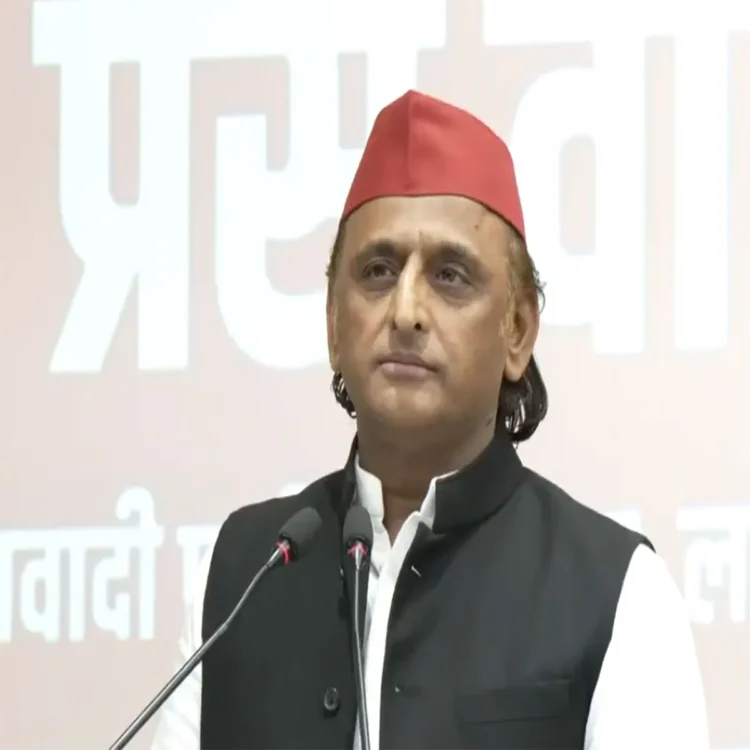
Speaking to reporters at the Samajwadi Party office, Yadav suggested that the padyatra appeared more like a carefully managed political exercise than a genuine public movement. He pointed out that during such extreme weather conditions, it was surprising that participants did not show visible signs of discomfort, such as wearing sunglasses or taking protective measures against the sun.
According to him, the ruling party was staging events that seemed rehearsed rather than reflecting real public sentiment. He added that such initiatives raise questions about authenticity and whether they are intended to address public concerns or merely serve as political messaging tools.
Allegations of Political Strategy
Yadav went further to accuse the BJP of adopting tactics typically used by opposition parties. He stated that it was unusual for a government in power to engage in activities that resemble protest-style campaigns, which are generally associated with opposition groups.
In his view, this approach indicated a shift in political strategy, where the ruling party was attempting to control the narrative by preemptively adopting methods often used to criticise governments. He argued that such actions might be aimed at diverting attention from governance issues.
Stand on Women’s Reservation
During the press interaction, Yadav also reiterated his party’s commitment to women’s reservation. He emphasized that the Samajwadi Party has consistently supported policies that promote representation and empowerment of women in politics.
At the same time, he accused the BJP of not being sincere in its stance on reservation. According to him, there were concerns that efforts could be made to delay or dilute such measures. He assured that his party would oppose any move that undermines reservation policies and would continue to advocate for their implementation.
Accusations of Misleading the Public
Yadav alleged that the BJP was attempting to influence public perception through symbolic events rather than addressing substantive issues. He claimed that such political programs were designed to create an impression of engagement while avoiding accountability on governance matters.
He also suggested that the ruling party’s actions reflected a sense of insecurity about upcoming political challenges. According to him, these efforts were part of a broader attempt to manage public opinion ahead of future elections.
Political Context in Uttar Pradesh
The exchange highlights the ongoing political contest in Uttar Pradesh, where both major parties continue to sharpen their narratives. Public events, rallies, and padyatras have become key tools for reaching voters and shaping perceptions.
Observers note that such criticisms and counter-criticisms are likely to intensify as political activity increases in the state. While the BJP continues to project its initiatives as efforts to connect with citizens, opposition parties like the Samajwadi Party are questioning their intent and execution.
The debate also underscores broader themes in Indian politics, including the use of symbolism, public outreach strategies, and the role of political communication in influencing voters.