
Governance – Uttar Pradesh Sets Fixed Transfer Window, Clears Key Reforms
Governance – The Uttar Pradesh government has announced a significant administrative decision affecting nearly 1.6 million employees and officials. The state Cabinet has approved a fixed schedule for transfers and postings for the 2026–27 cycle, limiting the process to a defined period between May 5 and May 31. The move is aimed at improving transparency and ensuring smoother governance across departments.
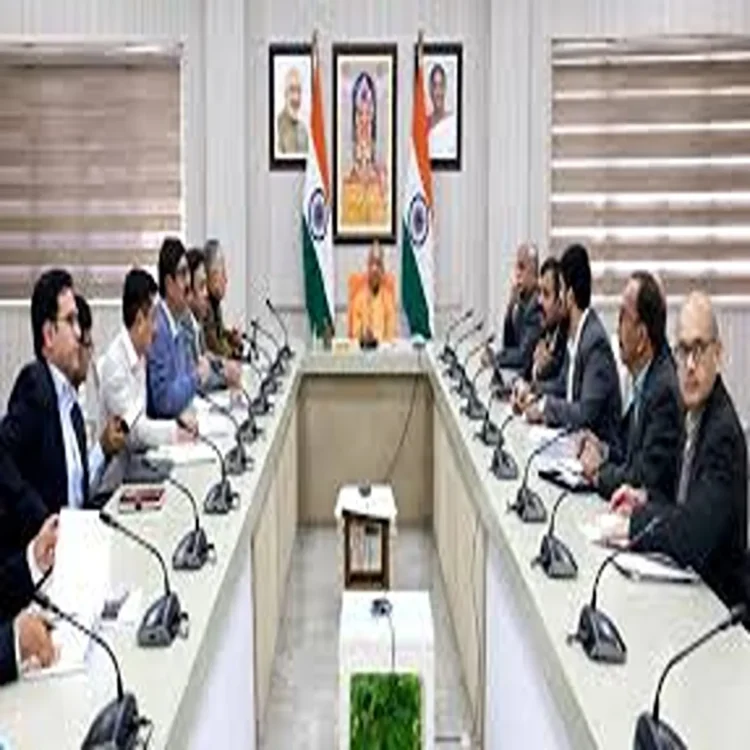
Defined Transfer Policy for State Employees
According to Finance and Parliamentary Affairs Minister Suresh Khanna, the new transfer framework applies to officers and staff who have spent a certain duration in one location. Officials serving for three years in a district or seven years within a division will be considered for relocation. The policy seeks to maintain administrative balance while preventing long-term stagnation in postings.
Special provisions have also been introduced to address personal circumstances. Government employees who are married to each other will be accommodated at the same place of posting wherever possible. Additionally, exemptions and relief measures will be extended to employees with disabilities and those dealing with serious medical conditions.
Limits and Digital Oversight in Transfers
The Cabinet has placed clear limits on the number of transfers to avoid large-scale disruptions. For Group A and Group B officers, transfers will not exceed 20 percent of the total cadre strength. Meanwhile, Group C and Group D employees will see a maximum of 10 percent transfers. Authorities have emphasized that the process will rely on digital systems and merit-based evaluation to reduce manual intervention and increase fairness.
‘One District-One Dish’ Initiative Gets Approval
In a separate development, the Cabinet has approved a new scheme aimed at promoting regional cuisine. The initiative, titled One District-One Dish, focuses on identifying a signature food item from each district and enhancing its recognition at both national and international levels.
MSME Minister Rakesh Sachan explained that each district will select a unique dish that reflects its culinary heritage. The government plans to improve packaging standards, create distinctive branding, and develop logos to strengthen market identity. Training programs will also be organized for local vendors and artisans to help them scale production and improve quality.
Boosting Local Economy Through Food Branding
The scheme is expected to provide economic opportunities for small businesses and traditional food makers. Selected dishes will be showcased at festivals, exhibitions, and public events, helping them reach wider audiences. Efforts will also be made to connect producers with larger markets to increase revenue.
The state already has a strong reputation for its diverse food culture. Popular items from different regions, such as Agra’s petha, Mathura’s peda, and Meerut’s gajak, highlight the potential of the initiative to create a distinct identity for local specialties.
To support the rollout, a vendor conference will be organized in Lucknow. The event will bring together food vendors, confectionery experts, academic institutions, and investors. Financial incentives, including subsidies of up to 25 percent, will be offered to encourage participation and investment.
Digital Measures to Improve Judicial Efficiency
The Cabinet has also cleared proposals aimed at strengthening the judicial process. A new e-summons system will be introduced to address delays in court proceedings caused by traditional methods of serving notices. Under the new rules, summons can be sent through digital platforms such as email and WhatsApp, and these will be considered legally valid.
The approval includes the Uttar Pradesh E-Evidence Management Rules, Electronic Summons Issuance and Service Rules 2026, and updated Community Service Guidelines. These measures are expected to speed up case disposal and reduce backlog in courts.
Increased Compensation for Farmers Affected by Power Lines
In another important decision, the state government has revised compensation for farmers whose land is used for high-voltage transmission lines. Energy Minister Arvind Kumar Sharma noted that farmers had raised concerns over inadequate compensation under earlier provisions introduced in 2018.
Under the revised structure, farmers will receive compensation equivalent to double the circle rate for land within a one-metre radius of electricity towers. Additionally, they will be entitled to up to 30 percent of the land’s value for areas affected by power lines passing through their fields.
These decisions reflect the government’s focus on administrative efficiency, economic development, and addressing public concerns through policy reforms.