
Tiger – Veteran Corbett Tiger Vikram Dies After Long Captivity Journey
Tiger- A well-known Bengal tiger named Vikram, estimated to be around 21 years old, has died in Uttarakhand, bringing an end to a long and eventful life within the Corbett landscape. The tiger passed away late Saturday night at the Dhela Rescue Centre, where he had been kept under close observation for several years. Forest officials believe the cause of death was likely a cardiac arrest linked to age-related health issues.
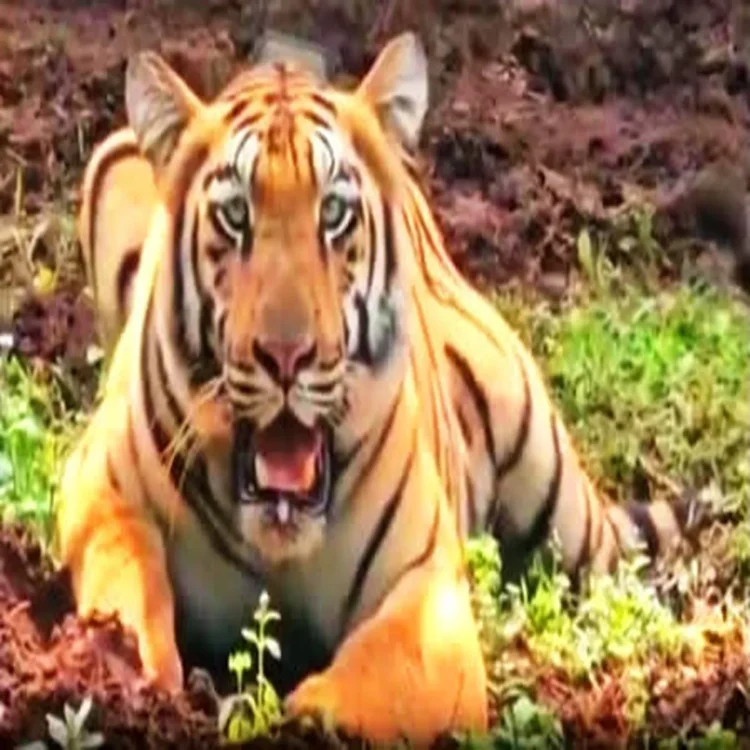
A Notorious Yet Remarkable Life
Vikram was once a dominant figure in the Dhikala range of Jim Corbett National Park. During his prime, he was widely regarded as a powerful and aggressive predator. His name became associated with multiple fatal encounters involving forest department staff, which led authorities to categorize him as a high-risk animal. These incidents significantly shaped the decisions around his future management and eventual relocation.
Capture and Relocation Efforts
In May 2019, forest authorities captured Vikram in an effort to reduce the risk to human life and maintain safety within the park. He was subsequently transferred to the Nainital Zoo. However, managing the tiger in captivity proved to be far from straightforward. In a notable incident, Vikram managed to escape from his enclosure, creating concern among officials and prompting a reassessment of containment measures.
Given the challenges, authorities later decided to shift him again. In April 2021, Vikram was moved to the Dhela Rescue Centre, located within the broader Corbett region. This facility was considered better suited for handling animals requiring special supervision.
Life Under Supervision
At the rescue centre, Vikram spent the remainder of his life under constant monitoring. Due to his aggressive nature and declining hearing ability, he was largely kept in isolation to ensure both his safety and that of the staff. Despite these limitations, he continued to receive regular veterinary attention.
In fact, his health was closely managed in recent years. Officials confirmed that Vikram underwent surgery for a tumour last year, which temporarily improved his condition. The treatment highlighted the level of care provided to aging wildlife in managed environments.
Final Moments and Medical Examination
According to forest officials, Vikram’s condition worsened in recent weeks. He eventually passed away late on Saturday night. Following standard protocol, a post-mortem examination was conducted by a team of experienced veterinarians from both Corbett Tiger Reserve and Nainital Zoo. Senior officials were present during the procedure to ensure transparency and proper documentation.
Preliminary findings suggest that his death was due to natural causes, primarily linked to old age and possible heart failure. Detailed reports are expected to confirm the exact cause.
A Rare Lifespan for a Bengal Tiger
Wildlife experts have noted that Vikram lived an unusually long life. Bengal tigers in the wild typically survive for about 10 to 15 years, although some may reach up to 20 years under favorable conditions. In captivity, where food supply and medical care are consistent, tigers can live longer—sometimes up to 25 years or more.
Officials pointed out that Vikram’s lifespan stands out, particularly given his earlier years in the wild and the challenges he faced throughout his life.
Legacy Within Corbett’s Conservation Story
Vikram’s life reflects the complex balance between wildlife conservation and human safety. While he was once considered a threat due to his involvement in fatal incidents, his later years demonstrated the evolving strategies used by forest authorities to manage such animals responsibly.
His journey—from a feared predator in the wild to a closely monitored resident of a rescue facility—highlights the difficult decisions conservationists often face. It also underscores the importance of dedicated care for aging wildlife.
With Vikram’s passing, Corbett Tiger Reserve loses one of its most recognized tigers, marking the end of a chapter that combined both conflict and conservation.