
Elections – Opposition Parties Explore New Alliances Ahead of Uttar Pradesh Assembly Polls
Elections – As political parties prepare for the Uttar Pradesh Assembly elections scheduled next year, alliance discussions have once again taken center stage. Several Opposition parties are reassessing their electoral strategies after the 2024 Lok Sabha elections, with efforts increasingly focused on avoiding a split in votes among key voter groups. Political observers believe these developments could significantly influence the state’s electoral landscape.
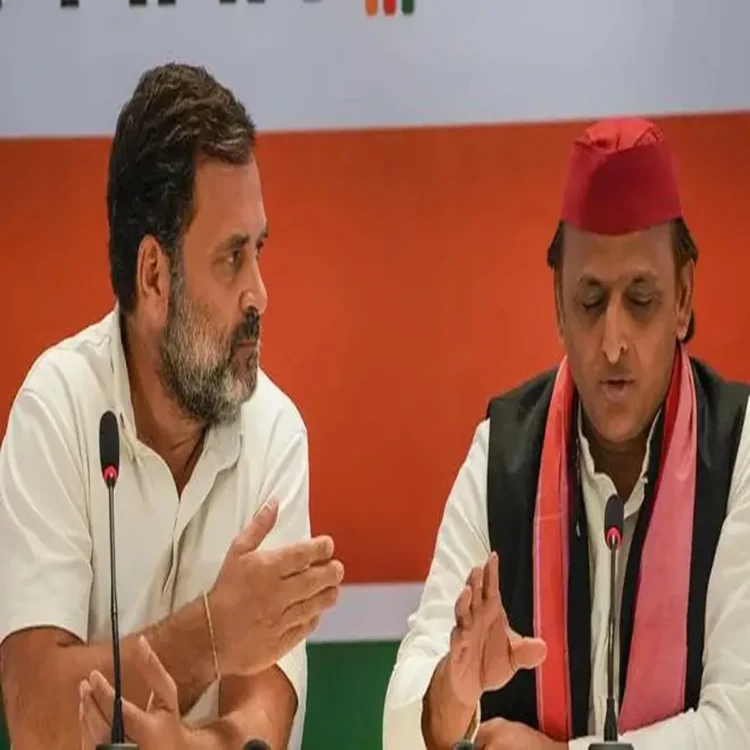
Opposition Leaders Renew Coordination
The cooperation witnessed between the Samajwadi Party (SP) and the Congress during the 2024 parliamentary elections appears to be continuing. SP president Akhilesh Yadav and Congress leader Rahul Gandhi have once again been seen maintaining close political coordination as both parties evaluate their approach for the upcoming state election.
At the same time, reports suggest that All India Majlis-e-Ittehadul Muslimeen (AIMIM) chief Asaduddin Owaisi has indicated a willingness to engage with parties associated with the INDIA alliance. Although no formal agreement has been announced, the possibility of broader Opposition coordination has generated fresh political discussion.
Minority Vote Remains a Key Electoral Factor
Political analysts say a major objective behind these alliance efforts is to reduce fragmentation among minority voters. In previous elections, contests involving multiple Opposition candidates have often divided votes, a situation that many observers believe has benefited the Bharatiya Janata Party (BJP) in several constituencies.
Owaisi has frequently faced criticism from rival Opposition leaders, who argue that AIMIM’s participation in elections divides anti-BJP votes. However, the AIMIM leader has repeatedly maintained that his party seeks independent political representation while remaining open to discussions on broader Opposition cooperation when appropriate.
Previous Attempts at Cooperation
This is not the first time AIMIM has explored the possibility of working alongside other Opposition parties. Similar outreach efforts were made during Assembly elections in states such as Bihar and West Bengal. Those proposals, however, did not result in formal alliances, with regional Opposition parties choosing different electoral strategies.
In recent years, many minority voters have increasingly backed candidates considered most capable of challenging the BJP in individual constituencies. This voting pattern has encouraged Opposition parties to prioritize seat-sharing arrangements wherever possible.
Electoral Demographics Shape Political Calculations
Uttar Pradesh’s social composition continues to play a major role in election planning. Muslims account for roughly one-fifth of the state’s population, making them an influential voting bloc in several Assembly segments.
Out of the state’s 403 Assembly constituencies, around 110 seats reportedly have a minority population ranging between 30 and 39 percent. Another 44 constituencies are estimated to have minority populations between 40 and 49 percent, while nearly a dozen seats have communities that form more than half of the local population.
Political experts note that voting patterns in nearly 165 constituencies are influenced to varying degrees by minority demographics, making unified electoral strategies particularly significant for Opposition parties.
Lessons From Earlier Alliances
Opposition alliances in Uttar Pradesh have produced mixed results in the past. Ahead of the 2017 Assembly election, the SP and Congress formed a high-profile alliance led by Akhilesh Yadav and Rahul Gandhi. Despite considerable attention, the partnership failed to translate into electoral success, with the BJP securing a decisive majority.
Following that defeat, the Samajwadi Party shifted its strategy and entered into an alliance with the Bahujan Samaj Party (BSP) for a later election, while the Congress remained outside the arrangement. Even that combination struggled to substantially reduce the BJP’s electoral advantage.
Lok Sabha Success and Assembly Challenge
The 2024 Lok Sabha election marked a significant improvement for the SP-Congress partnership. The Samajwadi Party secured 37 parliamentary seats, emerging as one of the largest parties in the Lok Sabha, while the Congress also improved its performance compared with previous elections.
Even so, political analysts caution that Assembly elections in Uttar Pradesh are shaped by different local issues, candidate selection, and constituency-specific factors. While parliamentary alliances can provide momentum, their effectiveness at the state level depends on successful coordination, vote transfer, and local political equations.
With the Assembly election drawing closer, alliance negotiations are expected to remain a central feature of Uttar Pradesh politics as parties seek the most effective strategy to strengthen their electoral prospects.