
Water Crisis – Tamil Nadu Faces Growing Drinking Water Shortages as Reservoirs Continue to Dry
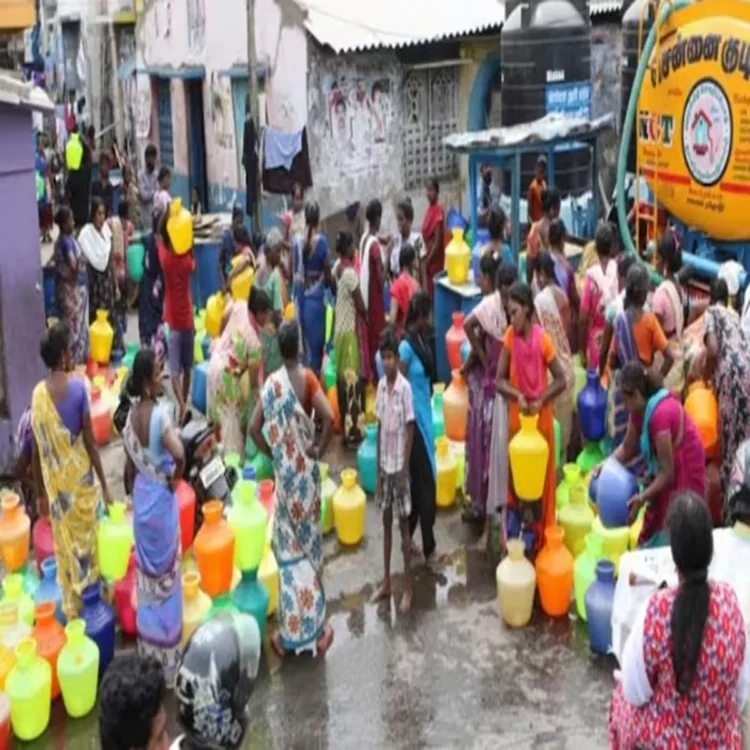
Water Crisis – Tamil Nadu is witnessing an increasingly serious drinking water shortage as the weak southwest monsoon has significantly reduced water availability across the state. Reservoirs, lakes, irrigation tanks, and groundwater sources have all recorded steep declines, creating pressure on drinking water systems in several districts. The worsening situation has raised concerns about the state’s ability to maintain regular water supply if rainfall conditions do not improve in the coming weeks.
Reservoirs and Irrigation Tanks Register Sharp Decline
Official figures released by the Water Resources Department indicate that the state’s water storage has fallen to concerning levels. The department, which oversees 90 major dams along with more than 14,000 irrigation tanks, reported that 59 dams have already become completely dry. In addition, another 16 dams currently hold only 25 to 50 percent of their total storage capacity, reflecting the impact of below-normal rainfall.
The condition of irrigation tanks has also deteriorated considerably. Government records show that 3,489 tanks no longer contain usable water, while another 6,158 are approaching critically low levels. The reduction in stored water is expected to affect both agricultural activities and drinking water availability across several regions.
Weak Monsoon Impacts Southern States
The shortage is not limited to Tamil Nadu alone. Several neighboring southern states have also received less rainfall than expected during the southwest monsoon season. Lower rainfall across the region has reduced inflows into major reservoirs, resulting in limited water available for irrigation projects as well as public drinking water schemes.
Officials say the combined effect of poor rainfall and declining reservoir inflows has made water management increasingly challenging across multiple sectors.
Pressure on Public Water Supply Systems
Water bodies managed by the Municipal Administration Department and the Rural Development Department have also experienced a noticeable fall in storage levels. The Tamil Nadu Water Supply and Drainage (TWAD) Board depends on rivers, reservoirs, and lakes to operate integrated drinking water supply schemes serving both urban and rural communities.
As surface water sources continue to shrink, groundwater has become an important backup source. However, many borewells operated under these schemes are now producing much less water than before because groundwater levels have fallen considerably. According to officials and residents, pumping equipment is being operated for longer hours to draw limited quantities of water, increasing electricity usage without substantially improving daily supply.
Several Districts Experience Water Scarcity
The effects of the shortage are already being felt across many parts of the state. Districts including Virudhunagar, Tiruvannamalai, Tirunelveli, Tiruchi, Thoothukudi, Thanjavur, Namakkal, Perambalur, Madurai, Sivaganga, Dharmapuri, Cuddalore, and Dindigul are among the areas reporting the most severe challenges.
In several localities, drinking water that was previously supplied once every seven days is now reaching households only once every ten days. This reduction has forced many residents to depend on private water tankers and other temporary arrangements to meet their daily needs.
Chennai Water Sources Under Close Watch
Authorities are also closely monitoring groundwater conditions in Tiruvallur and Kancheepuram districts, which play an important role in supplying drinking water to Chennai. Any further decline in groundwater availability in these districts could increase pressure on the city’s overall water supply system.
Calls for Alternative Water Arrangements
Officials from the Water Resources Department have reportedly shared updated information on falling water levels with the TWAD Board. Despite these assessments, concerns have been raised that sufficient alternative water sourcing measures have not yet been fully implemented in the most affected districts.
With water reserves continuing to decline and rainfall remaining below expectations, experts believe timely planning and additional supply measures will be necessary to reduce the impact on households. If weather conditions remain unfavorable, the state’s drinking water situation could become more challenging in the months ahead.