
UAPA – Supreme Court Refers Bail Dispute in Delhi Riots Case to Larger Bench
UAPA – The Supreme Court has referred a significant legal question concerning bail under the Unlawful Activities (Prevention) Act to a larger bench after differing judicial views emerged over the handling of prolonged incarceration in terror-related cases.
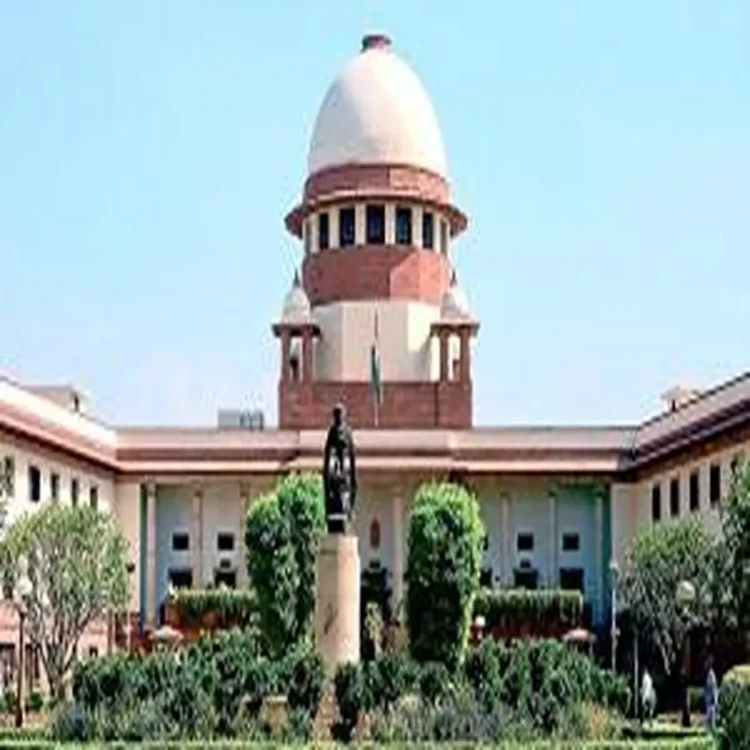
The development came during proceedings linked to the Delhi riots conspiracy case involving accused Umar Khalid and Sharjeel Imam, both of whom were arrested under the stringent provisions of the UAPA. A bench comprising Justices Aravind Kumar and P B Varale decided that the issue required deeper constitutional examination due to conflicting interpretations within the apex court.
Diverging Judicial Opinions on Bail Principles
The disagreement revolves around how courts should assess bail pleas when trials face substantial delays. Earlier, a three-judge bench in the Union of India versus K A Najeeb case had ruled that extended imprisonment without completion of trial could justify granting bail, even in cases governed by strict anti-terror laws.
Referring to that ruling, another Supreme Court bench led by Justices B V Nagarathna and Ujjal Bhuyan had recently stressed the importance of judicial consistency. The bench observed that smaller benches are expected to follow decisions delivered by larger benches to maintain certainty in the legal system.
However, the bench headed by Justice Aravind Kumar expressed a different interpretation while addressing the issue. The court clarified that the Najeeb judgment should not be treated as an automatic formula for granting bail merely because a trial has been delayed.
Court Highlights Case-Specific Evaluation
According to the observations made in open court, the judges stated that every accused person’s role must be individually examined before deciding on bail applications. The bench pointed out that on January 5, bail had already been granted to five accused persons in the same matter, while Umar Khalid and Sharjeel Imam were denied relief after a separate assessment of the allegations against them.
The court underlined that the present legal debate involves balancing constitutional protections with the restrictions imposed under Section 43D(5) of the UAPA. This provision places stringent conditions on the grant of bail in terrorism-related cases.
The judges noted that the larger constitutional question concerns the correct judicial approach when accused individuals seek bail on the basis of prolonged imprisonment and delays in concluding trial proceedings despite statutory restrictions.
Interim Relief Granted to Two Other Accused
The bench was hearing submissions made by Delhi Police in petitions filed by two other accused in the case, Tasleem Ahmed and Khalid Saifi, who had approached the Supreme Court seeking bail.
While referring the broader legal issue to a larger bench, the court granted interim bail to Ahmed and Saifi for a period of six months. The temporary relief was seen as a balanced measure while the Supreme Court examines the larger legal principles involved in such cases.
Wider Implications for UAPA Cases
The decision is expected to have wider implications for several pending cases under the UAPA across the country, particularly those involving lengthy trials and prolonged custody without final conviction.
Legal experts believe the larger bench will now have to determine how constitutional rights related to personal liberty should be weighed against national security concerns and statutory restrictions under anti-terror legislation.
The outcome of the reference could shape future judicial standards on bail in serious criminal and terror-related investigations, especially in situations where trial proceedings continue for several years.