
Textile – Telangana Showcases Ambition at Global ATEXCON 2026 Summit
Textile – Telangana Chief Minister Revanth Reddy on Friday inaugurated the 13th Asian Textile Conference (ATEXCON 2026), a major international gathering of textile and apparel industry leaders. The event, organised jointly by the state government and the Confederation of Indian Textile Industry (CITI), brought together over 1,200 delegates from across India and several global textile hubs.
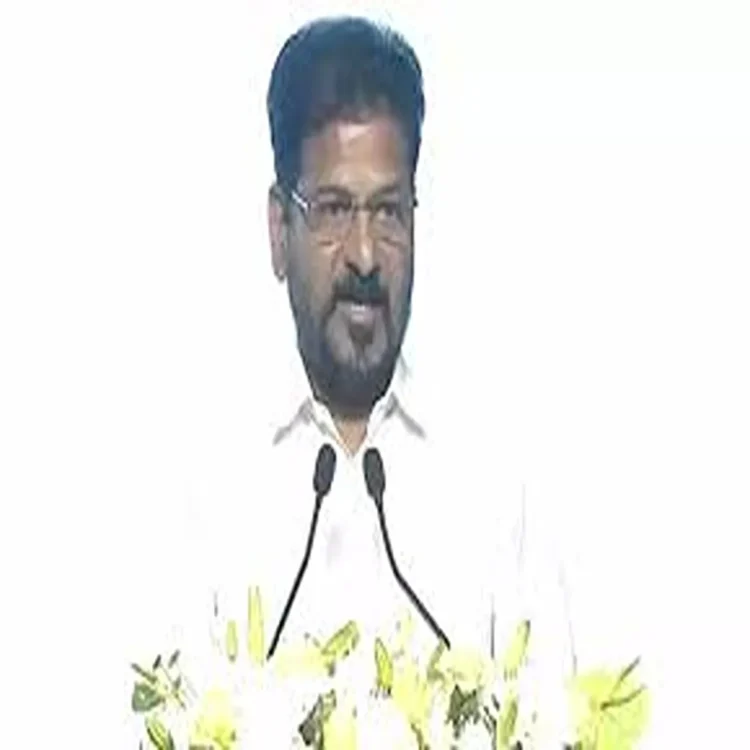
Telangana outlines long-term textile ambitions
Addressing the audience, the Chief Minister presented Telangana’s long-term roadmap to emerge as a leading textile hub in South Asia by 2047. He emphasized that the state is building a strong foundation through modern infrastructure, investor-friendly policies, and rapid project execution systems.
He noted that Telangana’s broader economic vision includes reaching a one trillion dollar economy by 2034 and expanding further to three trillion dollars by 2047. According to him, the textile sector will play a crucial role in achieving these milestones, supported by a skilled workforce and competitive industrial environment.
Strong roots in traditional textile heritage
Highlighting the state’s cultural legacy, Reddy referred to well-known textile traditions such as Pochampally Ikat, Gadwal sarees, Warangal durries, and Narayanpet weaves. He described textiles not merely as an economic activity but as a vital source of livelihood for thousands of weaving families across the region.
He also pointed out that Telangana has historically been a major cotton-producing region, with its cotton recognised for superior quality. This natural advantage, he said, continues to support the state’s position in the textile value chain.
Linking tradition with global markets
The Chief Minister stressed that India’s textile history is deeply rooted in craftsmanship and cultural expression. Drawing from tradition, he mentioned the ceremonial practice of offering sacred attire at the Bhadrachalam temple during Sri Rama Navami, underlining the cultural importance of textiles.
He also recalled Hyderabad’s historical role as a trading centre during the Nizam era, when merchants from different parts of the world visited the city for textiles and pearls. He suggested that Telangana is now ready to reconnect with global markets in a modern context.
Infrastructure and industrial ecosystem expansion
Reddy highlighted the development of the Kakatiya Mega Textile Park in Warangal as a key step toward building a comprehensive textile ecosystem. He added that the state is expanding apparel parks and strengthening multiple industrial sectors, including manufacturing, aerospace, energy, and life sciences.
Inviting investors, he said Telangana offers a complete ecosystem for textile production—from raw cotton to finished fashion products. He encouraged global participants to consider the state as a reliable partner for long-term growth.
Integration across global value chains
The Chief Minister explained that Telangana aims to position itself across the entire global textile value chain. From cotton cultivation within the state to participation in international fashion markets in cities such as London, New York, Paris, Milan, Tokyo, and Dubai, he said Telangana is prepared to contribute at every stage.
He also highlighted Hyderabad’s growing prominence in the global film and entertainment industry. With international studios establishing operations in the city, he expressed confidence that local textile production could support costume and fashion requirements for film industries worldwide.
Focus on sustainability and workforce development
A key part of the state’s strategy involves promoting environmentally sustainable textile production. The Chief Minister said Telangana plans to develop green textile clusters that prioritize eco-friendly practices.
He also emphasized skill development, particularly for women, to ensure that traditional weaving knowledge is combined with modern design and manufacturing techniques. This approach aims to create a future-ready workforce capable of competing globally.
ATEXCON discussions on future industry trends
The ATEXCON 2026 conference is centered on the theme “Reimagining the Future of Global Textiles.” The event features panel discussions covering critical areas such as fibre innovation, fabric development, manufacturing technologies including AI and automation, and evolving global trade dynamics.
Industry experts are expected to explore how technological advancements and sustainability requirements will shape the future of textiles, while also identifying new opportunities for collaboration across countries