
SupremeCourt – Apex Court Backs EC Rules on Bengal Vote Counting Staff
SupremeCourt – The Supreme Court on Saturday indicated that no further intervention was required in a petition filed by the Trinamool Congress challenging the Election Commission’s guidelines on appointing personnel for vote counting in West Bengal.
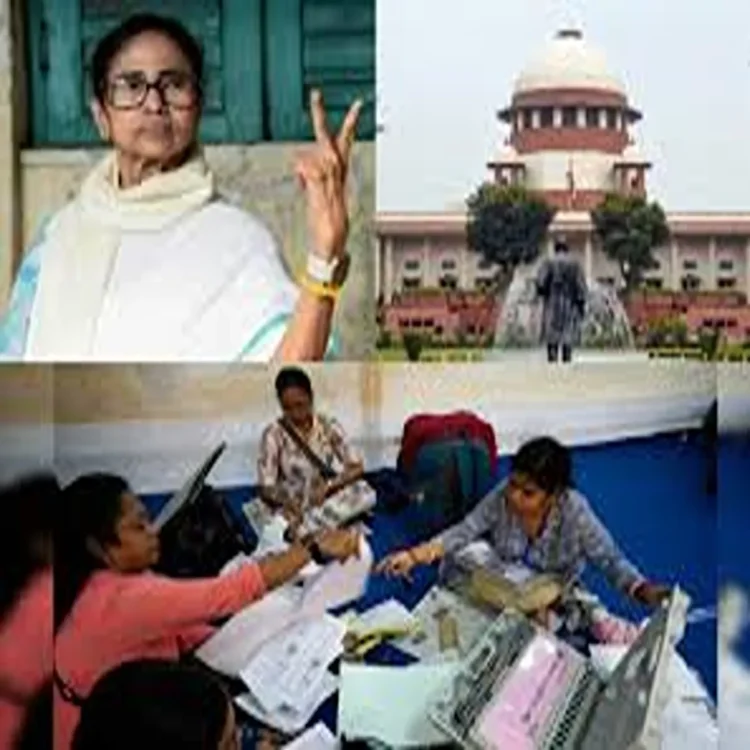
Court Records Assurance from Poll Panel
During the hearing, the bench noted the assurance given by the Election Commission of India that its April 13 directive would be followed strictly in both letter and spirit. The commission maintained that the framework for appointing counting staff had been designed to ensure fairness and transparency in the electoral process.
Role of Returning Officer Highlighted
The judges observed that the returning officer, who is typically a state government official, holds overall authority during the counting process. This, the court suggested, addresses concerns raised about the involvement of central government personnel. The bench further remarked that apprehensions expressed by the All India Trinamool Congress appeared to be based on a misunderstanding of how responsibilities are distributed during counting.
Mix of Personnel Ensures Balance
The Election Commission clarified that its system allows for a balanced mix of staff, including central government and Public Sector Undertaking employees. According to the poll body, this approach helps maintain neutrality and prevents any bias, while still operating within established legal provisions.
Bench Finds No Violation of Rules
A bench comprising Justices P S Narasimha and Joymalya Bagchi stated that the commission has the authority to choose counting personnel, even if it opts for a single category such as central government employees. The court made it clear that such a decision cannot be considered legally flawed and does not violate existing rules.
Presence of Party Representatives Noted
The court also underlined that representatives of political parties would be present throughout the counting process. This, it said, adds an additional level of oversight and transparency. The judges questioned the basis of the concerns raised, noting that all personnel involved are ultimately government employees bound by official protocols.
TMC Raises Concerns Over Timing and Inclusion
Appearing for the Trinamool Congress, senior advocate Kapil Sibal argued that the issue stemmed from the exclusion of state government nominees, despite provisions allowing their inclusion. He also pointed to the timing of the implementation, stating that the party was informed about the deployment details only on April 29, leaving limited room for response.
EC Defends Established Practice
On behalf of the Election Commission, senior advocate D S Naidu told the court that the commission has consistently followed procedures designed to ensure fairness. He reiterated that the April 13 circular would be implemented fully, without deviation.
No Further Directions from Supreme Court
After considering the arguments, the Supreme Court of India declined to issue any additional orders. This effectively upholds the Election Commission’s framework for appointing counting staff for the upcoming vote counting scheduled on May 4.
Background of the Legal Challenge
The matter reached the apex court after the Calcutta High Court dismissed the Trinamool Congress’s earlier plea. The high court had ruled that the Election Commission has the authority to appoint personnel from either state or central government services, reinforcing the poll body’s discretion in such matters.
Guidelines to Continue for Ongoing Elections
With the Supreme Court choosing not to interfere further, the Election Commission’s guidelines will remain in place for the ongoing West Bengal election process. The decision provides clarity on the administrative framework governing vote counting and reinforces the commission’s role in ensuring a structured and transparent electoral exercise.