
Smithsonian: Museum to Repatriate South Indian Bronzes After Provenance Review
Smithsonian: The Smithsonian’s National Museum of Asian Art has confirmed it will return three historic bronze sculptures from South India to the Indian government following detailed research that established the works were removed illegally from temple sites several decades ago. The decision comes after a multi-year provenance investigation into the museum’s South Asian collection and marks another significant step in international efforts to address the unlawful removal of cultural heritage.
Decision Following Extended Provenance Investigation
According to the museum, the determination to return the sculptures was reached after an extensive internal review that examined how the objects entered the collection. Researchers found clear evidence that the bronzes had been taken from active temple settings in Tamil Nadu without legal authorization, violating Indian cultural property laws in force at the time of their removal.
While two of the sculptures will be fully repatriated to India, one piece will remain in the United States under a long-term loan agreement finalized with the Indian government. This arrangement allows the museum to continue exhibiting the work while openly acknowledging its history and eventual return.
Details of the Sculptures Involved
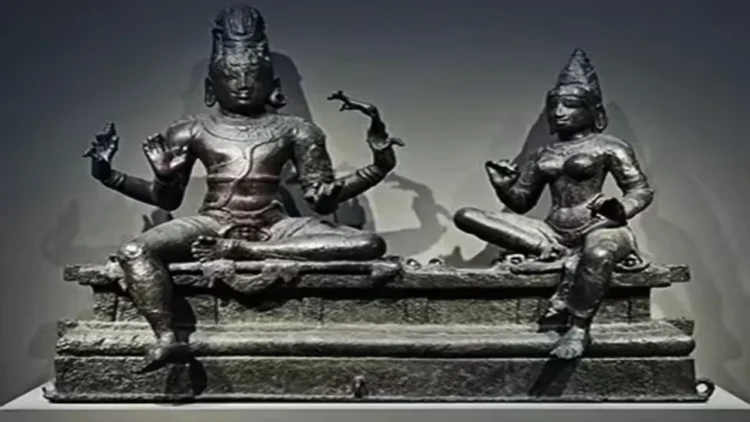
The three objects identified for return are a Shiva Nataraja dating to around 990 CE from the Chola period, a Somaskanda bronze from the 12th century, also from the Chola era, and a sculpture depicting Saint Sundarar with Paravai from the 16th-century Vijayanagar period. These bronzes are widely recognized as important examples of South India’s sophisticated metal-casting traditions.
Originally, all three sculptures functioned as sacred icons, carried during religious processions in temples across Tamil Nadu. Their cultural and religious significance extends beyond their artistic value, making their unlawful removal particularly sensitive.
Long-Term Loan Arrangement for Shiva Nataraja
The Chola-period Shiva Nataraja will remain on display at the National Museum of Asian Art under the terms of a long-term loan approved by Indian authorities. The museum has stated that the sculpture will be featured in the exhibition The Art of Knowing in South Asia, Southeast Asia, and the Himalayas, accompanied by transparent documentation outlining its provenance, removal, and return agreement.
Museum officials emphasized that this approach reflects a broader commitment to ethical stewardship while allowing public access to historically significant works.
Role of Archival Evidence and Indian Authorities
Key evidence in the investigation came from photographs held by the Photo Archives of the French Institute of Pondicherry. Researchers confirmed that all three bronzes had been photographed in Tamil Nadu temples between 1956 and 1959, placing them in situ well after Indian laws governing antiquities were in effect.
The Archaeological Survey of India later reviewed the findings and concluded that the sculptures had been removed unlawfully. This assessment played a central role in formalizing the repatriation process.
Acquisition History and Documentation Issues
Museum records revealed that the Shiva Nataraja was acquired in 2002 from the Doris Wiener Gallery in New York. Subsequent research found that falsified paperwork had been used to support the transaction. The remaining two sculptures entered the museum’s holdings in 1987 as part of a large donation from Arthur M. Sackler. Further investigation confirmed their earlier presence in temples at Alattur and Veerasolapuram villages.
The museum noted that provenance research involves careful physical examination combined with a review of archival materials such as export permits, dealer correspondence, shipping records, and historical photographs to reconstruct an object’s ownership history.
Broader Context of Cultural Repatriation
For many years, India has sought the return of artefacts removed illegally from temples and archaeological sites, working with international institutions to trace and recover displaced heritage. The Smithsonian’s action reflects a growing global emphasis on transparency and accountability within museums.
The National Museum of Asian Art, which first opened in 1923 and offers free public access, is part of the Smithsonian Institution, the world’s largest museum and research organization. Museum leadership stated that coordination with the Embassy of India is ongoing to finalize the logistics of the returns.