
Security – Congress Criticizes Rajnath Singh Over Remarks at SCO Meet
Security – The political temperature rose on Wednesday after the Congress party strongly criticized Defence Minister Rajnath Singh for his remarks at a Shanghai Cooperation Organisation (SCO) meeting held in Bishkek. The opposition described his comments as inappropriate and accused him of indirectly offering a clean chit to Pakistan, triggering a sharp exchange over India’s foreign policy stance on terrorism.
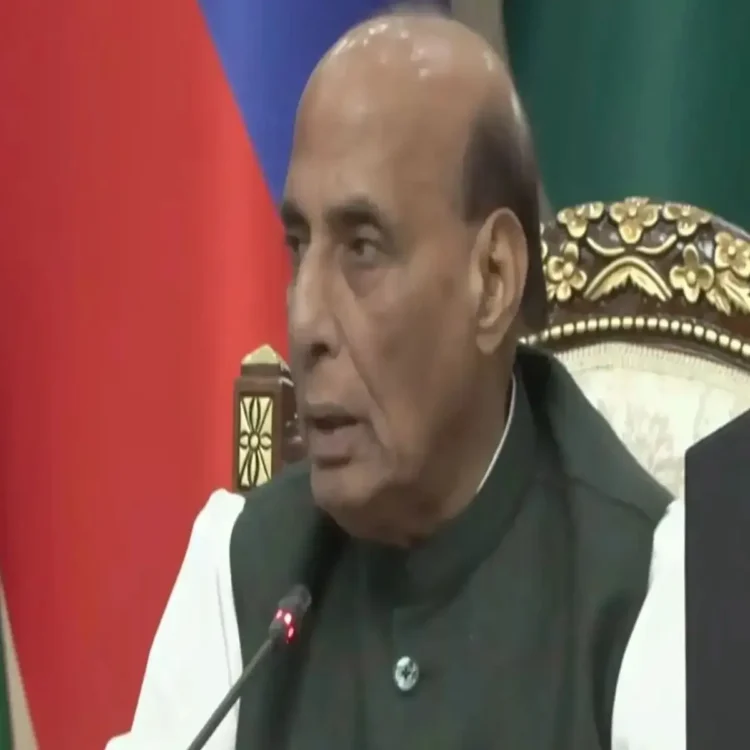
Congress Questions Government’s Position on Terrorism
Congress general secretary for communications, Jairam Ramesh, expressed concern over the minister’s statements, suggesting they downplayed Pakistan’s alleged involvement in cross-border terrorism. Referring to a video clip of the minister’s address, Ramesh pointed to Singh’s statement that terrorism should not be linked to any nation or religion and that no grievance can justify acts of violence.
According to the Congress leader, such remarks overlook the realities faced by India. He questioned whether Pakistan continues to serve as a hub for terrorist activities targeting India and cited past incidents to support his argument. Ramesh raised concerns about the existence of terror camps and ideological indoctrination allegedly directed against India, asking whether these issues were being ignored at the international platform.
Allegations of Shift in Foreign Policy
The Congress further claimed that Singh’s remarks reflect a broader shift in India’s diplomatic approach under Prime Minister Narendra Modi. Ramesh alleged that the government is adopting a softer stance in global forums, which he described as an attempt to balance relations with major global powers, including the United States and China.
He argued that such positioning could weaken India’s long-standing stance on terrorism and cross-border threats. Drawing parallels with past statements made by the Prime Minister, Ramesh suggested that recent comments by senior government leaders indicate a pattern that may dilute India’s position on key security concerns.
Government Emphasizes Collective Fight Against Terror
During the SCO meeting, Rajnath Singh highlighted India’s firm approach to counterterrorism. He referred to Operation Sindoor as an example of the country’s resolve to ensure that terror hubs are not beyond accountability. Singh stressed that those responsible for supporting or sheltering terrorism must face consequences.
At the same time, he called for a unified global response, urging SCO member nations to avoid selective approaches when addressing terrorism. He emphasized that double standards could undermine international efforts and weaken the fight against extremist threats.
Debate Reflects Broader Political Divide
The controversy underscores the continuing divide between the ruling government and opposition parties over how India should present its stance on terrorism at international forums. While the government has consistently advocated a strong and coordinated global response, the opposition insists that clarity is needed when addressing specific sources of threats.
Analysts note that statements made at multinational platforms often aim to build consensus among diverse member countries. However, such diplomatic language can sometimes be interpreted differently in domestic political contexts, leading to disagreements like the current one.
Ongoing Focus on Security and Diplomacy
As India continues to engage with global organizations like the SCO, the balance between diplomatic language and domestic expectations remains a sensitive issue. The government maintains that its commitment to national security is unwavering, while opposition leaders continue to scrutinize how that commitment is communicated internationally.
The debate sparked by Singh’s remarks highlights the complexities of addressing terrorism in a global setting where cooperation is essential, but national concerns remain deeply rooted