
Rights – President Approves New Law Defining Protections for Transgender Individuals
Rights – A newly passed amendment to India’s transgender rights framework has formally become law after receiving the approval of the President. The updated legislation introduces a structured system of penalties for offenses involving physical harm against transgender individuals, while also redefining the scope of who is covered under its provisions.
Presidential Approval and Legal Implementation
The amendment, officially cleared by President Droupadi Murmu, marks a significant step in the evolution of legal protections for transgender persons. As per a notification issued by the Ministry of Law on March 30, the law will not come into force immediately. Instead, it will be implemented on a date to be announced by the Central Government through an official gazette notification.
The revised framework aims to strengthen legal safeguards by introducing graded punishments for acts of bodily harm. Lawmakers supporting the bill have argued that such provisions are necessary to address the serious forms of discrimination and violence often faced by transgender individuals in society.
Debate Over Scope and Inclusion
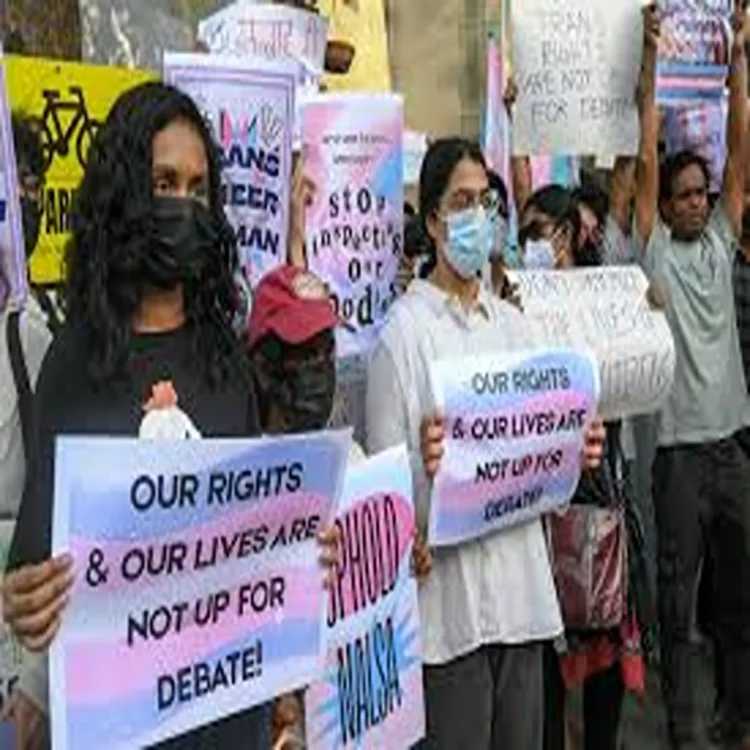
The passage of the bill, however, was not without controversy. Opposition members in Parliament raised strong objections, particularly regarding the exclusion of individuals identifying as gay or lesbian from the law’s coverage. Critics argued that the legislation creates a narrow definition of identity and leaves out other vulnerable groups within the broader LGBTQ+ spectrum.
During parliamentary discussions, opposition leaders emphasized that the bill should have undergone further scrutiny. They called for it to be referred to a standing committee to allow for wider consultation and a more inclusive approach.
Definition of Transgender Identity
A key feature of the amendment is its attempt to provide a clear and specific definition of the term “transgender.” According to the provisions, the law explicitly excludes individuals with different sexual orientations or self-identified gender identities that do not fall within its defined category.
The text of the law clarifies that transgender persons, as recognized under this framework, do not include those who identify based on sexual orientation alone or through self-perceived gender identities outside the defined scope. This distinction has been central to the criticism from various quarters, who argue that identity is complex and should not be narrowly interpreted.
Concerns Over Self-Determination
Another contentious aspect of the amendment is the establishment of an authority tasked with determining whether an individual qualifies as transgender under the law. Opponents of the bill have expressed concern that this provision could undermine the principle of self-identification, which has been widely recognized as a fundamental right in matters of gender identity.
Critics contend that requiring official validation may create additional barriers for individuals seeking recognition and protection. They argue that the process could lead to bureaucratic hurdles and potentially exclude those who do not conform to rigid criteria.
Government’s Justification
In response to the criticism, the government has maintained that the primary goal of the legislation is to protect a specific group that has historically faced severe and systemic discrimination. Officials have stated that the law is intended to address the unique social and cultural challenges experienced by transgender persons, rather than covering all forms of gender identity or sexual orientation.
The bill emphasizes that its purpose is focused and targeted. It acknowledges the distinct hardships faced by transgender individuals, particularly in areas such as access to healthcare, education, and employment, as well as exposure to violence and social exclusion.
Balancing Protection and Inclusivity
The debate surrounding the amendment highlights an ongoing challenge in policymaking: balancing targeted protections with broader inclusivity. While the government has framed the law as a necessary step toward safeguarding a marginalized community, critics argue that excluding other identities risks creating gaps in protection.
As the law awaits formal implementation, its real-world impact will likely be closely monitored by legal experts, activists, and community members alike. The effectiveness of the new provisions, as well as the concerns raised during its passage, will shape future discussions on rights and recognition in India’s evolving legal landscape.