
Politics – Seven AAP MPs Shift to BJP Amid Internal Party Rift
Politics – A significant political shift unfolded on Monday as Rajya Sabha MP Raghav Chadha publicly addressed his decision to part ways with the Aam Aadmi Party (AAP), describing the organisation as increasingly difficult to function within. His remarks came days after he, along with six other Members of Parliament, formally joined the Bharatiya Janata Party (BJP).
Concerns Over Internal Functioning
In a video statement shared online, Chadha explained that his move followed growing unease about the party’s internal environment. According to him, the situation had deteriorated to a point where meaningful participation and open dialogue were no longer possible. He indicated that while isolated disagreements can occur in any organisation, widespread dissatisfaction among multiple members signals deeper structural issues.
Chadha also reflected on his long association with AAP, noting that he had spent over a decade and a half contributing to its growth. Leaving behind a professional career in chartered accountancy, he said his entry into politics was driven by public service rather than personal ambition. Over the years, he claimed to have invested considerable effort in strengthening the party’s base.
Allegations Against Party Leadership
The Rajya Sabha MP alleged that the party’s direction had shifted significantly from its original ideals. He claimed that decision-making was now concentrated in the hands of a few individuals, whose priorities, according to him, did not align with broader public interest. Chadha further suggested that opportunities for elected representatives to voice concerns or contribute effectively in Parliament had become limited.
At the time of his statement, there was no immediate official response from AAP addressing these allegations.
Decision to Move On
Chadha outlined the dilemma he faced before making his decision. He said he considered three possible paths: stepping away from politics entirely, remaining within the party and attempting internal reform, or joining another political platform to continue his work. Ultimately, he chose the third option, stating that it would allow him to remain active in public life and pursue what he described as constructive politics.
He compared his experience to working in an environment where efforts are constrained and voices are restricted, adding that leaving such a setting becomes necessary to maintain effectiveness and integrity.
Collective Exit of Seven MPs
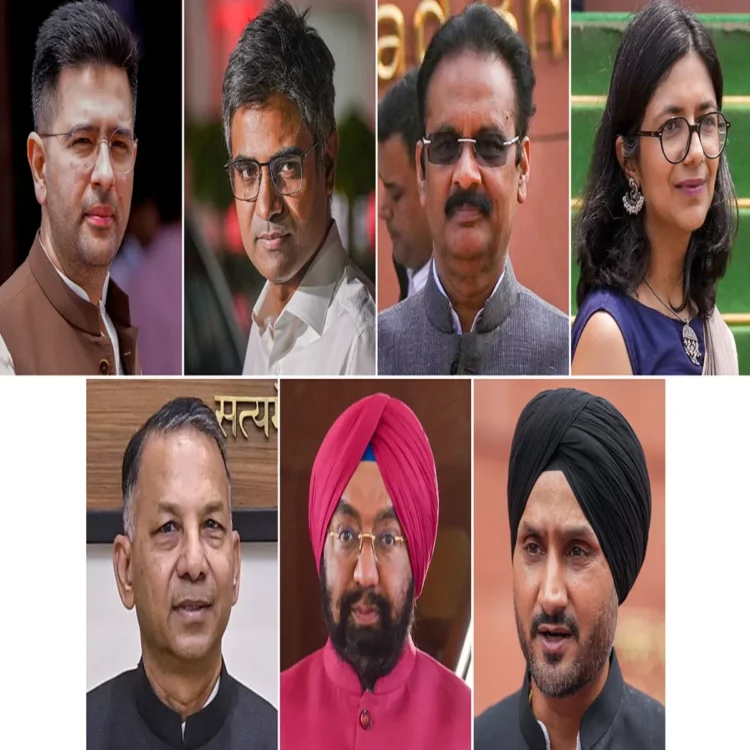
Chadha was joined in this move by six other Rajya Sabha MPs—Sandeep Pathak, Ashok Mittal, Harbhajan Singh, Rajinder Gupta, Swati Maliwal, and Vikramjit Sahney. Their decision was announced on April 24, with the group citing constitutional provisions that permit a merger when a sufficient number of members agree to switch parties.
Soon after, Rajya Sabha Chairman C. P. Radhakrishnan approved the merger, increasing the BJP’s strength in the Upper House to 113. As a result, AAP’s representation in the Rajya Sabha has been reduced to three members.
AAP’s Response and Political Fallout
The Aam Aadmi Party responded strongly to the development, initiating a formal complaint seeking the disqualification of the seven MPs. Senior leader Sanjay Singh criticised the move, calling it a violation of democratic principles and alleging that external pressure may have influenced the decision.
The episode has triggered a broader political debate, with questions being raised about party discipline, anti-defection laws, and the stability of political alliances. As both sides present their arguments, the matter is expected to remain a point of contention in the coming weeks.
Chadha, meanwhile, has indicated that he intends to continue focusing on public issues and hopes to contribute more effectively within his new political setting.