
Politics – Modi Targets Opposition Over Women’s Reservation, Praises Sikkim’s Growth
Politics – Prime Minister Narendra Modi on Tuesday delivered pointed remarks from two separate locations, blending political criticism with a focus on development. Speaking in Varanasi and later in Gangtok, he addressed issues ranging from women’s representation in governance to Sikkim’s achievements in sustainable agriculture.
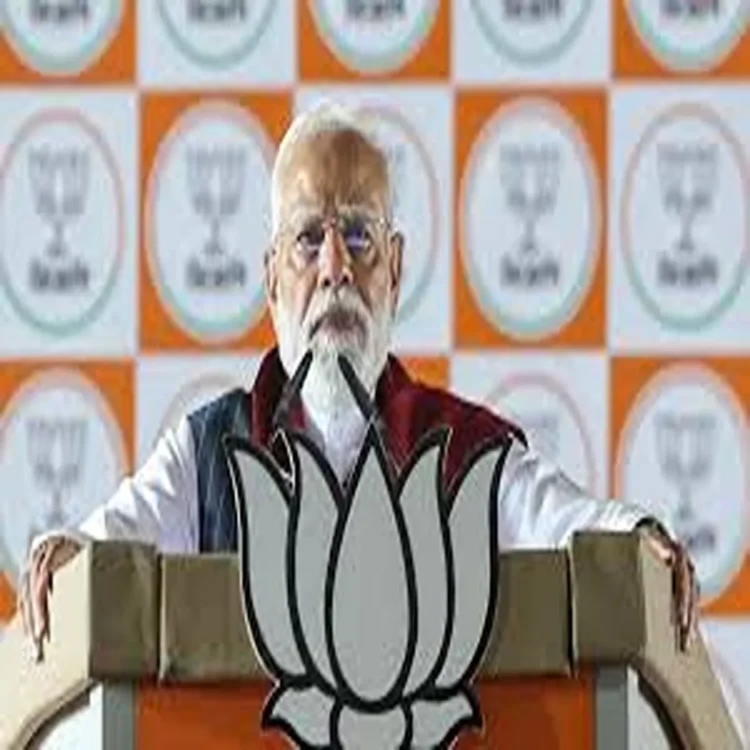
Strong Remarks on Women’s Reservation Bill
At a public gathering in Varanasi, the Prime Minister accused several opposition parties of obstructing progress on the proposed constitutional amendment aimed at reserving seats for women in legislative bodies. He claimed that parties such as the Congress, Samajwadi Party, Trinamool Congress, and DMK had once again failed to support women’s political participation.
He reiterated his government’s commitment to ensuring the implementation of the reservation policy, stating that empowering women at the household level strengthens society and, ultimately, the nation. According to him, women’s participation is central to India’s long-term development goals.
Emphasis on Women’s Role in National Development
During his address, Modi highlighted the importance of “Nari Shakti,” describing it as a key driver of India’s future growth. He urged citizens to support what he described as a major national effort to secure representation for women in governance structures.
The rally also touched on issues of women’s safety, dignity, and economic independence. With elections approaching in key states, these themes formed a significant part of the broader political messaging.
Criticism of Opposition’s Political Approach
The Prime Minister further alleged that opposition parties tend to operate within limited family-based leadership structures, which, he argued, makes them hesitant to promote broader representation, including that of women.
Referring to past governance challenges, he suggested that earlier administrations failed to create an environment where women felt secure. He contrasted this with current efforts aimed at strengthening law enforcement and accountability.
Development Projects in Varanasi
During his visit to Varanasi, Modi inaugurated and laid the foundation for multiple infrastructure projects valued at over Rs 6,000 crore. These included a new bridge project, improvements in healthcare facilities, and expanded railway connectivity linking major cities.
He also paid tribute to local cultural and religious landmarks before proceeding with the development announcements, reinforcing the city’s significance both spiritually and economically.
Sikkim Highlighted as a Model State
Later in Gangtok, marking 50 years since Sikkim became a state of India, the Prime Minister praised its achievements in organic farming. He described Sikkim as a leading example for the rest of the country, noting that it transitioned to fully organic agriculture nearly a decade ago.
He also pointed out the state’s rich biodiversity, mentioning its significant share of India’s plant species and wildlife diversity despite its small geographical size. The presence of Mount Kanchenjunga continues to attract tourists, contributing to the local economy.
Focus on Infrastructure and Tourism Growth
Modi stressed the importance of improving infrastructure in the northeastern region, referring to a long-pending railway project that has recently gained momentum. He suggested that such projects could have been completed earlier with stronger policy focus.
Encouraging tourism, he urged visitors to support local economies by purchasing regional products. He also promoted eco-tourism, wellness travel, and adventure activities as key opportunities for sustainable growth in the region.
Broader Message of Development and Inclusion
Across both addresses, the Prime Minister combined political messaging with a broader narrative of development and inclusion. While criticizing opposition parties, he emphasized ongoing efforts to expand infrastructure, promote sustainable practices, and enhance participation across different sections of society.
His remarks reflect a dual strategy of addressing immediate political debates while highlighting long-term developmental priorities.