
Politics – Modi Pays Tribute to Chandra Shekhar on Centenary Year
Politics – Prime Minister Narendra Modi on Friday honoured former Prime Minister Chandra Shekhar on the beginning of his birth centenary year, recalling his enduring influence on India’s democratic journey and public life.
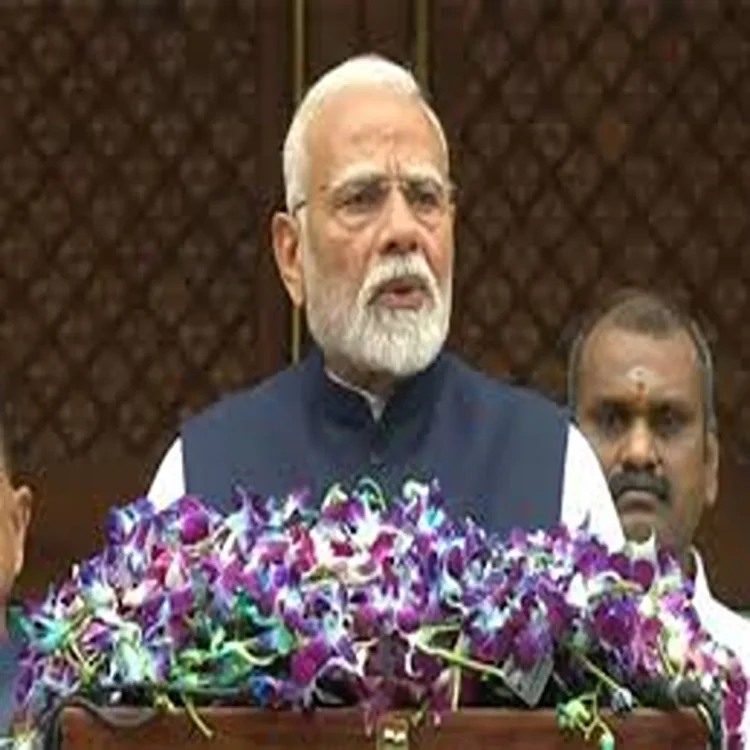
Tribute Marks Beginning of Centenary Observance
In a message shared on social media, the Prime Minister remembered Chandra Shekhar as a leader who stood firmly by his beliefs and maintained a deep connection with the people. He noted that the centenary year offers an opportunity to revisit the late leader’s vision of a fair and prosperous nation and to reaffirm commitment to those ideals.
Modi highlighted Chandra Shekhar’s reputation as a mass leader who combined courage with clarity in public life. According to him, his grounded approach and understanding of common citizens’ aspirations made him stand out in Indian politics.
Personal Recollections and Message to Youth
Reflecting on his own interactions, the Prime Minister mentioned occasions when he had the chance to engage with Chandra Shekhar on national issues. He described those exchanges as meaningful and insightful, particularly in shaping perspectives on development.
He also urged young people to explore Chandra Shekhar’s ideas and contributions, suggesting that his life offers valuable lessons on leadership, integrity, and service to society.
Early Life and Political Beginnings
Chandra Shekhar was born on April 17, 1927, in Ibrahimpatti village in Uttar Pradesh’s Ballia district, into an agricultural family. His early years were shaped by rural life, which later influenced his political outlook and commitment to grassroots issues.
His interest in public affairs developed during his student days. After completing a Master’s degree in Political Science from Allahabad University in the early 1950s, he became actively involved in the socialist movement. During this phase, he worked closely with noted socialist thinker Acharya Narendra Dev, which played a key role in shaping his ideological foundation.
Rise in Political Career
Chandra Shekhar’s political journey began at the district level, where he took up responsibilities within the Praja Socialist Party in Ballia. His rise was swift—within a short span, he moved from district secretary to a senior position at the state level and eventually became the party’s general secretary in the mid-1950s.
In 1962, he entered Parliament as a member of the Rajya Sabha from Uttar Pradesh. A few years later, he joined the Indian National Congress and took on a prominent organisational role. As a parliamentarian, he earned recognition for raising issues concerning marginalised communities and advocating structural reforms for social progress.
Stand During Political Turmoil
Known for his outspoken nature, Chandra Shekhar often challenged policies that he believed favoured concentrated economic power. His criticism of influential business groups and their ties with the state placed him at odds with sections of the political establishment.
During the Emergency imposed in June 1975, he was detained under preventive laws despite being part of the ruling party’s leadership framework. His arrest reflected his independent stance and commitment to democratic principles.
Bharat Yatra and Grassroots Engagement
One of the most defining episodes of his life was a nationwide foot march undertaken in 1983. Covering nearly 4,260 kilometres from Kanyakumari to Rajghat in New Delhi, the journey was aimed at directly engaging with citizens across regions and understanding their concerns.
Following this extensive outreach, he established several Bharat Yatra Centres across different states. These centres were intended to promote social awareness and train workers for development initiatives in underprivileged areas, reinforcing his focus on grassroots participation.
Lasting Legacy in Indian Politics
Chandra Shekhar served as President of the Janata Party for over a decade and remained an influential voice in national politics. His career was marked by a consistent emphasis on democratic values, social justice, and public accountability.
As India marks the beginning of his centenary year, leaders across the spectrum continue to acknowledge his contribution to political discourse and nation-building. His life remains a reference point for those seeking to balance ideology with practical governance.