
Politics – Modi Highlights UCC and Election Reform as Key Priorities
Politics – Prime Minister Narendra Modi on Monday outlined two major policy areas—the Uniform Civil Code and the concept of simultaneous elections—as ongoing priorities for the Bharatiya Janata Party, indicating that discussions on both subjects are actively progressing at the national level.
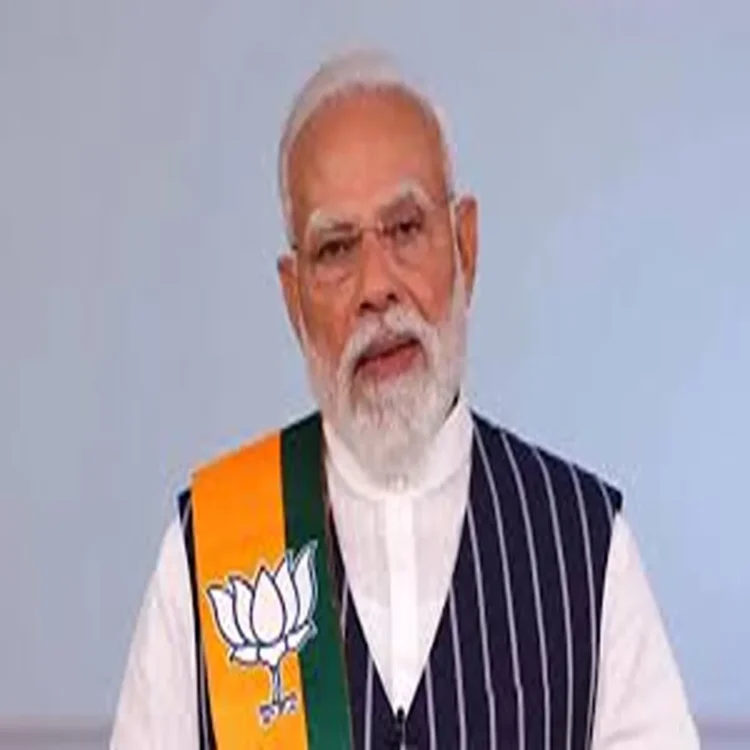
Focus on Pending Policy Reforms
Addressing party members virtually on the BJP’s 47th Foundation Day, the Prime Minister described the Uniform Civil Code (UCC) and the “One Nation, One Election” proposal as significant yet unfinished objectives. He noted that both topics are currently under detailed consideration, with broader consultations taking place across the country.
The remarks come ahead of a proposed special session of Parliament expected in mid-April, where the government may introduce key legislative proposals. Modi emphasized that these reforms are part of a larger vision aimed at streamlining governance and ensuring uniformity in legal and electoral processes.
Commitment to Women’s Reservation
Reaffirming the government’s stance on gender representation, Modi reiterated that the BJP remains committed to implementing 33 percent reservation for women in both Parliament and state assemblies. He pointed out that the party has supported this initiative for decades, tracing its advocacy back to the mid-1990s.
According to him, the current administration is determined to ensure that the Women’s Reservation Act, also referred to as the Nari Vandan Adhiniyam, is operational in time for the 2029 general elections. He described this as a crucial step toward strengthening women’s participation in governance.
Broader Vision for Development
The Prime Minister also spoke about the party’s long-term political and economic vision, stating that efforts are being made to transform India into a developed and self-reliant nation. He highlighted steady progress across sectors and said that the government remains focused on addressing challenges while maintaining growth momentum.
He added that public support reflects confidence in the government’s approach, particularly in areas related to infrastructure, governance reforms, and social welfare initiatives.
Key Achievements Highlighted
During his address, Modi listed several initiatives undertaken by his government as examples of its policy direction. These included the removal of outdated colonial-era laws, the construction of a new Parliament building, and the introduction of a 10 percent reservation for economically weaker sections within the general category.
He also referred to legislative actions such as the ban on instant triple talaq and the implementation of the Citizenship Amendment Act as part of broader governance reforms. In addition, he cited the construction of the Ram temple in Ayodhya as a fulfillment of a longstanding commitment.
Emphasis on Legal and Institutional Changes
The Prime Minister underlined the importance of modernizing India’s legal framework, stating that the repeal of numerous obsolete laws inherited from the British era was a necessary step toward simplifying governance. He described these changes as part of an effort to make the legal system more relevant and efficient for present-day needs.
At the same time, he highlighted the significance of building institutions that reflect democratic values, pointing to the new Parliament building as a symbol of India’s evolving political landscape.
Looking Ahead
With discussions on electoral and legal reforms continuing, the government appears to be preparing the ground for further legislative action. The upcoming parliamentary session is expected to provide more clarity on the timeline and scope of these proposals.
Modi’s address signals that the BJP intends to keep these issues at the forefront of its policy agenda while continuing to pursue broader development goals.