
Politics – Farooq Abdullah Voices Concern Over INDIA Bloc’s Limited Support
Politics – National Conference president Farooq Abdullah has expressed dissatisfaction with the INDIA alliance, saying it has not demonstrated the level of commitment he expected, particularly on the issue of restoring Jammu and Kashmir’s statehood. Speaking candidly in an interview, the veteran leader noted that while his party remains aligned with the opposition bloc, the coalition has yet to fully utilise its collective strength.
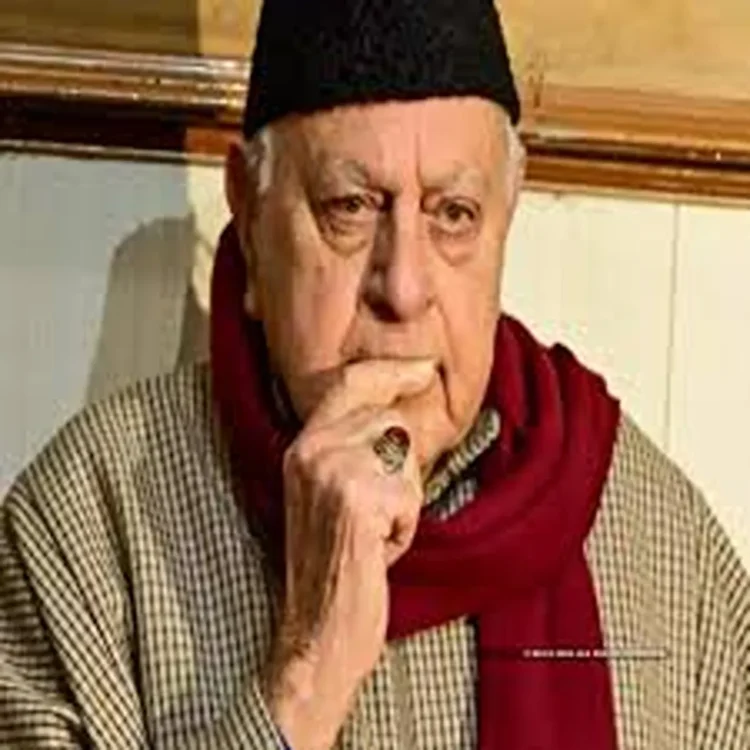
Concerns Over Alliance Commitment
Abdullah pointed out that one of his primary concerns is the lack of a strong and coordinated approach within the alliance on matters related to Jammu and Kashmir. He said the expectation was that the bloc, especially its leading party, would push the issue with greater determination. However, he believes that has not happened so far, leaving his party disappointed.
He reiterated that the National Conference continues to stand firmly with the alliance but stressed that its role should extend beyond electoral cooperation. According to him, the bloc must take a more proactive stance on key national concerns, including the political future of Jammu and Kashmir.
Call for Stronger Engagement
The senior leader emphasised the need for regular discussions among alliance members. He argued that the grouping should not be limited to contesting elections but must evolve into a platform that addresses broader national challenges. Abdullah remarked that important issues affecting the country are sometimes being overlooked, which he finds troubling.
He expressed hope that once ongoing elections in various states conclude, the alliance would regroup and work with renewed focus. In his view, a more unified and consistent effort is necessary to address both national priorities and regional concerns such as statehood.
Leadership and Changing Political Landscape
When asked about the current political environment, Abdullah highlighted the opposition’s inability to project a leader capable of effectively countering Prime Minister Narendra Modi. He observed that contemporary politics demands a different approach compared to previous decades.
Offering advice to opposition leaders, he suggested that they should connect more closely with the public by stepping out of their comfort zones. Engaging directly with people, he said, is essential in today’s political climate, which is far removed from the era of earlier national leaders.
Statehood Restoration Remains Key Issue
On the question of Jammu and Kashmir’s statehood, Abdullah said there have been repeated assurances from the central government. He noted that both the prime minister and the home minister have indicated their commitment to restoring statehood, though a clear timeline has not been provided.
He expressed cautious optimism that the matter would be addressed after the completion of state assembly elections elsewhere. At the same time, he acknowledged the uncertainty surrounding when exactly a decision might be taken.
Possibility of Legal Action
Abdullah indicated that if progress on statehood does not materialise, his party may consider seeking legal intervention. Referring to earlier directions from the Supreme Court, he pointed out that the court had called for restoration of statehood at the earliest.
He suggested that approaching the court again could become the only available option if political assurances fail to translate into action. For now, however, the party appears to be waiting for developments on the political front.
Centre-State Relations and Development Issues
Discussing relations with the central government, Abdullah said there is ongoing engagement at the administrative level. He mentioned recent support for rural infrastructure projects as a positive development, while also noting that several issues remain pending.
He expressed confidence that these concerns would be addressed gradually, though he did not specify timelines.
Message to Emerging Leaders
Drawing on his long political experience, Abdullah offered guidance to younger leaders. He stressed the importance of honesty and transparency in public life, cautioning against misleading people. According to him, voters today are more aware and discerning than ever before.
He also urged young leaders to focus on tackling poverty and lack of education, describing these as critical challenges. Despite various pressures, he encouraged them to remain committed to these goals.