
Politics – Delhi Assembly Speaker Defends Suspension Amid Ongoing Disruptions
Politics – During the current Budget Session of the Delhi Legislative Assembly, Speaker Vijender Gupta addressed the House on Tuesday, raising concerns over repeated disruptions that have affected proceedings. He also clarified the circumstances that led to the suspension of four members belonging to the Aam Aadmi Party (AAP), stating that the action was taken after careful consideration and in accordance with established rules.
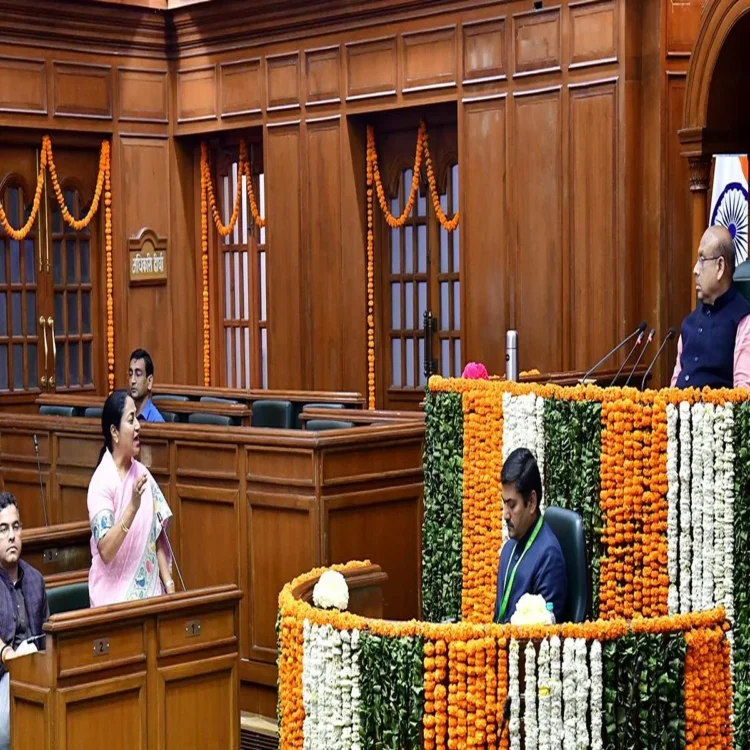
Speaker Raises Concerns Over Repeated Disruptions
The Speaker underlined that maintaining order and decorum within the Assembly is essential for the proper functioning of democratic institutions. He noted that the recent disturbances, particularly during the Lieutenant Governor’s address, crossed acceptable limits and disrupted a constitutionally significant process. According to Gupta, such actions undermine the dignity of the House and cannot be overlooked, regardless of political affiliations.
Suspension Based on Procedural Rules
Gupta made it clear that the suspension of the four legislators was not a sudden or arbitrary move. Instead, it followed the Rules of Procedure governing the Assembly. He explained that the members had engaged in persistent protests and conduct deemed inappropriate within the legislative setting, leaving the Chair with little choice but to act.
He further pointed out that the initial suspension stemmed from the members’ actions during the Lieutenant Governor’s address, which is considered a constitutional obligation. Disrupting such proceedings, he said, sets a concerning precedent and weakens institutional norms.
Letter to Opposition Leader Highlights Concerns
In a formal communication addressed to Leader of Opposition Atishi, the Speaker expressed dissatisfaction with her stance on the issue. He criticised her for defending the suspended members instead of acknowledging what he described as “unparliamentary behaviour.”
The letter also accused the Opposition of presenting a misleading narrative regarding the suspensions. Gupta suggested that such claims were aimed at gaining political advantage rather than addressing the core issue of maintaining discipline within the House.
Absence From Proceedings Questioned
Gupta referred to a meeting held on March 21, where he had advised Opposition members to attend the Assembly sessions and allow the House to deliberate on the possibility of recalling the suspended legislators. However, he noted that the Leader of Opposition chose not to participate in subsequent proceedings.
He remarked that avoiding participation does not align with the responsibilities expected from elected representatives. According to him, dragging the authority of the Chair into political disputes diverts attention from the actual issue of legislative conduct.
Rejection of Bias Allegations
Addressing accusations of bias and authoritarian functioning, the Speaker rejected such claims. He maintained that under his leadership, the Assembly has shown considerable flexibility and tolerance towards Opposition voices. However, he added that such openness should not come at the expense of orderly proceedings.
Gupta stressed that while dissent is a vital part of democracy, it must be expressed within the framework of rules and respect for the institution.
Call for Constructive Participation
The Speaker urged the suspended members to reflect on their actions and consider expressing regret to the House. He suggested that an apology could pave the way for restoring normalcy and allow the Assembly to focus on legislative work.
He also appealed to the Opposition to engage constructively in discussions rather than staying away from proceedings. According to him, absence from the House ultimately affects the representation of their constituents and hampers the legislative process.
Emphasis on Upholding Institutional Integrity
Reiterating his stance, Gupta emphasised that the dignity of the Assembly and the authority of the Chair must remain above political considerations. He concluded that safeguarding these principles is essential for ensuring that the democratic process functions smoothly and effectively.