
Politics – BJP Secures Historic Victory, Ends TMC Rule in West Bengal
Politics – In a major political development, the Bharatiya Janata Party has secured a decisive victory in West Bengal, winning 206 out of 294 Assembly seats and bringing an end to the Trinamool Congress’s 15-year tenure in the state. This outcome marks the BJP’s first time forming a government in West Bengal and reflects a significant shift in the state’s political landscape.
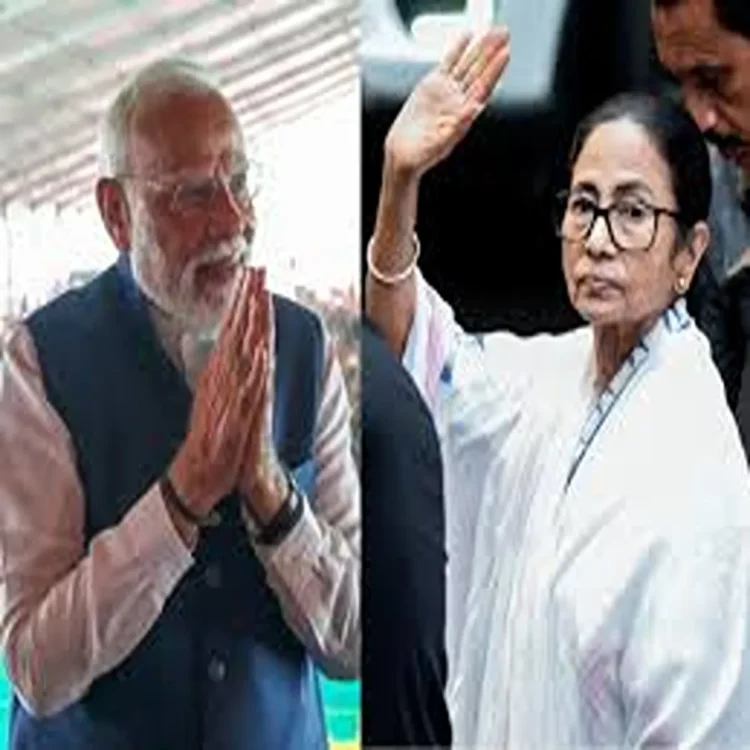
Chief Minister Faces Major Electoral Setback
The election results gained further attention as Chief Minister Mamata Banerjee was defeated in the Bhabanipur constituency by BJP candidate Suvendu Adhikari. After trailing in the early stages of counting, Adhikari surged ahead in later rounds to win by a margin of 15,105 votes. This result is particularly notable as it mirrors his earlier victory over Banerjee in Nandigram in 2021, reinforcing his rising prominence within the BJP’s state leadership.
Adhikari, once considered a close associate of Banerjee, has now emerged as a key figure in Bengal politics. Alongside him, several other BJP leaders are being discussed as potential candidates for the chief minister’s role.
Statewide Gains Reflect Broad Support
According to official data, the BJP crossed the majority mark well before counting concluded and steadily expanded its lead. The Trinamool Congress finished with 80 seats and led in one. The BJP’s success was not limited to a specific region but extended across various parts of the state, including urban centres, border areas, and traditionally contested regions.
The party made notable gains in constituencies such as Dinhata, Gosaba, Bankura, Asansol Dakshin, Durgapur Purba, Darjeeling, and Medinipur, indicating a widespread shift in voter preference.
Vote Share Trends Highlight Changing Dynamics
The BJP’s vote share saw a significant rise, reaching around 45 percent, compared to 38 percent in the previous Assembly election. In contrast, the TMC’s vote share dropped to approximately 40.94 percent from its earlier 48 percent. These figures suggest a consolidation of support for the BJP, alongside a decline in the ruling party’s traditional voter base.
In several constituencies where previous victory margins were narrow, the BJP managed to convert opportunities into wins, pointing to a deeper change in electoral behavior rather than a temporary swing.
TMC Faces Organizational and Leadership Challenges
The election proved particularly challenging for the Trinamool Congress at multiple levels. Several senior leaders and ministers were defeated, including prominent figures who had previously held key positions in the state government. Losses were reported in important constituencies such as Sabang and Dinhata, while even parts of Kolkata saw unexpected outcomes.
The party’s established strengths, including grassroots organization and welfare initiatives, appeared to weaken during this election cycle, both in rural areas and urban constituencies.
Bhabanipur Contest Carries Symbolic Weight
The Bhabanipur seat, long associated with Mamata Banerjee, became a focal point of the election. Initially leading by a comfortable margin, Banerjee saw her advantage diminish as counting progressed, eventually losing in the final rounds. Given the constituency’s political importance and its role in restoring her to the Assembly in the past, this defeat carries considerable symbolic significance.
BJP Credits Campaign Strategy and Leadership
Prime Minister Narendra Modi described the result as a reflection of public support for development-focused governance. The BJP’s campaign was led prominently by Modi, while organizational efforts were coordinated by Union Home Minister Amit Shah. The party’s steady expansion in West Bengal over the past decade, from a marginal presence to a dominant force, played a key role in this outcome.
Opposition Raises Concerns Over Process
Following the results, Mamata Banerjee questioned the fairness of the election, alleging irregularities during the counting process. Similar concerns were raised by Congress leader Rahul Gandhi, who referred to broader patterns across recent elections. The BJP, however, rejected these claims and maintained that the mandate reflects the will of the voters.
A Turning Point in State Politics
The outcome represents a major turning point for West Bengal. For the BJP, it marks a transition from opposition to governance in the state. For the Trinamool Congress, the result signals the need for internal reassessment after more than a decade in power.
This election not only changes the leadership in West Bengal but also reshapes the broader political narrative in eastern India, highlighting evolving voter priorities and the emergence of a more competitive political environment.