
Parliament – Special Session Focuses on Women’s Quota and Seat Expansion Debate
Parliament – The government has called a special session of Parliament beginning Thursday, bringing key legislative proposals to the forefront, including a long-discussed plan to reserve seats for women and a contentious move to redraw parliamentary constituencies.
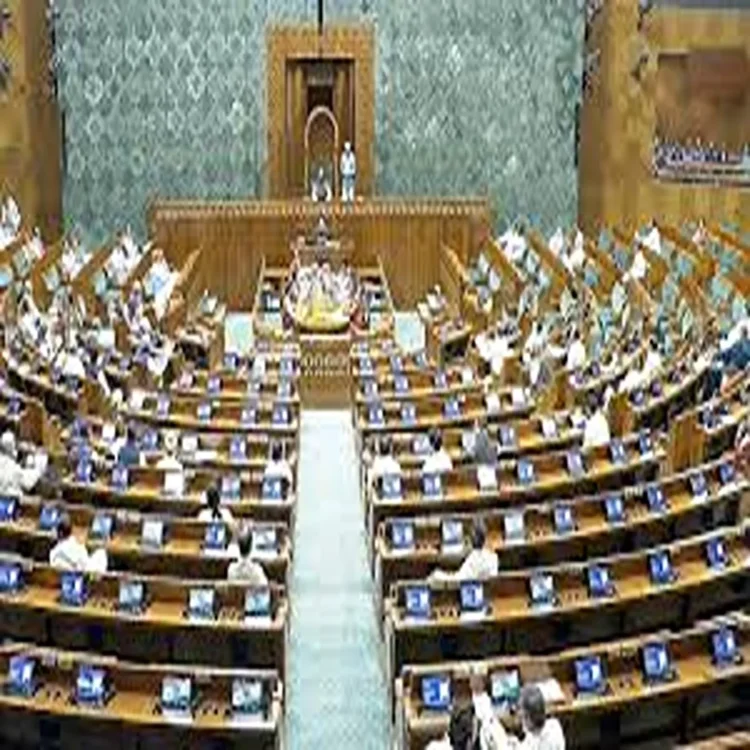
The meeting comes amid heightened political activity, with opposition floor leaders scheduled to gather at the office of the Leader of Opposition in the Rajya Sabha, Mallikarjun Kharge, to coordinate their approach for the upcoming debates. The session, set for April 16 to 18, is expected to witness intense discussions as both sides prepare to present their positions on crucial reforms.
Key Bills Expected During the Session
Among the major proposals likely to be introduced is the Constitution (One Hundred and Thirty-First Amendment) Bill, 2026, which aims to operationalize women’s reservation in the Lok Sabha starting from the 2029 general elections. Alongside this, the Delimitation Bill, 2026, proposes a reconfiguration of parliamentary constituencies, while the Union Territories Laws (Amendment) Bill, 2026, seeks changes in governance frameworks for union territories.
Law Minister Arjun Ram Meghwal is expected to present the constitutional amendment and delimitation proposals, while Home Minister Amit Shah is slated to introduce the bill related to union territories. These legislative measures are being positioned as part of a broader effort to reshape representation and governance structures.
Debate Over Delimitation and Seat Expansion
The proposal to redraw constituency boundaries has sparked considerable concern among opposition parties. Questions have been raised about the rationale behind altering existing boundaries and the potential increase in Lok Sabha seats from the current 543 to as many as 850.
Critics argue that such changes could have far-reaching political implications, potentially affecting regional representation and electoral balance. Supporters, however, maintain that delimitation is necessary to reflect demographic changes and ensure fair representation based on updated population data.
Procedural Move to Fast-Track Legislation
To facilitate the passage of these interconnected bills, the government is expected to move a procedural motion in the Lok Sabha. This proposal seeks to suspend specific provisions under Rule 66, allowing multiple related bills to be taken up and passed together.
The motion highlights that certain bills are dependent on the constitutional amendment, making it necessary to consider them collectively. This approach is seen as a strategic step to streamline legislative proceedings during the limited duration of the special session.
Push for Women’s Reservation Implementation
The government has been actively seeking support from opposition parties to ensure the timely implementation of women’s reservation. The plan is to roll out the reservation framework from the 2029 Lok Sabha elections, based on data from the 2011 census.
Prime Minister Narendra Modi recently emphasized the importance of consensus on the issue, stating that the proposal reflects the aspirations of women across the country. He called for unified support to ensure that the measure becomes a reality without delay.
Opposition’s Conditional Support
While opposition parties have broadly welcomed the idea of reserving seats for women, they have expressed strong reservations about the delimitation proposal. Leaders have indicated that they are in favor of implementing women’s reservation at the earliest but remain unconvinced about the need for immediate constituency restructuring.
This divergence sets the stage for a complex debate during the session, where consensus on one issue may not necessarily translate into agreement on others.
As Parliament convenes for this crucial session, the outcome of these discussions will likely shape the future of electoral representation in India, with both political and structural implications for the years ahead.