
NEET – Vijay Backs Congress Protest, Calls Police Action Against Leaders Undemocratic
NEET – Political tensions over the NEET examination and the detention of opposition leaders have intensified, prompting fresh demands for changes in India’s education policy.
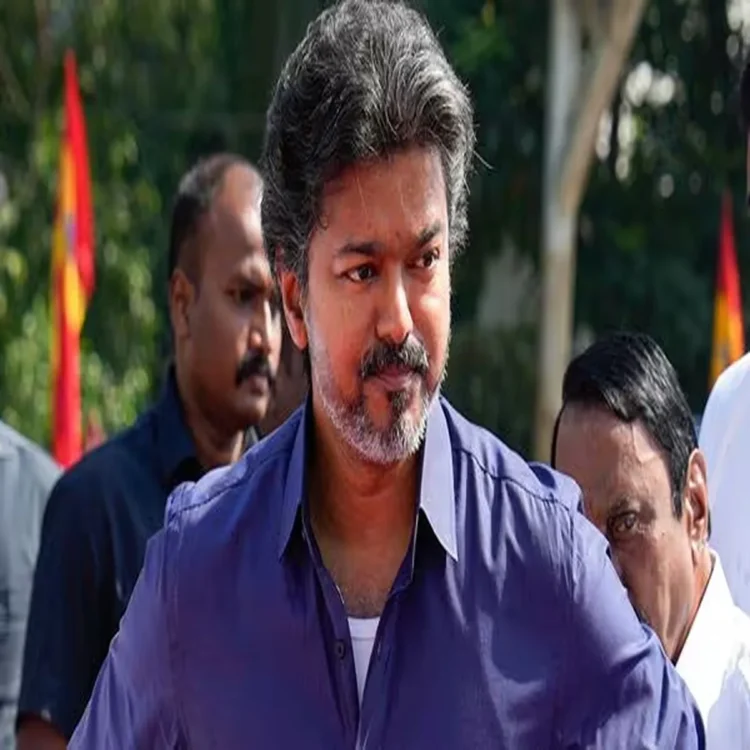
Tamil Nadu Chief Minister Vijay has expressed support for the Congress-led protests over the police action taken against opposition leaders in New Delhi, describing the detentions as inconsistent with democratic values. His remarks came after Congress leaders and allied opposition parties staged demonstrations over issues linked to the NEET examination and their demand for accountability from the Union government.
Opposition Protest Sparks Political Response
The latest round of protests unfolded on Parliament premises, where several opposition Members of Parliament, including Leader of the Opposition Rahul Gandhi, Congress leader Priyanka Gandhi Vadra, and Samajwadi Party president Akhilesh Yadav, participated in demonstrations while dressed in black as a mark of protest. A separate Congress demonstration near Lok Kalyan Marg later led to the detention of Rahul Gandhi, Priyanka Gandhi, and several other party leaders by Delhi Police.
Congress has been pressing for the resignation of Prime Minister Narendra Modi and Union Education Minister Dharmendra Pradhan, holding them responsible for the handling of issues surrounding the NEET examination and related controversies.
Vijay Criticises Detentions
Reacting to the developments, Vijay said the detention of opposition leaders who had joined demonstrations in support of students was unacceptable in a democratic system. In a statement shared on social media platform X, he said the actions taken against senior political leaders, including Rahul Gandhi, deserved condemnation.
He also announced that Tamilaga Vettri Kazhagam (TVK) fully supports the opposition’s protest inside the Parliament complex, stating that the party stands with those raising concerns over the treatment of demonstrators and the issues affecting students.
Fresh Push to Abolish NEET
Alongside his criticism of the police action, Vijay renewed his party’s long-standing demand for the complete abolition of the National Eligibility-cum-Entrance Test (NEET). He maintained that the examination places an unfair burden not only on students but also on their families and argued that meaningful reform requires structural changes in the education system.
According to Vijay, the permanent solution lies in transferring education from the Concurrent List to the State List, allowing state governments to exercise greater control over education policies. He said this shift would enable states to independently decide matters related to school education as well as professional courses, including medical education.
Proposal for Interim Constitutional Change
Recognising that such a constitutional change could take time, Vijay also suggested an interim arrangement. He proposed the creation of a “Special Concurrent List” that would temporarily provide states with wider authority over general and medical education until a permanent solution is achieved.
He reiterated that his party had consistently maintained this position since its formation and had highlighted the issue during earlier public programmes focused on education. Vijay further urged the Union government to acknowledge public sentiment and take steps to withdraw the NEET examination, saying that this remains the only effective answer to the concerns repeatedly raised by students and parents.
Wider Political Debate Continues
Vijay’s remarks came shortly after DMK president and former Tamil Nadu Chief Minister M.K. Stalin also renewed his demand for the abolition of NEET, highlighting that opposition to the examination continues to unite several political parties in Tamil Nadu despite their broader political differences.
Meanwhile, Congress workers organised demonstrations in multiple states, protesting against the police action that followed the July 20 protests in the national capital. Party leaders accused the authorities of suppressing democratic dissent through detentions and restrictions on peaceful demonstrations.
On the other hand, the Union government indicated that it is prepared to address the issue in Parliament. Union Parliamentary Affairs Minister Kiren Rijiju stated that the government is willing to hold a discussion on the alleged NEET paper leak and other concerns related to the examination process, signalling that the matter is likely to remain a major subject of political debate in the ongoing parliamentary session.