
Narmada – Four States Reach Agreement on Displacement Compensation Issues
Narmada – Madhya Pradesh, Gujarat, Rajasthan and Maharashtra have signed an agreement aimed at settling long-running disputes over rehabilitation and land compensation linked to the Narmada Project. Union Home Minister Amit Shah was present when the states formalised the arrangement on Tuesday.
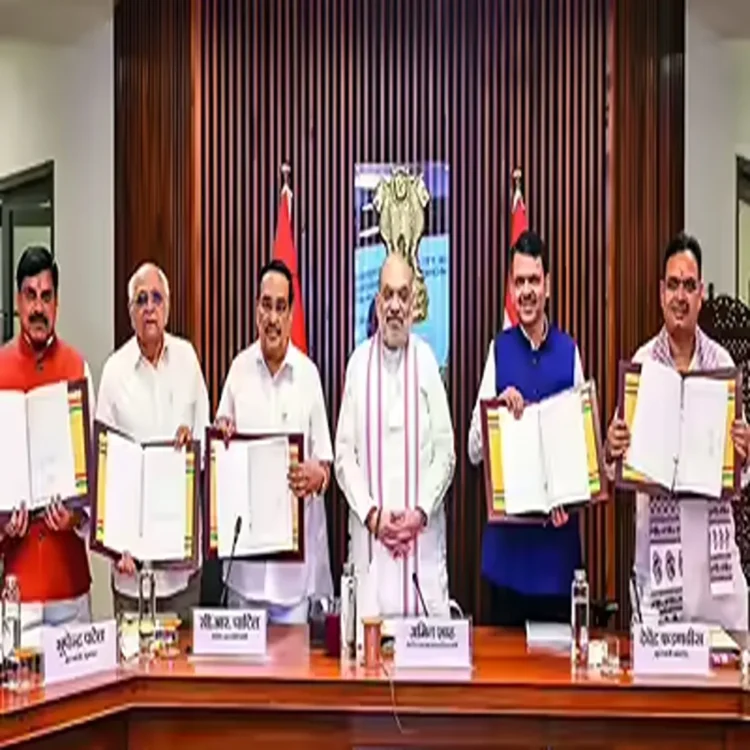
The agreement addresses concerns involving families displaced by the large river development project, particularly residents from areas affected by reservoirs and flooding. Officials said the framework is intended to resolve pending questions related to resettlement, acquired land and compensation payments.
Focus on Affected Families
For years, rehabilitation and compensation matters connected to the Narmada Project have remained a source of disagreement among the participating states. The project spans several regions and has affected communities in different parts of central and western India, making coordination between governments essential.
Under the new understanding, the four states are expected to work together on outstanding cases involving displaced households. The focus will be on ensuring that rehabilitation commitments and land-related compensation issues are handled through an agreed process rather than prolonged administrative or legal disputes.
Officials did not immediately provide details about timelines, financial provisions or the number of families expected to benefit. However, the signing is being viewed as an important administrative step toward closing issues that have remained unresolved for decades.
Centre Encourages Consensus-Based Solutions
The agreement reflects the Centre’s wider effort to encourage states to settle inter-state matters through consultation and cooperation. Water projects, land acquisition and rehabilitation programmes often involve several governments, creating complex legal and financial responsibilities.
The Narmada settlement is part of a recent series of agreements involving river systems and multi-state infrastructure projects. These initiatives seek to improve coordination on water availability, irrigation needs, hydropower development and the interests of people living near project sites.
Government officials said dialogue between states has helped create conditions for progress on disputes that had previously remained pending for long periods.
Yamuna Water Project Agreement
On June 29, Rajasthan and Haryana signed an agreement related to the Yamuna Water Project. The arrangement covered the construction and implementation of the proposed project and brought an end to a disagreement that had continued for nearly 30 years.
Officials described that agreement as a significant development in efforts to address one of the country’s longest-running inter-state water matters. The project is expected to support water management planning for the two states, subject to implementation processes and future coordination.
The development also demonstrated the importance of negotiated solutions in disputes involving shared river resources, where states must balance agricultural, urban and environmental requirements.
Kishau Project Gains Support From Six States
Earlier, on June 16, six states agreed to sign a memorandum of understanding for the Kishau Multipurpose Project. Himachal Pradesh, Uttarakhand, Delhi, Uttar Pradesh, Haryana and Rajasthan were part of the proposed arrangement.
The project is designed to improve water availability, expand irrigation support and contribute to electricity generation. It is also expected to play a role in efforts connected with the rejuvenation of the Yamuna River.
The Kishau project has long required coordination among states with different water and infrastructure priorities. The proposed MoU is expected to provide a common basis for moving the project forward.
Growing Momentum on River Infrastructure
The recent agreements indicate renewed movement on legacy disputes involving river water, rehabilitation and infrastructure development. While the implementation of each project will require continued cooperation, the settlements show that states are increasingly seeking negotiated paths to address complex issues.
For families affected by the Narmada Project, the latest agreement may offer a clearer route for resolving compensation and rehabilitation claims. Its impact will depend on how effectively the commitments are carried out by the four participating states.