
Maintenance – Supreme Court Says Adultery Claim Must Be Examined Before Interim Support Decision
Maintenance – A significant ruling from the Supreme Court has clarified that when a husband raises an allegation of adultery against his wife in a maintenance dispute, the issue cannot be postponed until the final stage of the case if there is prima facie evidence supporting the claim. The court observed that such allegations must be considered before deciding whether interim maintenance should be granted, as the relevant legal provision bars maintenance if adultery is established.
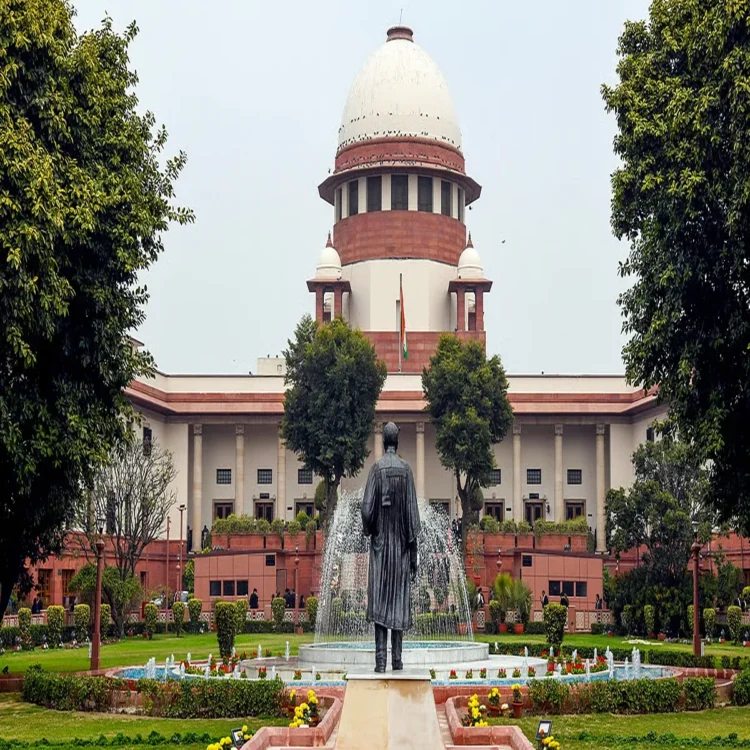
Supreme Court Clarifies Scope of Interim Maintenance
A Bench comprising Justices Sanjay Karol and Vipul M. Pancholi stated that courts should not automatically defer the examination of adultery allegations until the conclusion of the trial. The judges explained that Section 125(4) of the Code of Criminal Procedure provides that a wife found to be living in adultery is not entitled to either interim or final maintenance. Therefore, if the husband submits an application under the provision and is able to present prima facie evidence supporting the allegation, the court must first assess that material before deciding on interim financial assistance.
The Bench noted that ignoring such a plea at the preliminary stage would amount to an incorrect interpretation of the law.
Background of the Dispute
The case arose from a matrimonial dispute involving a couple who married in July 2014. According to court records, differences between the spouses led the wife to leave the matrimonial home in May 2020 along with their minor son.
She later approached the Special Additional Chief Judicial Magistrate in Udaipur, seeking maintenance for herself and the child under Section 125 of the Code of Criminal Procedure. In response, the husband filed an application alleging that his wife was involved in an adulterous relationship and therefore was not legally entitled to receive maintenance. He also submitted supporting material before the court.
Trial Court Had Deferred Examination
The trial court chose not to examine the husband’s allegations at the interim stage, observing that the authenticity of electronic evidence could only be determined during the course of a full trial. As a result, the issue was left for final adjudication.
The Supreme Court disagreed with that approach, stating that where credible prima facie evidence is produced, the court should first decide whether the statutory bar under Section 125(4) applies before awarding interim maintenance. The Bench, however, reiterated that maintenance laws serve an important social welfare purpose and should generally be interpreted in a manner that protects the dignity and financial security of eligible dependents.
Concern Over Use of Private Detectives
While hearing the matter, the Supreme Court also expressed concern over the growing use of private investigators in family disputes. The judges observed that there is a need for greater accountability in the functioning of such agencies, especially when their findings are relied upon in sensitive matrimonial litigation.
The court urged the Central Government and the Law Commission to examine the possibility of introducing a regulatory framework for private detective agencies so that their operations are governed by appropriate legal standards.
Other Matters Heard by the Supreme Court
In another case, the Supreme Court directed the Central Government to appoint a nodal officer in the Ministry of External Affairs to coordinate with families of Indians who have died, gone missing, or suffered injuries while participating in the Russia-Ukraine conflict. The court also instructed the ministry to facilitate DNA matching to help identify mortal remains wherever required.
Separately, the apex court sought the Centre’s response to a petition challenging the constitutional validity of polygamy among Muslims. A Bench headed by Chief Justice Surya Kant, along with Justices Joymalya Bagchi and V. Mohana, issued notice to the Union Government on a plea filed by women’s rights activists, seeking its stand on the issue.