
LPGPrices – Shimla Traders Warn of Rising Food Costs After Gas Hike
LPGPrices – Restaurant owners and small business operators in Shimla have voiced strong concerns over a steep increase in commercial LPG cylinder prices, cautioning that the rise will directly translate into higher food prices and add to inflationary pressures in the region.
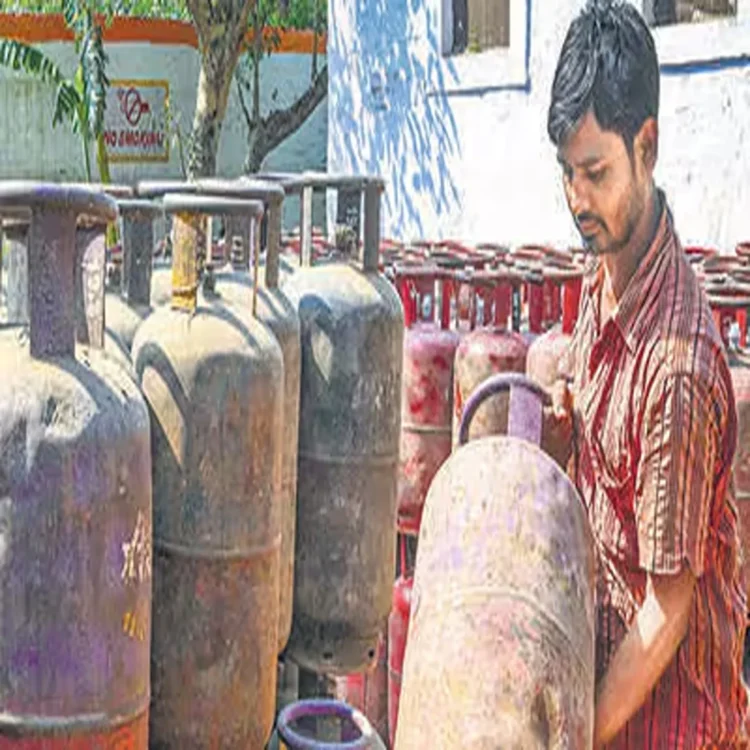
Sharp increase sparks concern among traders
Local business owners say the latest hike did not come as a surprise. Many had anticipated an increase in fuel prices following the conclusion of assembly elections in several states. With the cost of a 19-kg commercial LPG cylinder now reaching Rs 3,071, traders argue that their earlier fears have proven accurate.
This marks the second significant price revision since tensions escalated in the Middle East involving the US, Israel, and Iran. Business owners believe global developments are being cited as justification, but the immediate impact is being felt at the local level.
Smaller consumers also under pressure
The price surge has not only affected large establishments but also hit smaller users. A 5-kg LPG cylinder, commonly used by street vendors and daily wage workers, has jumped from Rs 549 to Rs 810. This sharp increase—close to 50%—has made it harder for small-scale operators to sustain their daily operations.
For many vendors, this rise represents a direct challenge to their livelihoods, forcing them to reconsider pricing or cut down on expenses elsewhere.
Food businesses face shrinking margins
Owners of eateries and sweet shops say the financial strain is becoming difficult to manage. Varun, who runs a confectionery shop in Shimla, explained that the effective cost of a commercial cylinder, including transportation, has now climbed to approximately Rs 3,450. He pointed out that earlier, the same amount would cover the cost of two cylinders.
According to him, passing on the increased expense to customers may become unavoidable. However, he fears that higher prices could reduce footfall, particularly among tourists who are sensitive to rising costs.
Long-standing establishments struggle to cope
Even well-established businesses are feeling the pressure. Tavesh, who operates a decades-old sweet shop in Ram Bazaar known for snacks and traditional items, said that rising LPG prices combined with delays in supply have significantly reduced profit margins.
He noted that despite increasing input costs, his business has so far avoided raising menu prices. However, maintaining this approach is becoming increasingly unsustainable, and adjustments may soon be necessary.
Hospitality sector echoes similar worries
Hoteliers in Shimla have also expressed concern over the situation. Industry representatives say the sector was already dealing with supply shortages of commercial cylinders, and the price hike has added to their challenges.
Inderjeet Singh, a hotelier and former trade body leader, stated that the cumulative effect of supply issues and rising prices is putting the hospitality industry under considerable strain. He warned that the additional cost burden is likely to be passed on to customers, impacting tourism and overall business activity.
Political reactions and criticism
The price increase has also triggered political responses. Opposition leaders argue that the hike was expected after elections and have criticised the reasoning behind it. Some have described the move as unfair to the public, claiming that the financial burden is being shifted onto consumers.
Concerns have also been raised about the country’s progress toward self-reliance in the energy sector. Critics questioned whether initiatives aimed at boosting domestic production have achieved their intended goals.
Possibility of protests if rollback not considered
With rising costs affecting multiple sectors, traders and political representatives have indicated that protests could take place if the government does not reconsider the hike. Business owners say that without intervention, the increase will continue to impact both livelihoods and consumer spending.
As the situation unfolds, stakeholders across Shimla are closely watching for any policy response that could ease the pressure on businesses and the public alike.